

Brushless vs. Brushed Motors: Technology Comparison and Application Selection
Leave a message
Motor selection has a long-term impact
In the field of modern industry and consumer electronics, motors are everywhere. From home appliances to automated production lines, from medical equipment to robotic systems, motors are the core components that drive the normal operation of various devices.
Currently, one of the most common types of motors is the brushed DC motor and the brushless DC motor. They have significant differences in structure, working method and performance. For design engineers or equipment purchasers, understanding the main differences between these two motors is the key to making the right selection decision.
This article will comprehensively compare brushless motors and brushed motors in terms of technical principles, service life, control methods, and typical applications, and provide practical application suggestions to help you choose the appropriate motor type according to project requirements.

Principle and structure comparison: the fundamental difference between brushless and brushless
There are two main types of DC motors: brushed DC motors and brushless DC motors. The core difference between the two in structure determines their performance and application scenarios.
The structure and working principle of brushed motor
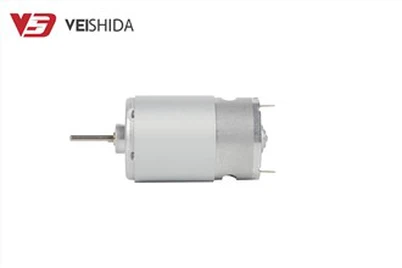
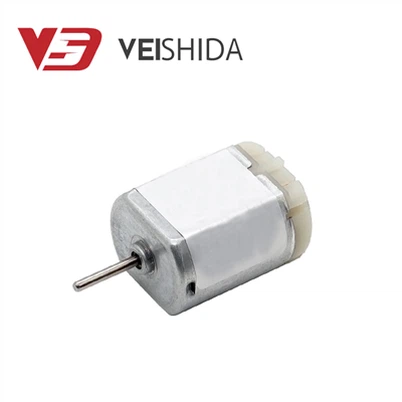
A brushed motor is a motor that achieves rotation through mechanical commutation. Its main structure includes:
Stator: Made of permanent magnets or electromagnets, it provides a constant magnetic field.
Rotor: The rotating part of a motor, usually consisting of coils of wire.
Brushes and commutator: key components for switching the direction of current. The brushes contact the commutator to drive the rotor to rotate continuously.
This mechanical contact commutation method is simple and reliable, and easy to start, but as the use time increases, the brushes will gradually wear, resulting in reduced performance, increased noise, and the need for regular maintenance.

The structure and working principle of brushless motor
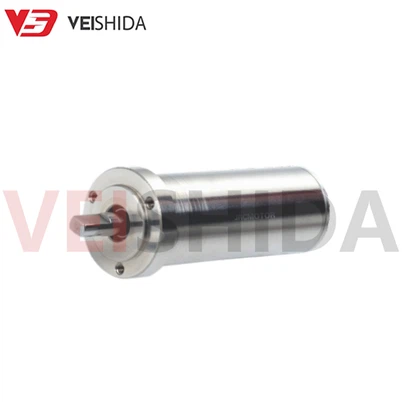
The brushless motor completely removes the brushes and commutator, and relies on the electronic commutation system to drive the motor to rotate. The main structure includes:
· Stator: It is wound with multi-pole coils to generate a rotating magnetic field.
· Rotor: Usually a permanent magnet and can be in the form of an inner rotor or an outer rotor.
· Driver: The core control unit, combined with Hall sensor or magnetic encoder, detects the rotor position in real time and controls the on and off of the current.
This method avoids mechanical wear and greatly improves operating efficiency, response speed and service life.
Key comparison points at a glance
|
project |
Brushed Motor |
Brushless Motor |
|
Commutation method |
Mechanical commutation (brush + commutator) |
Electronic commutation (controller + sensor) |
|
Main structure |
Stator, rotor, brush, commutator |
Stator, rotor, controller, encoder |
|
Maintenance requirements |
The brushes are severely worn and need to be replaced regularly |
Virtually maintenance-free |
|
Noise and efficiency |
High noise, relatively low efficiency |
Low noise, higher efficiency |
Brushed motors are more traditional in structure and are suitable for cost-sensitive or low-control devices. Brushless motors are increasingly used in industrial automation, smart devices and high-end consumer electronics due to their higher efficiency and longer life.

Differences in control methods and performance
In addition to structural differences, brushed motors and brushless motors also show significant differences in control methods and operating performance. These differences determine their advantages and disadvantages in practical applications.
Control method comparison
Brushed motors rely on mechanical contact between carbon brushes and commutators to achieve current commutation. The control is relatively simple, and only a stable DC power supply is required to work. By adjusting the voltage and direction applied to both ends of the brush, the motor can be started, stopped, speed-regulated, and commutated. Therefore, it is very suitable for applications with compact structures and low control requirements.
Brushless motors use electronic commutation technology and no longer rely on physical contact parts. They use Hall sensors or magnetic encoders to sense the position of the rotor poles in real time, and the driver accurately controls the power-on sequence of the stator windings. The entire process is usually completed by a microcontroller or digital signal processor (DSP), enabling the motor to achieve smooth and efficient closed-loop control.
Although brushless motors have a more complex control system, they also offer greater precision and flexibility, making them ideal for modern automation and high-performance systems.
Performance comparison
|
Performance Indicators |
Brushed Motor |
Brushless Motor |
|
Control System |
Simple, just adjust the voltage |
Complex, requires drive and position feedback |
|
Startup and response |
Quick startup and fast response |
Smooth start-up and precise response |
|
Speed control |
Limited accuracy, suitable for basic speed regulation |
Wide control range, enabling fine speed regulation |
|
Work efficiency |
Generally 75% - 80% |
Up to 85% - 90%, lower energy consumption |
|
Noise and distractions |
Loud noise, electric sparks, and easy to generate electromagnetic interference |
Low noise, no spark, little interference |
|
Reliability and lifespan |
The brushes are severely worn and need to be replaced regularly, so their lifespan is short. |
Less mechanical wear, long life, suitable for long-term continuous operation |
Application scenario comparison: different needs, different choices
Due to differences in structure and performance, brushed motors and brushless motors are applicable to very different scenarios in actual applications. The choice of motor often depends on factors such as cost budget, control accuracy, noise level, operating life, and maintenance requirements.
Suitable for brushed motors
Brushed motors are still widely used in some low-cost devices that do not require high precision and life due to their simple structure, large starting torque and direct control method:
· Electric toys: compact structure, low manufacturing cost, and simple motor control requirements.
· Traditional power tools: such as electric drills, hair dryers, vacuum cleaners, etc., emphasize torque output and quick start.
· Small household appliances: such as blenders, electric shavers, electric toothbrushes, etc., have short motor operation cycles and high tolerance for maintenance.
These occasions usually do not have high requirements for efficiency and operating stability, so the use of brushed motors can reduce overall costs while ensuring functionality.
Suitable for brushless motors
Brushless motors are increasingly being used in high-end and smart devices due to their high efficiency, low noise, long life and good control characteristics:
· UAVs and model aircraft: extremely high requirements on response speed, weight and efficiency.
· Electric vehicles: need to operate continuously and efficiently, and energy consumption and maintenance frequency must be kept as low as possible.
· Industrial automation equipment: such as robots, CNC machine tools, and automatic production lines, which have strict requirements on control accuracy and durability.
· High-end home appliances: such as smart fans, air conditioners, washing machines, etc., which have high requirements for quietness and energy efficiency.
In these fields, equipment usually needs to run for a long time, be precisely controlled, or start and stop frequently, so brushless motors become the first choice.

Choose VSD motor: professional manufacturing, quality assurance
When choosing a brushless or brushless motor, in addition to the performance of the product itself, the supplier's professional capabilities and manufacturing level are equally important. VSD is committed to providing high-quality, customizable motor solutions to global customers to meet the diverse needs of different industries.
Multi-type motor manufacturing capabilities
VSD specializes in the design and manufacture of various types of DC motors, including:
· Brushless DC Motor (BLDC Motor)
Available in inner and outer rotor configurations, suitable for applications with high efficiency, quietness and long life. Widely used in drones, power tools, medical equipment, smart home appliances and industrial automation systems.
With reliable structure and high cost performance, it is suitable for electric toys, small household appliances, basic portable devices and other fields.
We can provide customized options of different voltages, currents, speeds, sizes and installation methods according to customer needs.
Why choose VSD
· Rich manufacturing experience
With many years of experience in motor design and production, we serve customers in many countries and regions in Europe, America and Asia.
· Strict quality management system
The factory has passed ISO 9001 quality certification and its products comply with international standards such as RoHS and CE.
· Strong R&D and customization capabilities
It supports the whole process service from prototype development to mass production, and can provide integrated solutions such as encoders, reducers, and drivers.
· Quick response and technical support
A team of professional engineers provides selection suggestions, technical docking and after-sales support to ensure the smooth progress of customer projects.
Whether you are developing high-performance automation equipment or looking for reliable motor solutions, VSD can provide you with suitable products and reliable service support.