


What Is Pump
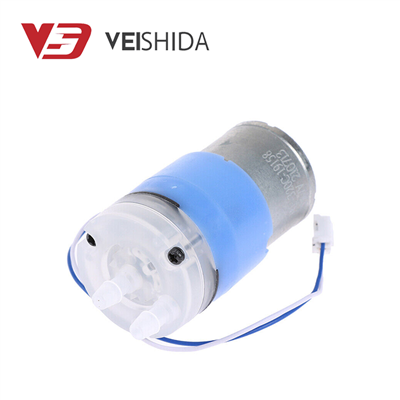
A pump is a device that moves fluids (liquids or gases), or sometimes slurries, by mechanical action, typically converted from electrical energy into hydraulic energy. Mechanical pumps serve in a wide range of applications such as pumping water from wells, aquarium filtering, pond filtering and aeration, in the car industry for water-cooling and fuel injection, in the energy industry for pumping oil and natural gas or for operating cooling towers and other components of heating, ventilation and air conditioning systems. In the medical industry, pumps are used for biochemical processes in developing and manufacturing medicine, and as artificial replacements for body parts, in particular the artificial heart and penile prosthesis. When a pump contains two or more pump mechanisms with fluid being directed to flow through them in series, it is called a multi-stage pump. Terms such as two-stage or double-stage may be used to specifically describe the number of stages. A pump that does not fit this description is simply a single-stage pump in contrast.
Advantages of Pump
Increased efficiency
Pumps can help to increase the efficiency of a system by reducing the amount of energy required to move fluids.
Improved safety
Pumps can be used to move dangerous or toxic fluids, reducing the risk of exposure to workers.
Increased productivity
Pumps can help to increase productivity by allowing fluids to be moved quickly and efficiently.
Cost savings
Pumps can help to reduce costs by reducing the amount of waste and minimizing the need for manual labor.




Why Choose Us
Our product
The main products are precious metal motors, carbon brush motors, geared motors, brushless motors, steel tube shaped motors, coreless motors, hub motors, water pumps, air pumps, solenoid valves and other DC motors. Products are widely used in medical, smart home, beauty, health, vehicle, model aircraft, electrical and electronic office supplies, banking, communication equipment and other fields.
R&D capability
The company has professional production R&D equipment and advanced production management concepts, and has gathered a large number of high-end technical and management talents in the motor industry. An average of two months to develop a new motor.
Professional team
Vshida's factory covers an area of more than 10,000 square meters, with more than 500 front-line employees and more than 100 management personnel, including 25 R&D personnel. The monthly output of motors exceeds 4.5 million.
Company certificate
The company passed the ISO/9001:2015 quality management system certification and IATF16949 automotive quality management system certification in 2014 through continuous efforts and innovation.
Different Types of Pump and its'uses
Dynamic pumps
This is a kind of pump that is usually for water supply, and positive displacement pumps are used for foam.
Centrifugal pumps
The most common model where the fluid is sucked in by a propeller. It is used when you require pump media that have low viscosity and solid elements.
Submersible pumps
This type of dynamic pump is also known as stormwater, sewage, and septic pumps. It is commonly used for shifting stormwater, subsoil water, wastewater, black water, greywater, rainwater, trade waste, chemicals, bore water, and foodstuffs.
Fire hydrant systems
Also known as hydrant boosters, fire pumps, and fire water pumps are fire hydrant systems. These are water pumps that are high-forced, and that enhances the capacity of fire fighting of construction. So, you can use these for irrigation as well as water transfer.
Positive displacement pumps
Another main type of pump is the pd. It makes a fluid move by trapping a fixed amount and displacing that trapped volume into the discharge pipe. Some classifications of it are:
Piston pumps
This is a type of positive displacement pump where the fluid is sucked in and out by one or more piston, which has reciprocating movements. Mostly used in used in water irrigation, scenarios requiring high, or reliable pressure.
Gear pumps
Another type of positive displacement pump is the gear pump. This one force a stable amount of liquid for every revolution.
Diaphragm pumps
This one is also known as aod pumps (air operated diaphragms), pneumatic, and aodd pumps. It is frequently used in general plants, industrial and mining.
Working mechanism of Pump




The pump delivers the flow by converting energy of a prime mover (an electric motor or turbine) first into velocity or kinetic energy and then into pressure energy of a fluid that is being pumped. The energy changes occur by virtue of two main parts of the pump, the impeller and the volute or diffuser. The impeller is the rotating part that converts driver energy into the kinetic energy. The volute or diffuser is the stationary part that converts the kinetic energy into pressure energy. Thus, by creating resistance to flow (pressure or head) the centrifugal pump delivers the required flow.
The process liquid enters the suction nozzle and then into eye (centre) of a revolving device known as an impeller. When the impeller rotates, it spins the liquid sitting in the cavities between the vanes outward and provides centrifugal acceleration. As the liquid leaves the eye of the impeller, a low-‐pressure area is created causing more liquid to flow towards the inlet. Because the impeller blades are curved, the fluid is pushed in a tangential and radial direction by the centrifugal force. This force acting inside the pump is the same as the one that keeps water inside a bucket that is rotating at the end of a string.
Once the liquid enters the eye of the impeller, it moves outward along the impeller. By virtue of its rotation, the impeller imparts kinetic energy to the liquid as it moves outward along the impeller. The liquid accelerates and its kinetic energy increases and at the outer tip of the impeller the liquid possesses the highest velocity. The key idea is that the energy created by the centrifugal force is kinetic energy. The amount of energy given to the liquid is proportional to the velocity at the edge or vane tip of the impeller. The faster the impeller revolves or the bigger the impeller is, then the higher will be the velocity of the liquid at the vane tip and the greater the energy imparted to the liquid.
The rapidly moving liquid leaves the pump impeller and the liquid enters the diffusing element of the pump (the volute in the casing). Here an increase in the cross-‐sectional area of the flow passage occurs, causing the liquid to slow down. The deceleration of the liquid in the diffusing element converts the kinetic energy of the liquid to pressure energy.
Fluid type and viscosity
When selecting a pump for industrial applications, it is crucial to consider the fluid type and viscosity. Different types of fluids have varying viscosities, which affect the pump's performance. Low-viscosity fluids like water require centrifugal pumps, while high-viscosity fluids like oil necessitate positive displacement pumps.
Flow rate and pressure requirements
Determining the required flow rate and pressure is essential to choosing the right pump for your industrial needs. Higher flow rates usually call for centrifugal pumps, which are suitable for moving large volumes of fluid at low pressures. On the other hand, positive displacement pumps are ideal when higher pressures or precise dosing are necessary.
Efficiency and power consumption
Efficiency plays a significant role in minimizing energy consumption and reducing operational costs. Centrifugal pumps generally have higher efficiency rates compared to positive displacement pumps but may experience lower efficiency with changing conditions or when handling viscous fluids. Considering power consumption can help optimize pumping systems while maintaining cost-effectiveness.
Maintenance and reliability
Regular maintenance ensures the long-term reliability of pumping systems in industrial settings. Due to their simpler design, centrifugal pumps typically require less maintenance; however, in some applications, they may be more susceptible to wear from abrasive particles. Positive displacement pumps often demand stricter maintenance routines but offer greater reliability under challenging environmental conditions.
Flow rate and pressure requirements
When selecting a pump for an industrial application, it is crucial to consider the required flow rate and pressure. The flow rate determines how much fluid the pump can move within a given time frame, while the pressure requirement indicates the force needed to overcome resistance in the system. By accurately assessing these parameters, engineers can choose a pump that meets their specific needs and ensures optimal performance. To determine flow rate requirements, it is essential to evaluate factors such as production demands, system design, and desired process efficiency. Additionally, considering any potential future expansions or modifications can help avoid operational constraints down the line. Similarly, understanding the pressure requirements involves identifying components with high pressure drops and factoring in any elevation changes or pipe friction losses. By carefully analyzing these aspects of fluid dynamics upfront, engineers can confidently select pumps that deliver efficient operation at adequate flow rates and pressures for their industrial applications.
Efficiency and power consumption
Efficiency and power consumption are crucial factors to consider when selecting pumps for industrial applications. High-efficiency pumps can significantly reduce energy costs and environmental impacts. It is important to choose a pump that matches the specific flow rate and pressure requirements of the system, as oversized or undersized pumps can lead to inefficient operations and increased power consumption. Regular maintenance and reliability checks are essential for ensuring optimal pump performance and minimizing downtime.
What Are The Different Parts Of Pump Design
Impeller
The impeller is the most important and central part of pump design. It is responsible for producing the pumping action that moves water or other fluids through the system. The impeller’s shape, size, and design determine how well a pump will perform.
Shaft
The shaft is another important pump part, as it transmits power from the motor to the moving parts inside the pump housing. Most pumps have either a simple straight shaft or an offset shaft in one form or another to optimize performance.
Casing
The casing houses all of the internal components of a pump and forms its outermost shell. Casing designs vary depending on whether they are dry-pit pumps or submersible pumps, but both types should be designed for optimal functionality and performance.
Sealing
The seal is a vital part of any pump design because it helps protect the internal components from damage or overheating by preventing water from entering the shaft housing area. Different seals are used based on the pump design and the pump application.
Bearings
The bearings are important pump parts that allow the rotating shaft to turn smoothly while transferring power to other moving parts within the system. Modern pumps typically use either ball bearings or roller bearings, which vary in their durability, efficiency, and other properties.
Couplings
The coupling serves as an intermediary between the motor and pump shaft, allowing them to rotate together without slipping or producing too much vibration or noise. Couplings are usually made from plastic, rubber, or metal and come in various shapes and sizes, depending on their application.
Suction nozzle
The suction nozzle is what draws water into the pump housing so that it can be pressurized and moved through the system. Most nozzles have a specific shape to optimize flow rate, efficiency, and other performance characteristics, but they are also highly customizable for different applications. Getting the design of the nozzle is important to ensure that the pump serves its application in the right way.
Discharge nozzle
The discharge nozzle is responsible for controlling the direction and velocity of the pressurized water being pumped out of the system, which directly affects how much force will be applied to whatever needs to be moved by the pump. Therefore, specific pump design details should be considered when selecting a nozzle type for a particular application.
Check valve
An important pump part, the check valve, is a special one-wave valve that stops water or other fluid from flowing back into the pump housing after discharge. This is an important safety feature that protects the pump from damage and ensures that it continues to operate correctly.
Pump Maintenance in Easy Steps
Determine maintenance frequency
Consult the original manufacturer’s guidelines. Consider the timing to schedule your maintenance. Will lines or pumps have to be disabled? Select a time when the system is down and use common sense when deciding the time and frequency.
Observation is key
Get to know your system and make a point to observe your pump while it is still running. Make note of leaks, unusual sounds or vibrations and unusual odors.
Safety first
Make sure machines are properly shut-down before performing your maintenance and/or systems check. Proper isolation is important not only for electrical systems, but for hydraulic systems as well.
Mechanical inspection
Check that mounting points are secure. Inspect the mechanical seal and packing. Inspect the pump flanges for leaks. Inspect the couplings. Inspect and clean filters.
Lubrication
Lubricate the motor and pump bearing per manufacturer’s guidelines. Be sure not to over lubricate. More bearing damage occurs as a result of over greasing than under greasing. If the bearing has a vent cap, remove the cap and run the pump for 30 minutes before reinstalling cap. This will allow excess grease to work its way out of the bearing.
A water pump
Electrical/motor inspection
Check that all terminations are tight. Inspect motor vents and windings for dust/dirt build-up and clean according to manufacturer’s guidelines.Inspect starter/contractor for arcing, overheating, etc.
Replace damaged seals and hoses
If any hoses, seals, or o-rings show wear or damage, replace immediately. Using a temporary rubber assembly lubricant will ensure a tight fit and prevent leaks or slips.
Founded in 2011, Shenzhen WEISHIDAD Micro Motor Co., Ltd. is a micro motor manufacturer in Shenzhen integrating professional R&D, production and sales. The company has professional production and research and development equipment and advanced production management concepts. The main products are precious metal motors, carbon brush motors, geared motors, brushless motors, steel tube shaped motors, coreless motors, hub motors, water pumps, air pumps, solenoid valves and other DC motors. Products are widely used in medical, smart home, beauty, health, vehicle, model aircraft, electrical and electronic office supplies, banking, communication equipment and other fields. Based on the principle of quality first and customer first, the company passed the ISO/9001:2015 quality management system certification and IATF16949 automotive quality management system certification in 2014 through continuous efforts and innovation. Fully guarantee customer satisfaction and first-class quality products. Thanks to the trust and support of our customers, Vshida is also growing rapidly and healthily. The products are exported to Europe and the United States and other Southeast Asian countries and regions, and have been unanimously recognized, trusted and praised by internationally renowned companies such as Mengfali, Panasonic, and Philips.


Our Certificate


