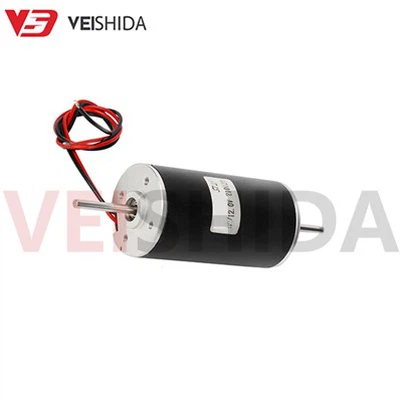


Coreless Motor - Helping Humanoid Robots Master the Future
Leave a message
Humanoid robots have become a shining star in the field of artificial intelligence.
In recent years, humanoid robots have become one of the landmark achievements of AI technology, with their widespread applications in fields such as Medical and services. To promote the development of this cutting-edge product, countries around the world have introduced policies and increased support for humanoid robots and their key components. In the humanoid robot industry chain, the coreless motor, as a vital component of the motion control system, plays an indispensable role. For example, Tesla's humanoid robot's dexterous hand+ uses coreless motors as the core component, with each robot assembling 12 of them (6 on each hand). This article, as a study on the coreless motor+, explores its technical characteristics, market status, and future prospects.
What is a Coreless Motor
1. Concept and Classification of Motors
A motor is a device that converts electrical energy into mechanical energy. It works by generating a force in a magnetic field through a coil of wire (stator winding), which then drives the rotation of the rotor. In principle, the motor utilizes the force effect of the current in the magnetic field to achieve efficient energy conversion.
Basic Principle of Motor Operation:
Around the rotating shaft, permanent magnets are used:
By generating a rotating magnetic field, the magnets are set into motion.
Based on the principle that "like poles repel, opposite poles attract," the rotating shaft is driven. Simply put, when current flows through the coil-shaped wire, it generates a rotating magnetic field, causing the magnet to rotate.
After inserting an iron core into the coil, the magnetic flux path becomes more concentrated, and the magnetic field strength is significantly enhanced. At this point, the motor's magnetic field is generated by the combined action of the coil's current and the iron core, forming clear N and S poles, which drive the rotor to rotate.
Key Components of a Motor
Stator:
The stator is the stationary part of the motor, and its core structure includes magnetic poles, windings, and the frame:
Magnetic Poles: Made of an iron core and coils, their main function is to generate the magnetic field.
Windings: The coils of the stator, usually made of conductive and insulating materials, are used to generate magnetic force when current passes through them.
Frame: Typically made of aluminum alloy, which provides structural support and excellent corrosion resistance and strength.
Rotor:
The rotor is the rotating part of the motor, consisting of the following major components:
Armature: Made of conductors and insulating materials, used to generate a magnetic field when current passes through it.
Bearings: Usually made of steel or ceramics, with excellent wear resistance and corrosion resistance, they support the rotation of the rotor.
End Caps: Made of materials like aluminum alloy, these provide sealing and structural strength to the motor.
Through the analysis of the motor's core components and its principles, it is easy to see that the coreless motor, with its compact and efficient characteristics, has become an important driving force for the development of humanoid robot technology. In the future, as technology continues to advance, the application of coreless motors in the field of intelligent robots will become even more widespread.
2. Coreless Motor Definition and Classification
The birth of the coreless motor can be traced back to 1958, when Dr. F. Faulhaber first proposed the skew-wound coil technology, and in 1965, he obtained the related patent, marking the advent of the coreless motor. Its innovative design achieved a perfect balance between the motor's size and efficiency. The coreless motor belongs to the category of DC permanent magnet servo motors and mainly consists of two main parts: the stator and the rotor. The stator is composed of silicon steel sheets and coils, and its unique slotless design effectively avoids the cogging effect commonly seen in traditional motors, reducing iron loss and eddy current loss. The rotor is composed of a permanent magnet, a shaft, and a fixed assembly, using a ring-shaped permanent magnet, which facilitates processing and installation.
Compared with traditional motors, the most distinctive feature of the coreless motor is the innovation in its rotor structure. Unlike the iron-core rotor in traditional motors, the coreless motor adopts an ironless rotor structure, known as the coreless rotor. Inside, it is surrounded by wire windings and magnets, forming a hollow cup-shaped structure.
In traditional motors, the function of the iron core is:
1. Concentrating and guiding the magnetic field: The iron core is typically made of high magnetic permeability materials (such as silicon steel sheets) that effectively concentrate and guide the magnetic flux, thus enhancing the motor's magnetic field strength and efficiency.
2. Supporting the windings: The iron core provides stable support for the motor windings, ensuring the stability of the windings' shape and position during motor operation.
In contrast, the coreless motor uses a thin-walled hollow cylindrical rotor, with the windings directly wound around the rotor, eliminating the need for additional iron core support.
The advantages of the ironless design are very significant:
1. Eliminating eddy current and hysteresis losses: In traditional motors, the iron core easily generates eddy currents and hysteresis losses in the alternating magnetic field, which reduces the motor's efficiency. The coreless motor, due to the absence of an iron core, eliminates these losses, greatly improving the energy conversion efficiency of the motor.
2. Reducing weight and lowering rotational inertia: The ironless design makes the rotor lighter, reducing the rotational inertia, which results in faster response times, quicker start and stop speeds, and is highly suitable for applications that require high acceleration and response times.
With a precisely designed hollow cylindrical structure and optimized winding layout, the coreless motor can better distribute the magnetic field, reduce magnetic leakage, and further improve the motor's operational efficiency and performance.
Coreless Motor Classification
Coreless motors are generally classified into two categories based on the commutation method:
Coreless Brushed Motor: This type of motor uses mechanical carbon brushes for commutation.
Coreless Brushless Motor: This motor uses electronic commutation instead of traditional carbon brushes for commutation. This design not only eliminates the electrical sparks and carbon dust particles commonly found in traditional motors, reducing noise, but also significantly extends the motor's lifespan.
By comparing different products, it is clear that the brushless coreless motor no longer requires carbon brushes, but instead uses Hall sensors to detect the rotor's magnetic field changes in real-time, converting mechanical commutation into electronic signals for commutation. This design greatly simplifies the motor's physical structure, making it more efficient and durable.

| Table: Comparison of brushed and brushless DC motors | ||
| Category | Brushless DC motor | Brushed DC motor |
| Commutation | Electronic switch commutator | The brush is in mechanical contact with the rectifier part |
| Structural features | Generally, the rotor is a permanent magnet and the stator is an armature | Generally, the rotor is the armature and the stator is the permanent magnet |
| Reversal method | Change the sequence of the electronic switch commutator | Change the terminal voltage polarity |
| Advantages | Good mechanical performance, long life, low noise, good heat dissipation | Good mechanical performance, low cost |
| Disadvantages | Slightly higher initial cost | High noise, poor heat dissipation, commutation requires maintenance |
3. Advantages of Coreless Motor
The coreless motor, through its innovative rotor structure design, breaks the limitations of traditional motor rotors and greatly reduces eddy current losses caused by the iron core. At the same time, this design effectively lightens the motor's weight and reduces its rotational inertia, thus minimizing the mechanical energy loss of the rotor during motion. Overall, the coreless motor exhibits significant advantages in multiple areas, including high power density, long lifespan, fast response, high peak torque, and excellent heat dissipation performance.
High Power Density
The power density of a coreless motor refers to the output power per unit volume or per unit weight. Compared to traditional motors, the coreless motor is lighter and more efficient due to its ironless rotor. The ironless rotor eliminates the eddy current and hysteresis losses caused by the iron core, improving the efficiency of the miniature motor and thus allowing it to provide greater output power and torque within a smaller volume. The efficiency of the coreless motor typically reaches over 80%, whereas the efficiency of traditional brushed DC motors is generally much lower, usually around 50%. Therefore, the coreless motor is particularly suitable for battery-powered devices requiring long-term stable operation, such as portable air sampling pumps, humanoid robots, bionic hands, and handheld power tools.
High Torque Density
Thanks to the ironless design, the rotor of the coreless motor is not only lightweight but also has a smaller rotational inertia, meaning the motor can accelerate and decelerate quickly, generating greater torque in a shorter amount of time. In addition, due to the more compact structure of the ironless rotor, the coreless motor is able to provide higher torque output in a limited space.
Long Lifespan
The coreless motor has more commutator segments, and the current fluctuations during the commutation process are smaller, which reduces the inductance and significantly lowers the electro-corrosion of the motor system during commutation. Therefore, the lifespan of the coreless motor is much longer than that of traditional brushed DC motors. According to related research, the expected lifespan of a coreless motor is usually between 1000 to 3000 hours, while that of brushed DC motors is usually only a few hundred hours.
Fast Response
Traditional motors, due to the presence of the iron core, have larger rotational inertia and thus slower response times. In contrast, the coreless motor has a compact structure and uses a self-supporting cup-shaped coil for the rotor, making it lighter and reducing its rotational inertia. This gives the coreless motor very sensitive start-stop characteristics. According to related data, the mechanical time constant of a coreless motor is typically less than 28ms, with some products even below 10ms, which is far superior to the 100ms time constant of traditional iron-core motors.

High Peak Torque
The coreless motor can achieve a larger peak torque in a short period of time because the motor's torque constant remains stable during the current rise, and there is a linear relationship between current and torque. In contrast, traditional iron-core DC motors can no longer increase the torque once they reach the saturation point.
Excellent Heat Dissipation Performance
The rotor surface of the coreless motor allows air to flow, providing better heat dissipation than traditional iron-core motors. In traditional motors, the coil of the iron-core rotor is usually embedded in the grooves of silicon steel sheets, which results in less airflow on the coil surface and higher temperature rise. Under the same power output conditions, the coreless motor has a significantly lower temperature rise and more efficient heat dissipation.
4. Technical Path of Coreless Motor
The key process in the production of coreless motors is the manufacturing of the coil, so the design and winding process of the coil become technical barriers. The wire diameter, number of turns, and linear characteristics of the wire directly affect the core parameters of the motor, while the winding method directly determines the motor's efficiency and performance.
Coil Design and Winding Methods
The winding design of the coreless motor mainly includes straight winding, skew winding, and saddle winding.
Straight Winding: This winding method features coils where the wire is parallel to the motor's axis, forming a concentrated winding. While this design is simple, the end parts of the armature cannot generate effective torque, and it increases the armature's weight and resistance.
Skew Winding: Also known as honeycomb winding, this method uses an angled winding where the end parts of the winding are smaller and there are no end windings. Compared to straight winding, skew winding reduces the weight and rotational inertia of the armature, improving the motor's acceleration capability and output torque. Brands such as Germany's Faulhaber and Switzerland's Portescap commonly use this design.
Saddle Winding: This winding method uses self-bonding enameled wire and improves slot filling rate through multiple shaping and arrangement processes. Saddle winding can effectively reduce the air gap and increase the utilization rate of the permanent magnet, thereby improving the motor's power density. Some products from Switzerland's Maxon adopt this winding design.
These different winding methods have an important impact on the efficiency, power, and torque output of the coreless motor, and they also determine the motor's production cost and suitable application scenarios.

Classification of Winding Processes
From a production technology perspective, the coil forming processes of coreless motors can be divided into three categories: manual winding, coil winding production technology, and one-step forming production technology.
1. Manual Winding
Manual winding is a handcrafted production process involving a series of complex steps such as pin insertion, manual winding, and manual winding arrangement. While this method is suitable for highly customized products, its production efficiency is relatively low, and the consistency and stability of the products are limited. Therefore, this process is more commonly used for small batch or special requirement production.
2. Coil Winding Production Technology
Coil winding production technology is a semi-automated process where enameled wire is wound onto a spindle with a diamond cross-section in a specific order. Once the required length is reached, the coil is removed and then flattened into a wireboard, which is then wound into a cup-shaped coil. This process has higher production efficiency and can meet medium-scale production needs. According to data in the article "Coil Winding Process and Equipment for Coreless Armature Manufacturing," equipment using four workers can achieve an annual production of 30,000 units. However, the limitation of coil winding technology is that it is primarily suited for coreless coils with diameters of 20-30mm. For smaller coils with diameters less than 10-12mm, especially those with tap spacing less than 7mm, winding becomes more challenging. Additionally, the coil winding process requires considerable manual labor, which may affect product consistency.
3. One-Step Forming Production Technology
One-step forming production technology uses highly automated equipment to wind enameled wire onto a spindle according to a specific pattern. Once the coil is wound into a cup shape, it is directly removed in a single step, eliminating the need for further processes like rolling or flattening. This method offers a higher degree of automation, providing higher production efficiency and better product consistency. However, it also requires a higher initial investment in equipment. Compared to coil winding technology, one-step forming technology can produce a greater variety of motor types and specifications, and it can better control the quality and tightness of coil arrangement.
| Table: Comparison between winding process and one-step forming process | ||
| Wound process | One-shot forming production technology | |
| Equipment price | Low | High |
| Automation degree | Low, not suitable for large-scale automated production | High, large-scale automated production is possible |
| Scrap rate | High | Low |
| Comprehensive technical difficulty | Low | High |
See more:Winding technology is the core barrier of hollow cup motor
Coreless Motor - Core Component of Humanoid Robots
Humanoid robots, also known as anthropomorphic robots, are intelligent robots designed to work and interact in environments similar to those of humans. These robots are designed to mimic human appearance and behavior, capable of sensing the surrounding environment, recognizing objects and humans, processing and understanding spatial data, and providing efficient and intelligent services. Through the integration of sensors, actuators, algorithms, and other hardware and software systems, humanoid robots can efficiently perceive, process information, and respond to human needs.
With the continuous development of technology, humanoid robots are increasingly being applied across various industries and are expected to become a trillion-dollar market on par with smartphones, passenger vehicles, and other technologies in the future. In the industrial field, particularly in manufacturing, humanoid robots can replace humans in performing high-intensity, hazardous, and repetitive tasks, such as material handling, welding, polishing, and more. Tesla plans to introduce humanoid robots into its gigafactories for assembly line operations to increase production efficiency and reduce worker injury risks; China General Nuclear Power Group is also considering deploying humanoid robots in nuclear power plants; Foxconn is piloting humanoid robots to address quality control issues, employee turnover, and alleviate the physical strain caused by certain repetitive tasks. The service industry is no exception. With their powerful environmental perception and excellent human-robot interaction capabilities, humanoid robots can undertake tasks such as delivery and companionship in restaurants, hospitals, and other locations, as well as serve as home care providers and companions in household environments. For example, Apollo, a robot by U.S.-based Apptronik, is mainly used for warehouse management and assists in transporting goods, with a battery life of 4 hours; G1, a general-purpose humanoid robot developed by Yushu Technology, can perform fine movements such as opening a bottle cap.
In terms of the structure of humanoid robots, they are generally divided into the execution system, perception system, and other systems. The execution system mainly includes linear actuators, rotational actuators, and dexterous hands. The perception system, depending on the technical path, includes visual sensors, millimeter-wave radar, inertial navigation systems, and other devices. Other systems include key components like chips and batteries. The dexterous hand, as one of the key components of the execution system, operates based on the collaboration between the coreless motor and planetary gearbox. The coreless motor drives the planetary gearbox to generate a reverse reaction force, which then pulls the finger joints through hinges or other connections, transforming rotary motion into linear motion. By applying forward or reverse voltage, the coreless motor can control the extension and retraction of the fingers, enabling the gripping or releasing of objects.
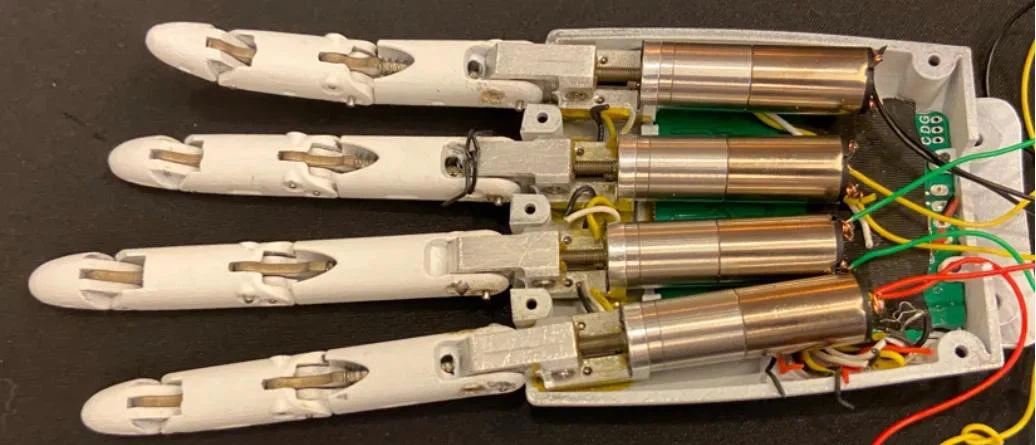

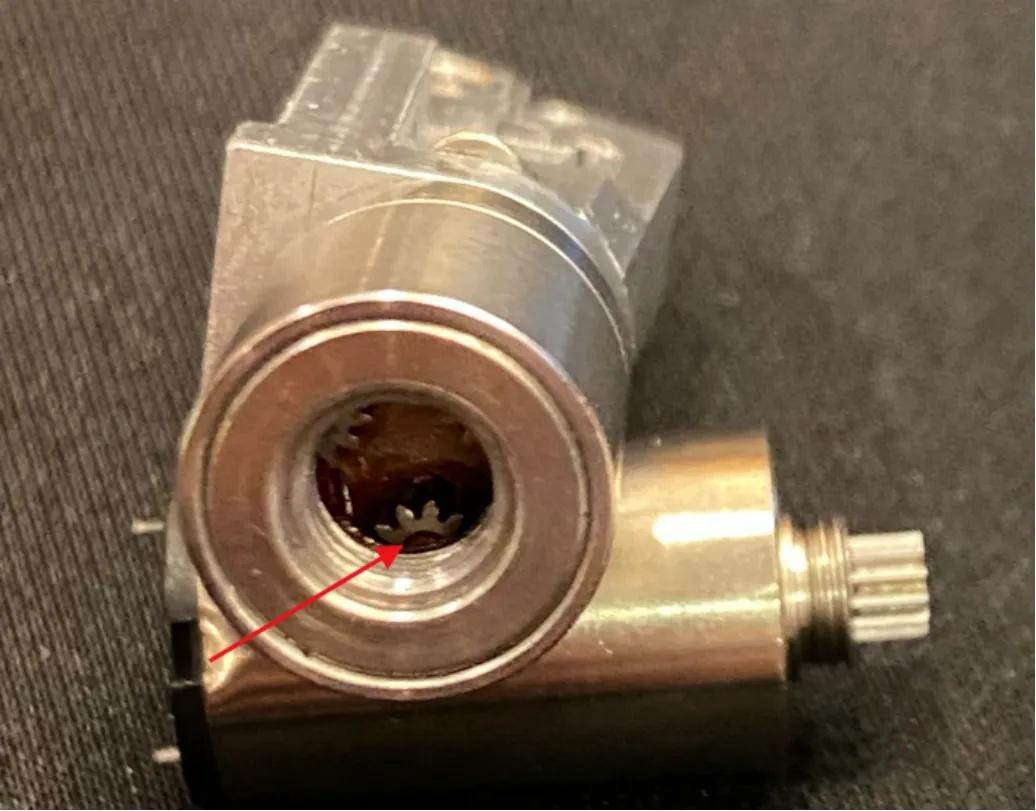
Taking Tesla's Optimus robot as an example, its dexterous hand consists of a coreless motor, precision planetary gearbox, ball screw, sensors, and encoders. The coreless motor accounts for approximately 50% of the cost of the hand's actuator components, and around 4~4.5% of the total cost of a single robot. Each dexterous hand is driven by six motors, with two coreless motor modules installed in the thumb section to perform both extension and flipping motions simultaneously; each of the other fingers is driven by one coreless motor module. The six motor modules work together with the worm gear and tendon system to perform flexible and precise operations of the hand.
Additionally, humanoid robots also contain another crucial component: the frameless torque motor, typically used in areas requiring high torque, such as joints. As a type of servo motor, the coreless motor offers higher control precision and faster response speed, making it widely used in components like dexterous hands that demand greater precision and responsiveness. Since this article focuses on coreless motors, a detailed analysis of frameless torque motors will not be expanded upon.
Coreless Motor Market Size Estimation
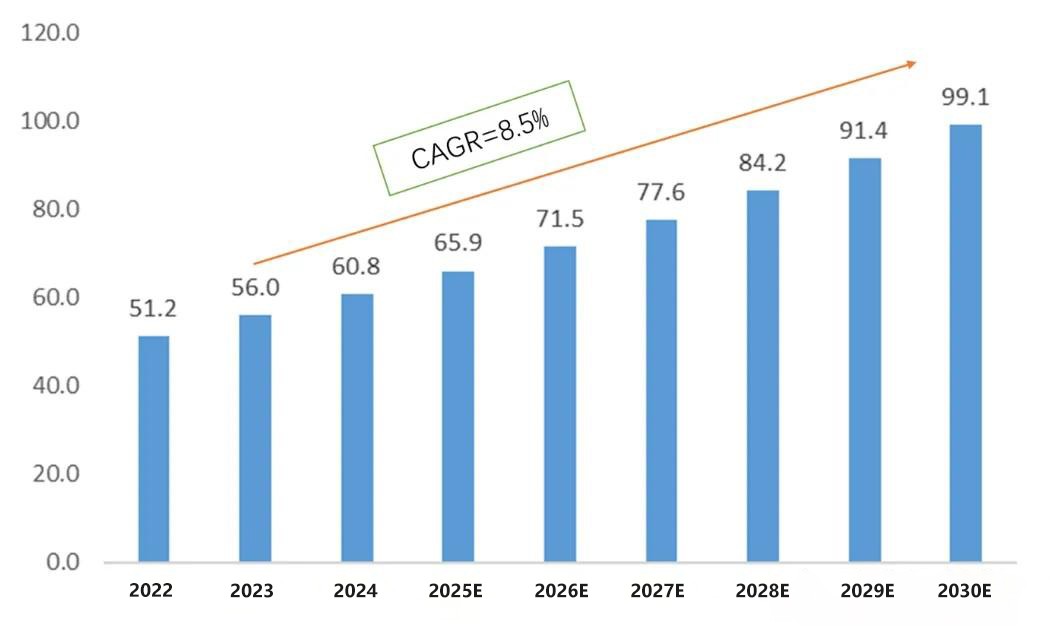
1. Currently, the rapid development of artificial intelligence has solved two key challenges for robots: lack of intelligence and lack of application scenarios. At the same time, the hardware of humanoid robots is also undergoing rapid iteration. The layout of the domestic industrial chain is conducive to quickly reducing costs, thereby laying the foundation for the popularization of humanoid robots. This article believes that the humanoid robot market growth will occur in three stages:
Stage 1: 2024-2026: Driven mainly by policies and capital, it is expected that companies will gradually enter the mass production phase of humanoid robots. In the first three years, the focus of commercial applications will be to meet the unstructured needs of the industrial market, supplementing traditional industrial production lines. During this stage, the compound annual growth rate (CAGR) of humanoid robot sales is expected to be around 50%.
Stage 2: 2027-2030: With continuous cost reduction and efficiency improvement in the supply chain, as well as continuous technological breakthroughs, humanoid robots will gradually spread and become popular in potential home and service market areas, with the application potential continuously being explored. The CAGR of humanoid robot sales during this stage is expected to be about 100%.
Stage 3: After 2030: Demand in scenarios such as elderly care, emotional companionship, and military applications will become the main driving force for humanoid robot growth, leading to a long-term upward market trend. The CAGR of humanoid robot sales in this stage is expected to be about 20%.
2. From a pricing perspective, the current average unit price of coreless motors in both domestic and international markets is 1200 RMB per unit. Assuming that the price remains stable in the future.
3. Assuming the number of coreless motors used in each humanoid robot remains the same as now, i.e., 12 motors per robot.
From the estimation, starting in 2028, the market scale increment of coreless motors in the humanoid robot field will reach the billion-yuan level. By 2030, the incremental market scale from the humanoid robot field will exceed 40% of the combined market scale of other fields.
| Table: Estimation of the scale increment of hollow cup motors brought by humanoid robots | |||||||||
| 2024 | 2025 | 2026 | 2027 | 2028 | 2029 | 2030 | 2031 | 2032 | |
| Humanoid robot sales (10,000 units) | 1 | 1.5 | 2.25 | 4.5 | 9 | 18 | 36 | 43.2 | 51.84 |
| Humanoid robot sales (yoy) | 50% | 50% | 100% | 100% | 100% | 100% | 20% | 20% | |
| Number of hollow cup motors per device (units) | 12 | 12 | 12 | 12 | 12 | 12 | 12 | 12 | 12 |
| Sales of hollow cup motors in this field (10,000 units) | 12 | 18 | 27 | 54 | 108 | 216 | 432 | 518.4 | 622.08 |
| Unit price of hollow cup motors (yuan) | 1000 | 1000 | 1000 | 1000 | 1000 | 1000 | 1000 | 1000 | 1000 |
| Increase in the market scale of hollow cup motors (10,000 yuan) | 12000 | 18000 | 27000 | 54000 | 108000 | 216000 | 432000 | 518000 | 622080 |

Coreless Motor Competitive Landscape
Internationally, coreless motor manufacturing, due to its advanced technology and competitive advantages, combined with matching advanced winding equipment technology and a high level of automation, has long maintained a high market share, giving it a first-mover advantage. The global industry leaders include Switzerland's Maxon, Germany's Faulhaber, and Switzerland's Portescap. In the Chinese market, representative companies include VSD, founded in 2011. Coreless motor manufacturing in China started later, with a certain technological gap compared to overseas companies. However, benefiting from China's strong full industrial chain advantage and engineer talent pool, rapid catching up is expected.
Maxon (Switzerland): Founded in 1961, Maxon has around 3,300 employees globally, distributed across 40 countries. In 2022, the company achieved a turnover of 708 million Swiss Francs, with an annual production of 5 million units and around 12,000 product varieties. Their products primarily include brushless and brushed DC motors, various gearboxes, sensors, encoders, servo amplifiers, position controllers, CIM and MIM components, and custom solutions tailored to customer needs. Their coreless motors range from diameters of 4-90mm, with power ranging from 1.2-400 watts. The torque performance is excellent, with high power, a wide speed range, and long service life.
Faulhaber (Germany): As an independent family business, Faulhaber's drive technology is an outstanding example of precision engineering and motor technology. Faulhaber has R&D and production centers in Germany, Switzerland, the U.S., Romania, and Hungary, with a network spanning over 30 countries and regions, and more than 2,300 professional employees. Their brushless coreless motor B-Micro has a minimum size of 3mm, and their brushed coreless motor 0615N1.5S has a minimum size of 6mm.
Portescap (Switzerland): Founded in 1931 in Switzerland, Portescap initially focused on the watchmaking industry and introduced the revolutionary coreless rotor DC motor EscapTM in 1959, entering the miniature motor industry. In 2023, it was acquired by RegalRexnord. The company's micro-motor products meet the transmission needs of end markets ranging from medical devices to various industrial applications.
VSD (China): Founded in 2011, VSD has developed rapidly, initially in China, and within a few years, it quickly rose to become one of China's leading micro-motor manufacturers, beginning to expand internationally. It has already cooperated with well-known international companies such as Montaplast, Panasonic, and Philips, gaining trust and praise. The company's total factory area exceeds 10,000 square meters, with separate production facilities for brushed and brushless motors, and hundreds of advanced automated machines (including advanced winding machines), dozens of experienced research engineers, and hundreds of frontline employees, producing 200,000 motors daily.