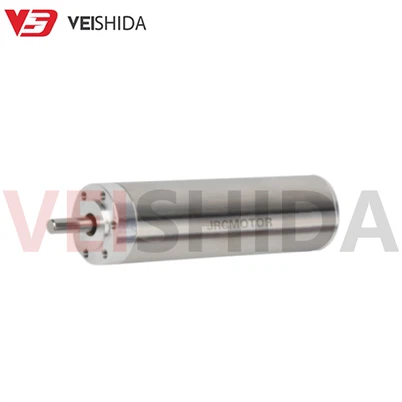


Potential Application of Coreless Motor in Blood Analyzer
Leave a message
With the continuous advancement of medical technology, blood analyzers play a vital role in clinical testing. They can process blood samples in an automated, efficient and precise manner to provide rapid diagnostic information. In these complex instruments, motors play a key role in helping to achieve various precision operations. Traditional blood analyzers mainly rely on micro DC motors, stepper motors, etc., but in recent years, Coreless motors have also shown their unique advantages in high efficiency and miniaturized design.
This article will explore the working principles of blood analyzers and focus on the potential applications of coreless motors, particularly how they can improve overall performance in devices that require high precision and compact design.
How blood analyzers work
A blood analyzer is a medical device used to automatically analyze blood samples. It is widely used in clinical laboratories to help doctors quickly obtain information about the patient's blood composition. The blood analyzer uses physical, chemical, and optical techniques to perform automated analysis of blood, which usually involves multiple key steps. The following is a detailed introduction to the working principle of the blood analyzer:
1. Sample collection and transportation
The first step of a blood analyzer is sample collection, usually by drawing a venous blood sample or a fingertip blood sample. The blood sample is first transferred to a test tube before entering the analyzer through a collection needle or an automated sampling system. The quality and quantity of the sample are very critical, and any error may affect the final test results.
2. Sample pretreatment
After the blood sample enters the analyzer, it usually needs to be pre-processed, such as:
Sample mixing: Some blood analyzers use methods such as rotation and vibration to thoroughly mix the blood with anticoagulants or reagents. This ensures that the blood components are uniform and different cells or molecules can react effectively.
Stratification: Some blood analyzers also separate blood components (such as red blood cells, white blood cells and plasma) through centrifugal force. Different stratification will help achieve more accurate measurement and analysis.
3. Automated reagent addition and dispensing
The blood analyzer uses an automated system to add the appropriate reagents to the blood sample. The addition of reagents is usually performed according to a preset program to ensure the accuracy of the test results for each sample. The mixing and reaction of the blood sample and reagents are necessary steps because they can help analyze specific blood components, such as blood sugar, hemoglobin, white blood cell count, etc.
Automated dispensing system: The motor plays a key role in this step, driving the sample pipeline and dispensing system to ensure that the liquid can be distributed to each detection area as needed. Whether dispensing reagents or dispensing samples, extremely high precision is required.
4. Physical and optical analysis
Once the reagents have reacted with the blood sample, the blood analyzer will analyze the blood sample using a variety of techniques, which generally include the following:
Optical analysis: Many blood analyzers use the principle of light scattering or light absorption to detect cells and molecules in the blood. For example, by measuring the number and morphology of hemoglobin, white blood cells, red blood cells, etc., detailed blood parameters can be obtained. These optical sensors usually use laser or LED light sources and use receivers such as photodiodes to capture reflected or scattered light.
Electrochemical analysis: Some devices also combine electrochemical methods to measure conductivity, voltage and current for detecting chemical components such as blood sugar and cholesterol. The role of the motor is to accurately drive and adjust the work of the electrode or sensor to ensure the accuracy of the data.
Flow cytometry: Flow cytometry is commonly used for cell counting and classification. It measures the shape, size and other characteristics of cells by passing them through a laser beam one by one in a flowing liquid. This process requires a sophisticated pump system and liquid delivery system, in which motors also play an important role to ensure a stable liquid flow rate and a reasonable cell arrangement.
5. Data processing and report generation
After analysis, the blood analyzer processes the data through an internal computing system. Based on the analysis data, the device generates a report on the patient's blood composition. The report usually includes important information such as the count of various types of cells in the blood (such as red blood cells, white blood cells, platelets), blood chemical composition (such as blood sugar, cholesterol), etc. The report is usually output in digital form or connected to the hospital information system through an interface.
6. Cleaning and calibration
In order to ensure the accuracy of each sample processing and avoid cross contamination, blood analyzers usually perform automatic cleaning procedures. Cleaning the system usually involves flushing pipes, probes, containers, etc. Motors play an important role in this step, especially when driving pumps and cleaning equipment, ensuring that the system is clean and maintained in good working condition.
Motor Application in Traditional Blood Analyzer
The operation of a blood analyzer depends on precise sample processing, reagent injection, turntable system, pump system and other links. In these links, the motor is the core driving part to ensure that the equipment can complete each task efficiently and accurately. The types of motors commonly used in traditional blood analyzers include micro DC motors, stepper motors and brushless DC motors. These motors play an important role in a variety of functions, and are used in the following aspects:
Turntable system drive: Many blood analyzers are designed with a rotating turntable to process multiple samples. The turntable requires a precise motor drive to control its speed and direction of rotation. Traditional stepper motors and micro DC motors are usually selected for such applications due to their good controllability and moderate torque output.
Sample distribution and reagent injection: The automated sample distribution system relies on motors to drive the flow of liquid or gas to ensure that each reagent can be added to the blood sample in a precise proportion. At this time, micro DC motors and brushless DC motors are often used to drive liquid delivery pumps due to their stability and high efficiency.
Micropump system: The pump system in the blood analyzer is responsible for mixing the blood sample and reagents and delivering them to each analysis channel. These pumps are usually driven by micro DC motors and can provide precise flow control.
Because traditional blood analyzers can already achieve precise control through these motors, coreless motors are rarely used in such equipment. This is mainly because the design and working principle of coreless motors are different from traditional motors. Its main advantages are high speed, low inertia, low noise and compact design, which are not fully utilized in traditional blood analyzers.
Application potential of Coreless motor in blood analyzer
Although coreless motors are not used in traditional blood analyzers, as the requirements for accuracy, volume and efficiency of medical equipment continue to increase, VSD has reason to believe that coreless motors will become an indispensable part of future blood analyzers. With the rapid advancement of medical technology, especially the sharp increase in demand for portable and high-precision equipment, the application prospects of coreless motors in blood analyzers will become more and more broad.
1. High response speed and precise control
The low inertia and fast response of the coreless motor are very suitable for automated sample handling and reagent injection in blood analyzers. By precisely controlling the speed, the motor can ensure accurate delivery and mixing of samples and reagents, improving analysis efficiency and accuracy.
2. Miniaturization and low noise
The compact design of the coreless motor makes it suitable for space-constrained devices, especially portable blood analyzers. Its low noise characteristics ensure that the device will not generate unnecessary noise during long-term operation, improving the user experience.
3. Support multi-function integration
The future blood analyzer will not only rely on a single function, but will tend to be integrated and intelligent. The Coreless motor can work with other electronic components to promote more complex automation control, such as precise turntable control, fast sample distribution and efficient pumping.
With deep technical accumulation and innovation in the field of Coreless motors, VSD is committed to promoting the widespread application of this technology in medical equipment, especially in blood analyzers. Through customized services, our Coreless motors can meet the growing needs of precision medical treatment.
VSD Coreless Motor Product Recommendations
To meet the needs of modern blood analyzers for high precision, compact design and high efficiency, VSD has launched a variety of Coreless motors, which are particularly suitable for medical equipment that requires high speed, high precision control and low noise operation. The following are two recommendations of VSD Coreless motors, which will help your blood analyzer improve its overall performance.
1. VEC-2855 Coreless Brushless Motor
The VEC-2855 motor has high efficiency and strong starting torque, making it particularly suitable for sample distribution and liquid delivery systems in blood analyzers. Its excellent speed control and starting performance ensure precise and fast operation during automated sample processing.
Highlight parameters:
Provides a wide operating voltage range to meet the needs of different devices
With high speed and high efficiency performance, the maximum efficiency output power can reach 38.5W
The starting torque reaches 438mN·m, ensuring stable system startup and suitable for functions requiring high torque drive
Applicable scenarios:
This motor is particularly suitable for links that require fast response and precise control, such as automated reagent distribution, sample mixing, etc., and can improve the overall performance and analysis efficiency of the analyzer.
The VEC-1657 motor is suitable for small and portable blood analyzers with its compact design and high speed characteristics, and can provide efficient drive in limited space. Its low noise and high efficiency ensure that the equipment provides stable and accurate performance during long-term operation.
Highlight parameters:
With excellent speed performance, no-load speed up to 32062r/min
The maximum efficiency output power is 21.3W, which can support more efficient automated analysis
The starting torque reaches 55.3mN·m, ensuring the system starts quickly and smoothly
Applicable scenarios:
This motor is ideal for efficient operation of small blood analyzers, such as cell counting, optical analysis, etc., where high-precision drive and low noise are required.
Why choose VSD
VSD focuses on providing customers with personalized customized solutions, supporting OEM and ODM services, and flexibly meeting the needs of different markets and applications. Our R&D team works closely with you to ensure that each product can perfectly meet your requirements and help you stand out in the fiercely competitive market.
As a factory direct supplier, VSD eliminates the middleman and offers competitive prices. At the same time, we have our own production plant with a transparent production process, and have passed ISO, CE and other international certifications, equipped with advanced testing equipment to ensure the quality and stability of each motor.