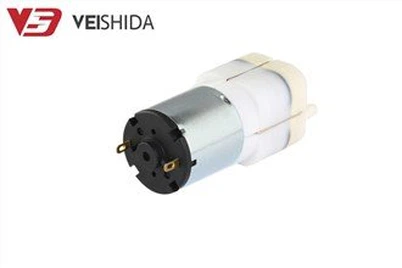


What is A Solenoid Valve?
Leave a message
1、Definition
As a device for controlling the fluid, it is a switch controlled by the electromagnetic force to control the movement of the valve through the current in its electromagnetic winding. The flow of fluids can be controlled and regulated by turning on or off, which makes it widely used in many industries, such as industrial control, medical equipment, automobile manufacturing, food processing, etc. With the advantages of sensitive opening and closing, flow control, electrical and hydraulic separation, it provides very important support and help for our industrial production and work. Due to its small size, less power consumption and reliable operation, it gradually replaces the position of traditional manual and mechanical controlled valves. At the same time, it can be used with computers, sensors, automatic control instruments and other equipment to achieve automatic control, improve production efficiency and energy saving and environmental protection. It has many kinds of different models and types in the control system of the different position play a role, the most commonly used is the one-way valve, safety valve, direction control valve, speed control valve and so on.
2、Operational principle
As a commonly used control element, its working principle is to control the movement of the valve core through the electromagnetic force, so as to realize the adjustment of the liquid or gas flow, pressure and other parameters. The main components include valve body, valve core, coil, spring and so on. When the coil is energized, a magnetic field will be generated, attracting the valve core to the coil, making the channel in the valve body open or close, so as to control the flow of the medium. When the coil power off, the spring will push the spool back in place, close the channel and stop the medium flow.
3、Classify
a. Classification by action mode
classification According to the classification of action state, can be divided into two categories: normally closed solenoid valve and normally open solenoid valve. When the normally closed solenoid valve is not connected, the internal valve is closed; when the power supply is connected, the internal valve is opened by the electromagnetic force; instead, when the normally open solenoid valve is not connected, the internal valve is opened when the power is connected At the source, the internal valve is closed by the electromagnetic force.
b. Classification by structure
According to the structure classification, can be divided into two categories: through type solenoid valve and Angle type solenoid valve. Direct type solenoid valve usually adopts direct type structure, that is, the inlet and outlet are on the same axis, with a relatively simple structure, easy to install and maintain. Angle solenoid valve usually use L or T structure, the structure is relatively complex, but in Some occasions have better practical results.
c. Classification by use
According to the use of the classification, can be divided into many categories, such as: hydraulic solenoid valve, pneumatic solenoid valve, steam solenoid valve, etc.. Hydraulic solenoid valve is mainly used in hydraulic system, pneumatic solenoid valve is suitable for pneumatic system, steam solenoid valve is usually used in the steam pipe or automobile engine radiator antifreeze, open and close and other fields.
4、Lectotype
Selection is very important, because it directly affects the working performance and stability of the system. There are several factors to be considered when selecting:
a. Working pressure: first of all, the range of the working pressure of the system should be defined. It is necessary to ensure that the rated working pressure is higher than the maximum working pressure of the system to ensure that the solenoid valve can work normally.
b. Working medium: different working media also have a certain impact on the selection. Generally speaking, it can be used in media such as gas, liquid and steam, but it is necessary to choose the corresponding valve body and sealing material according to the specific medium to ensure normal sealing and good corrosion resistance.
c. Import caliber: according to the flow requirements of the system and pipeline caliber, choose the appropriate import caliber. Too large or too small caliber will affect the flow and performance of the system.
d. Control mode: The control mode includes normally open type and normally closed type. The normally open solenoid valve is usually closed and can open only when powered on; the normally closed type is usually open and closed only when powered on. Need to choose the appropriate control mode according to the actual demand.
e. Valve material: The valve material determines its corrosion resistance and wear resistance in different environments. Usually, materials such as stainless steel, copper alloys and plastics are often used in manufactured valves with good corrosion resistance and wear resistance.
f. Temperature range: Different application scenarios have certain requirements for the working temperature range. When selecting, it is necessary to ensure that its operating temperature range covers the highest and minimum temperatures of the system.
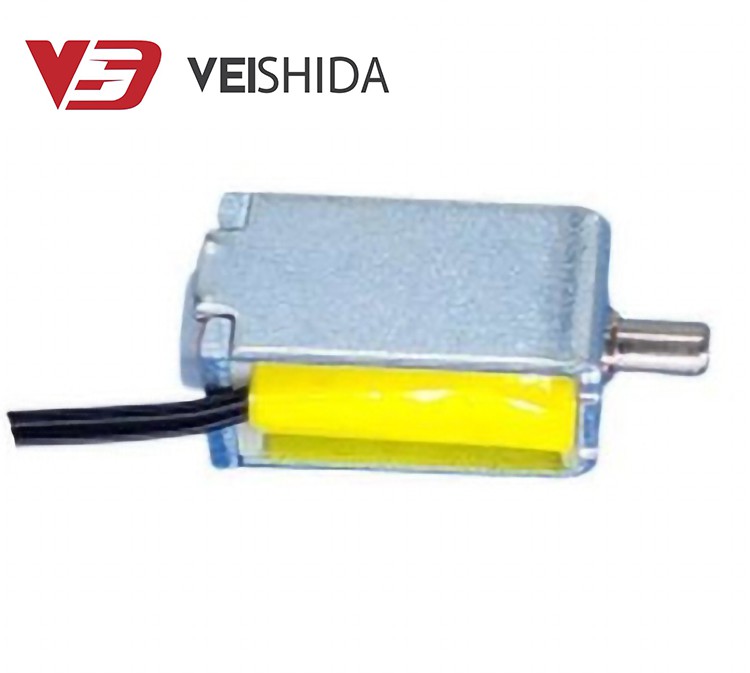
5、The meaning of several several passes
A few passes usually refer to the internal structure and the way of work. Where, "bit" indicates several working positions, that is, the different flow direction of fluid can be controlled at different positions; "through" means that the flow of several fluid lines can be controlled, that is, the switch of multiple lines can be controlled simultaneously. For example, a two-bit three-pass means that it has two working positions to control the switch of line 1 and line 2 respectively, while also controlling the circulation of line 3. This is often used in pneumatic system, hydraulic system, refrigeration system, water treatment system and other fields, can realize the control and adjustment of fluid, so as to control the working state of the equipment.
Two-bit two-way working principle: when the coil is not electric, the pipeline is not on, otherwise. Divided into one into two out, two into a, one into a, usually, is a common open or often closed two tee symbol: two three usually closed two three usually open two tee working principle: when the coil no electricity, often closed 2-3, often open 1-2, when the coil electricity, often closed 1-2, often open 2-3.
Two-bit five-way single electric control two-bit five-pass two-electric control two-bit five-pass working principle: single electric control: 1-2,4-5; 1-4,2-3 when the coil is powered. Double electric control: when the coil is not charged, the internal through hole to maintain the state of the last time when an electromagnetic coil is charged; for example, when 14 coil, 1-4,2-3, and when 12 coil 1-2,4-5, in order to extend the service life, usually 2 coils can not power at the same time, even if a coil is charged, it is best not to be charged for a long time.
6、Connecting aperture and channel diameter
a. The difference between the channel diameter and the pore size
The connection aperture refers to the aperture size when the solenoid valve is connected to the pipeline, which usually refers to the thread diameter of the inlet and outlet or the aperture size of the flange connection. The choice of the connection aperture size needs to be determined according to the size of the pipeline and the medium flow to be controlled. Usually, the size of the connection aperture diameter should be selected, which can reduce the resistance of the flow channel transition and ensure the stability of the medium circulation and the accuracy of the flow control. The diameter refers to the diameter of the internal valve body flow channel. The choice of path size has a great impact on the flow and cut-off performance. Generally speaking, the larger the diameter, the greater the flow, but for some specific media and control requirements, the larger the path is not the better, need to be selected according to the specific situation.
b. Threaded standard
Thread standards are usually divided into two types: British and metric. British thread standards include UNC, UNF, UNS, etc., in which UNC is commonly used coarse tooth thread, UNF is fine tooth thread, and UNS is special large diameter thread. Metric thread standards include M series and G series, where M series is the commonly used thread standard, and G series can be regarded as the tube thread of M series.
The above are some professional knowledges on Solenoid Valve by VSD Motors. For more relevant information, please contact us.