


What is the difference between a servo motor and an ordinary motor?
Leave a message
Ordinary motors are the motors that we usually use in our daily life, including electric toys, razors, etc. This kind of motor has the characteristics of too fast speed and too small torque. Generally, there are only two pins. The positive and negative poles of the battery are connected to the two pins, and the two pins will rotate. The motor will also reverse direction on the pin. The servo motor is mainly positioned by pulses. Basically, it can be understood in this way that when the servo motor receives 1 pulse, it will rotate the angle corresponding to 1 pulse, thereby realizing the displacement. Because the servo motor itself has the function of sending out pulses, so every Rotate an angle, will send out the corresponding number of pulses. The following is a brief introduction to the differences between servo motors and ordinary DC motors.
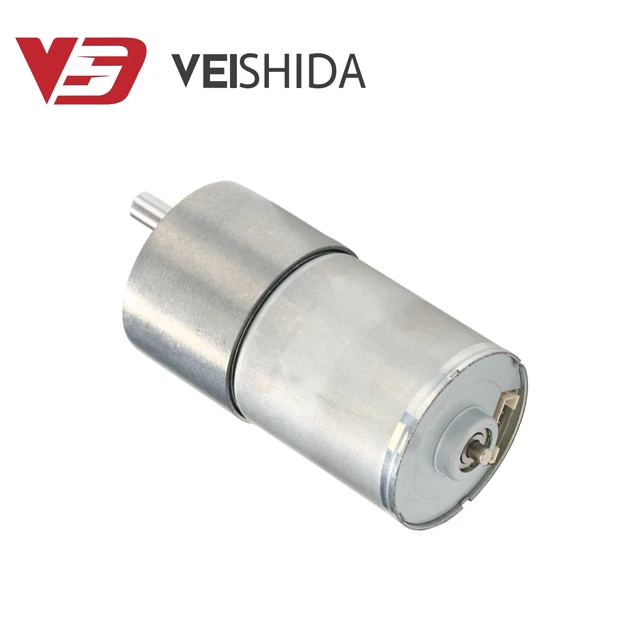
1. The biggest difference between the two is that the servo can be temporarily overloaded by 3-5 times and can remain overloaded, while the frequency conversion generally cannot be overloaded.
2. Servo motor refers to the engine that controls the operation of mechanical components in the servo system, and is an auxiliary motor indirect speed change device. The servo motor can control the speed and position accuracy very accurately, and can convert the voltage signal into torque and speed to drive the control object. The rotor speed of the servo motor is controlled by the input signal and can respond quickly. In the automatic control system, it is used as an executive element, and has the characteristics of small electromechanical time constant, high linearity, starting voltage, etc., which can convert the received electrical signal. Converted to angular displacement or angular velocity output on the motor shaft. It is divided into two categories: DC and AC servo motors. Its main feature is that when the signal voltage is zero, there is no rotation phenomenon, and the speed decreases uniformly with the increase of torque.
 3. The variable frequency motor adopts the AC speed regulation method of "special variable frequency induction motor + frequency converter", which greatly improves the degree of mechanical automation and production efficiency, and greatly improves the miniaturization of the equipment and the comfort. It is currently replacing the traditional mechanical speed regulation and DC speed regulation. Program.
The characteristics of the servo motor are: the speed and position accuracy are very accurate; the starting torque is large; the operating range is wide; there is no self-rotation phenomenon. Servo motors are mainly used in digital control systems and occasions that require high control accuracy.


