


What motor does the robot use?
Leave a message
Intelligent robots can complete various actions such as walking, jumping, and rotating. These two movements are both driven by micro DC motors. Different components and functions of intelligent robots use different types of micro motors. Common micro-DCs in intelligent robots include ordinary drive motors, gear motors, stepping motors, steering gears, servo motors, etc. Micro-DC motors are electromagnetic devices that convert or transfer electrical energy according to the law of electromagnetic induction. The main function is to generate driving torque as an electrical appliance. or various mechanical power sources.
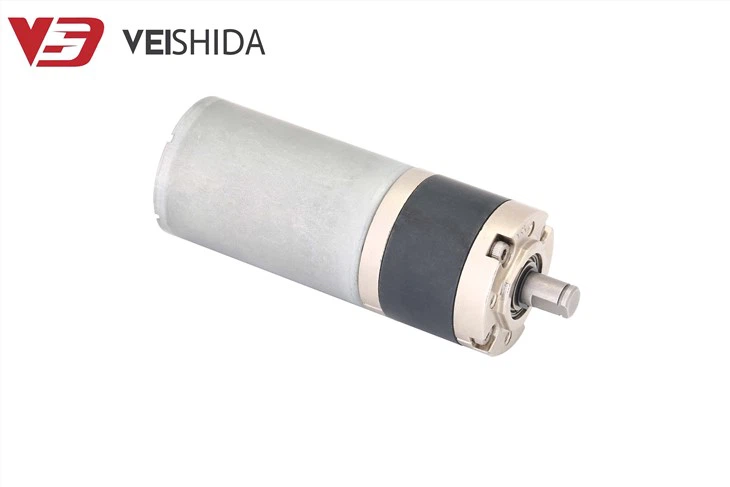
1. Ordinary miniature DC motors have high speed but low torque. Generally, two pins can be rotated at high speed by connecting the positive and negative poles of the battery, and the positive and negative poles can be reversed to reverse. Increasing the voltage can increase the speed, but it cannot exceed The maximum operating voltage will otherwise cause the current to increase and the motor to heat up badly.
2. Micro motor is a kind of commonly used micro motor, which is also very common in electric toys, smart door locks, electric shavers and other products. It can rotate at high speed only by connecting DC power, but the torque of micro DC motor is too small. , Generally in robots do not need too high rotation speed, so most of them are equipped with gear reducers, which not only reduces the rotation speed, but also increases the torque, which makes the miniature DC motor have more space for use, and the speed adjustment is simple, Large starting torque and stable operation.
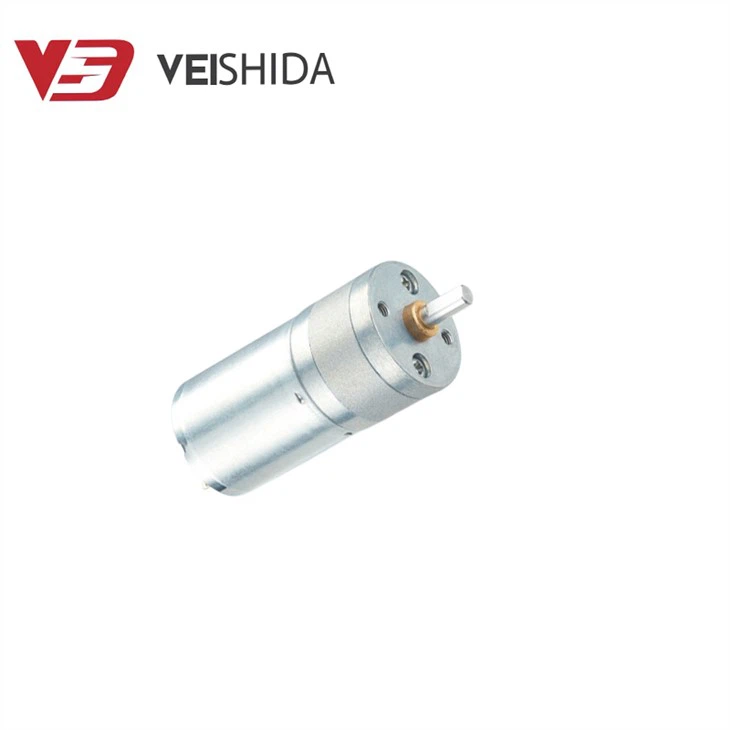
3. The stepper motor is an open-loop control motor that converts the pulse signal into angular displacement or linear displacement. Under normal circumstances, the speed and stop position of the micromotor only depend on the frequency and number of pulses of the pulse signal, and are not subject to load. The influence of changes, when the driver receives a pulse signal, it will drive the micromotor to rotate a fixed angle in the set direction, this is called the step angle, its rotation is a fixed angle step by step, and the number of pulses can be controlled by controlling the number of pulses. To control the angular displacement to achieve the purpose of accurate positioning, by controlling the pulse frequency to control the rotation speed and acceleration of the micro-motor to achieve the purpose of speed regulation.
4. The steering gear is also a very common type of intelligent robots. The steering gear is not a separate motor, but consists of a micro DC motor, a gear, a circuit board, a position detector and a housing. Its working principle is to send the signal through the receiver. The steering gear judges the steering direction through the IC on the circuit board, and then uses the micro DC motor to rotate the driving gear to transmit the power to the swing arm. At the same time, the position detector sends a signal back to determine whether it has reached the positioning position. The bit detector is actually a varistor. When the steering gear rotates, the resistance value also changes, and the rotation angle can be determined by detecting the resistance value.

5. Servo motors are also divided into brushed motors and brushless motors. Like ordinary micro DC motors, brushed motors have low cost, large starting torque, wide speed regulation range, and easy control, but short service life is prone to electromagnetic interference. Brushless motors are expensive and complicated to control, each with their own advantages and disadvantages.


