

What Is The Future Prospect Of The Coreless Motor, Which Has Become Popular Due To Humanoid Robots
Leave a message
There may be some differing opinions on a topic to be covered today, some will agree and some will argue against it.
Here's the thing.
Recently, since I've been making motors for many years as well, I've had a lot of friends ask me the same question a lot lately, "What do you think the future of hollow cup motors really is?" .
I've thought about this for a while, and it's actually really hard to answer.
Over the past two years, many similar expressions have appeared on different occasions: hollow-cup motors are the jewel of humanoid robotics and have a bright future.
However, there seem to be too many "pearls" of humanoid robots in the past two years.
The servo motor is the "pearl", the gearbox is the "pearl", the controller is the "pearl", the Coreless Motor is also the "pearl". "I don't know how many jewels the humanoid robot is sneaking around with.
One of the co-founders of a humanoid robotics company once said "I honestly didn't know what a Coreless Motor was until I got into humanoid robotics."
A researcher at a brokerage firm once said, "If it weren't for Marx and the humanoid robots, we probably wouldn't even be doing such detailed hollow-cup research, although it's just desktop research, so who cares about this stuff?"
It can be seen that humanoid robots are on fire, and some related industrial chains are also on fire, and some components or upstream enterprises that were originally known to few people have also been widely noticed. This is of course a good thing, because there is development only when there is attention. I have always believed that, whether for B-end customers or C-end players, we should have the sense of "penetrating into the common people's homes", and try to get ourselves noticed by as many people as possible. What does that mean?
Sellers for C-end players needless to say, definitely need to reach out to the common people, but customers for the B-end, especially manufacturing bosses who have been in the business for many years are accustomed to fighting fierce battles with the government or corporate customers, and basically don't care about what the average bosses' surnames are usually thinking because it's not the C-end people who are paying them directly. This is indeed good, but tech startups have to prioritize gathering the core target audience. However, we also have to think about who the customers of the customers and the customers of the customers of the customers are. It is the owner's last name and what is the cornerstone of the overall functioning of the society? It's also the people paying taxes and spending money.
So, no matter what kind of business you're in, there's no reason not to focus on the C-suite.
Do more than a decade of micro-motor manufacturing, we did not think of Coreless Motor this product line, will be because of humanoid robots and go to the front of the stage, but also can not think of this and the boss's last name has nothing to do with the field, actually one day will be the stock investor over and over the research, this kind of "can not imagine! This "unexpected" is our manufacturing industry's traditional operation inertia brought about by the cognitive level of the inevitable results.
So for upstream "stuff" like Coreless Motors these are probably the best of times - and I have a feeling that the future could be even better, as I firmly believe that more and more attention will be paid to the advantages and features of Coreless Motors as the technology develops.
Even now when humanoid robots are hot, not much humanoid robot production is actually happening ..... That is to say that the current humanoid robot does not give Coreless Motor to bring a great sales volume to improve. But even so, as as a Coreless Motor manufacturer or seller of us, or should grasp the use of the wind, realize the brand and the ecological relationship of the perfect!
In order for more people to understand an industry, in addition to the efforts of the companies themselves, someone has to do the work of science. Although this is a common need for many industries, but after all, the situation is different for each industry.
The popularization of Coreless Motors also incidentally answers that previous question: what is the future of Coreless Motors?
If you make a visual analogy, what is the Coreless Motor equivalent of a robot?
Perhaps it can be argued that a Coreless Motor is to a robot what a human muscle is to a robot - it serves the operation of the robot in the same way that a muscle is responsible for generating force and controlling fine movements in the human body.
The functions provided by Coreless Motors in robots are broadly as follows:
1. Source of strength: Muscles are the source of strength for our body to move and perform various activities, while Coreless Motors are the source of power for robots to perform actions, such as moving limbs and grasping objects.
2. Fine control: The contraction and relaxation of muscles enables fine human movements such as writing, playing a musical instrument or performing surgery. Similarly, the high-precision control of Coreless Motors allows robots to perform highly precise tasks, such as assembling tiny parts and other complex operations.
3. Speed of response: Muscles are able to respond quickly to commands from the brain, allowing us to react instantly. The high-speed response characteristics of Coreless Motors allow robots to quickly adjust their movements to dynamic environments.
4. Adaptability: The strength and flexibility of the muscles can be adjusted as needed, and the Coreless Motors can adjust their output power and torque for different load and speed requirements.
5. Efficiency and endurance: Muscular efficiency and endurance are key to the success of sportsmen and manual laborers, and the high performance and durability of Coreless Motors are essential to ensure stable, long-term robot operation.
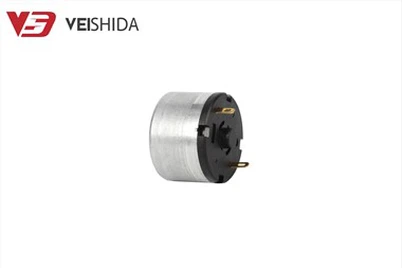
To put it plainly, the Coreless Motor is a kind of high-performance DC, permanent magnet, servo micro motor. By eliminating the eddy current (eddy current loss is one of the main causes of energy loss and heating), the Coreless Motor is not only efficient, but also has a small weight and rotational inertia, and the rotor itself has less mechanical energy dissipation. This design therefore allows the motor to achieve a higher energy density and to reduce its weight and volume by one-third to one-half compared to a conventional iron core motor of the same power.
This enables Coreless Motors to be used in application scenarios requiring high accuracy, fast response and low noise, such as in humanoid robots, aerospace equipment, precision instruments, medical devices, high-end photographic equipment and other low-power control systems requiring high-precision control.
Coreless Motor technical difficulties, mainly in the hollow cup of the part, a large part of the reason is to buy winding equipment - international technical capabilities of a number of companies do not sell to the outside world, resulting in a lot of Coreless Motor manufacturers to purchase the products of the Japanese companies to realize the production of Coreless Motor.
At the same time, Coreless Motors themselves face a number of technical and engineering challenges, such as high cost - Coreless Motors typically use higher-quality materials and complex manufacturing processes, which results in higher production costs than traditional iron-core motors; and for brushed Coreless Motors, wear and tear on the brushes can be a problem, as it can limit the motor's life of the motor. Brushless designs can solve this problem, but add complexity and cost; Coreless Motors, although highly efficient, still generate heat under high loads, so effective heat dissipation mechanisms are also considered a challenge; high accuracy and fast response require advanced control algorithms, which increases the complexity of motor drive and control system design, especially for applications that require dynamic adjustment of torque and speed; realizing high-quality and consistent mass production, while maintaining cost-effectiveness, is another important challenge, especially in the pursuit of higher performance and smaller size trend ......
So what's the outlook for such a Coreless Motor?
I believe that in the context of the current era, talking about the prospects of a hard technology field must combine three dimensions: problems and challenges, industrial policies, and target scenarios.
The challenges of Coreless Motors have already been stated, how should one think about them in relation to the latter two?
In terms of political policy, in the long term, Coreless Motors have the opportunity to overcome the challenges of high costs and high technological thresholds through continued progress in materials science, manufacturing processes and design optimization.
At the same time, attention should be paid to the global technology consumer electronics market. For the Coreless Motor application scenarios have been described in the previous article, why here to talk about technology consumer electronics? Because with the development of AI, the field began to be in a state of continuous expansion (well-known organizations TechInsights previously predicted that the global consumer electronics market size of 2023 is close to $ 950 billion, 2024 consumer electronics market size is expected to break through the $ 1 trillion mark), until today's point of view, to break through the $ 1 trillion mark is not a problem!
This has the opportunity to create a huge demand for high-performance and high-efficiency motors. From smart wearables to drones, from high-end cameras to medical devices, each market segment requires motor solutions that can meet specific performance specifications. Theoretically, Coreless Motors with low inertia, high responsiveness, and high efficiency fit the needs of these scenarios.
In short, the prospect of Coreless Motor depends on the external environment and its own breakthrough, which is also the most simple law, according to the GII quoted QY Research statistics, the global Coreless Motor market size in 2028 will grow to 1.186 billion U.S. dollars. Although it is "hot" because of humanoid robots, its future may not depend on the future of humanoid robots, and its development will never escape the simple law.