

Coreless motor da Vinci surgical robot opens a new era of minimally invasive surgery
Leave a message
With the rapid development of modern medical technology, the da Vinci surgical robot is reshaping surgical methods around the world with its superior precision, flexibility and minimally invasive advantages. It not only gives surgeons higher control precision, but also reduces surgical trauma, allowing patients to recover faster and with less postoperative risks.
The reason why the da Vinci surgical robot can perform such delicate operations is inseparable from the support of a high-performance motor drive system. As the "power core" of the surgical robot arm, the motor system determines the robot's operational stability, accuracy, and response speed. This article will explore in depth how the da Vinci surgical robot changes medical technology and analyze the key role of its high-precision motor drive system in surgical operations.
How the da Vinci surgical robot is changing medical technology
With the continuous development of medical technology, robot-assisted surgery is becoming an important development direction of modern surgical procedures. Among them, the da Vinci surgical robot, as a leader in the field of minimally invasive surgery, has greatly improved the accuracy and safety of surgery, bringing revolutionary changes to patients and doctors.
1. Improve surgical accuracy and reduce errors
Although traditional laparoscopic surgery has achieved minimally invasive operation, doctors still need to use long instruments to operate manually in a limited space. The accuracy of the operation is limited by factors such as hand tremors and limited surgical field of view. The da Vinci surgical robot uses a motor-driven mechanical arm to accurately transmit the doctor's operating instructions to the minimally invasive surgical instrument, eliminating hand tremors and achieving millimeter-level precision control. It is particularly suitable for delicate operations such as prostatectomy and heart surgery.
2. Enhance doctors' operational capabilities and reduce fatigue
In traditional surgery, doctors need to maintain high-intensity concentration for a long time and operate surgical tools in unnatural postures, which causes physical fatigue and even affects the surgical effect. The da Vinci surgical robot uses an ergonomic console, which allows doctors to easily complete complex surgical movements through 3D high-definition images and hand-controlled operating systems, greatly reducing operating fatigue and improving surgical stability.
3. Provide high-definition 3D vision to improve anatomical structure recognition
The da Vinci surgical robot is equipped with a high-definition 3D stereo camera system that can magnify the details of human tissue and provide a clearer and more three-dimensional field of view than traditional laparoscopic surgery. This allows doctors to more accurately distinguish important tissues such as nerves and blood vessels during operation, reduce unnecessary damage, and further improve the safety and success rate of surgery.
4. Reduce surgical trauma and promote rapid recovery of patients
This is also very important. Compared with traditional open surgery, the da Vinci surgical robot can complete complex operations within a smaller incision range. This can reduce the amount of bleeding during surgery, reduce the risk of infection after surgery, reduce pain after surgery, and greatly shorten the hospital stay.
5. Expanding the scope of surgical operations
The da Vinci surgical robot's robotic arm has more flexible freedom than human hands, and can perform complex operations in a small space, breaking through the limitations of traditional surgical instruments. It can also assist in completing some extremely delicate or difficult-to-complete surgeries with traditional methods, such as head and neck surgery, pelvic surgery, etc.
The da Vinci surgical robot relies on the motor drive system
The da Vinci surgical robot is able to perform highly sophisticated, stable and precise minimally invasive surgeries, all of which are inseparable from its core power source - the motor drive system. It determines the accuracy, stability and flexibility of the robotic arm and is the "heart" of the entire system.
1. High-precision motion control: precise operation within millimeters
In surgical operations, reducing precision errors means reducing surgical risks. The da Vinci surgical robot needs to complete surgical operations within the sub-millimeter precision range, and high-performance motor drive systems are the key to achieving this goal.
The robotic arm is driven by a brushless DC motor (BLDC) or a high-precision servo motor to ensure that every motion instruction is executed accurately, avoiding surgical failure due to equipment errors.
Equipped with a high-resolution encoder to monitor the motor speed and position in real time to ensure accurate movement of the robotic arm.
2. Reduce robot arm vibration and achieve stable control
Slight tremors in the doctor's hands may affect the accuracy of the surgery, but the da Vinci surgical robot effectively eliminates this effect through high-precision motor drive and intelligent control algorithms.
The advanced motor control system can filter and compensate for external interference in real time, ensuring the smooth operation of the robot arm and reducing unexpected jitter.
The low-noise, low-inertia motor makes the operation more stable and avoids overshoot or delay caused by excessive motor inertia.
3. Achieve 7-DOF flexible control, breaking the limits of human hands
The da Vinci surgical robot simulates the fine movements of the human hand and even exceeds the dexterity of the human hand. Its robotic arm can achieve 7 degrees of freedom (DOF) movement, including:
Move forward / backward/left/right / up and down
Roll / pitch / yaw
Flexible wrist movements similar to those of a human hand
These complex motion patterns rely on the coordinated drive of multiple high-precision motors, ensuring that the robotic arm can adapt to a variety of complex surgical environments and complete delicate operations within extremely small incisions.
4. Provide real-time feedback and force control to protect organizational security
During surgery, doctors need to accurately sense the resistance and tension of tissues to avoid damaging healthy tissues. The da Vinci surgical robot uses a force feedback control system combined with high-performance motors to achieve the following functions:
Accurately sense the interaction between surgical instruments and tissues, and adjust the force in time to avoid tissue damage.
Flexible control strategy ensures that the robotic arm can automatically adjust its movements when encountering abnormal resistance to prevent accidental injury to patients.
5. Ensure long-term stable operation of the system and improve surgical safety
Surgery usually lasts for several hours or even longer, which places extremely high demands on the reliability of the motor. The motor used in the da Vinci surgical robot has the characteristics of high efficiency, long life, low heat generation, and low power consumption, which can ensure high precision and stability during long-term operation.
The key to high-precision driving of the da Vinci surgical robot
Through the above introduction, we know that the high efficiency, low heat, low power consumption, low vibration, low noise, low inertia and other characteristics of the motor drive system are crucial to the operation of the da Vinci surgical robot. Then, among the many types of motors, only the Coreless Motor can better meet the da Vinci surgical robot's demanding requirements for precise control.
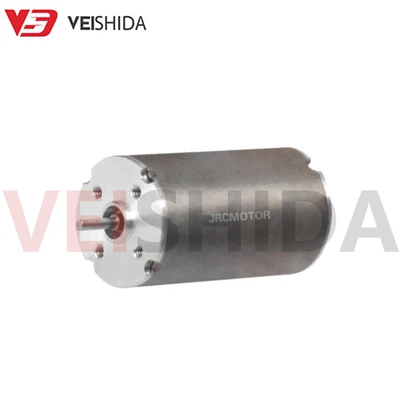
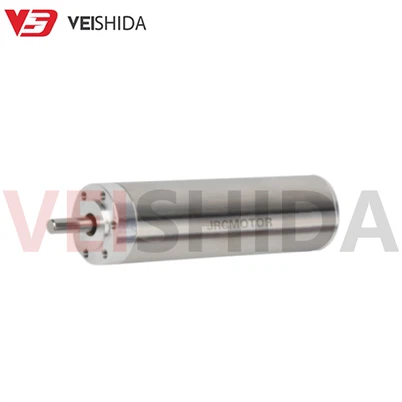
Why is this? This is mainly because the coreless DC motor is a high-performance micro motor. Its core feature is the ironless rotor structure, which enables it to show excellent performance in high-precision applications. Compared with traditional motors, the application of brushless DC coreless DC motors in the da Vinci surgical robot has the following significant advantages:
1. Ultra-low inertia, effectively achieving extremely sensitive control
The robotic arm of the da Vinci surgical robot usually needs to move precisely within millimeters, so the lower the inertia of the motor, the faster the response speed and the higher the control accuracy. The coreless motor does not have the iron core structure of the traditional motor, which greatly reduces the rotor inertia, enabling it to better achieve extremely fast acceleration and deceleration, ensuring that the surgical instrument can quickly respond to the doctor's operation. At the same time, low inertia can also reduce overshoot and lag, ensuring that every movement of the robotic arm is accurate and correct.
2. No cogging effect, ensuring smooth and fine movement
When a traditional motor is running, the magnetic field will produce a cogging effect, resulting in uneven movement, jitter, and even jamming. The coreless motor completely eliminates the cogging effect, making its operation more stable. Even at low speeds, it is still accurate and jitter-free, making it suitable for delicate operations in minimally invasive surgery. At the same time, the lack of cogging can also make the torque output more uniform, allowing doctors to have a more natural and smooth control experience when operating the da Vinci surgical robot.
3. High efficiency, low heat generation, suitable for long-term surgery
Most surgeries need to last for several hours or even longer. If the motor generates a lot of heat during this operation, it will not only affect the performance, but may also damage the precision machinery. The coreless structure of the Coreless Motor reduces eddy current loss and greatly improves the power conversion efficiency, even up to 90% or more, so that the motor can still provide strong power at low power input, greatly reducing heat generation and avoiding the decline of motor performance due to temperature increase, which affects the precision of surgical machinery.
4. Extremely low noise, creating a quieter surgical environment
The operating room environment has extremely high requirements for quietness. The quieter the environment, the more attention the doctor will pay. When the coreless motor is running, the coreless structure reduces mechanical friction and electromagnetic interference, which can greatly reduce noise, making the surgical robot quieter during surgery, thereby optimizing the doctor's operating experience.
Through the above introduction, we can clearly understand that the Coreless Motor perfectly meets the needs of high-precision surgical operations with its ultra-low inertia, high-precision control, smooth operation, high efficiency, low heat and low noise. It not only improves the flexibility and accuracy of the robot arm, but also optimizes the overall surgical environment, making minimally invasive surgery safer and more efficient.
VSD professional Coreless Motor manufacturer
VSD was founded in 2011 and has been focusing on the R&D and manufacturing of coreless motors for more than a decade. The company currently has a production base of more than 10,000 square meters, equipped with advanced automation equipment and precision testing instruments. With its deep accumulation and technological innovation in the field of motors, VSD is committed to becoming an important partner of global medical equipment manufacturers, especially in the application of minimally invasive surgical robots, relying on the excellent performance of coreless motors to help improve the accuracy, stability and safety of surgery.
VSD's coreless motors use an ironless rotor design, which significantly reduces inertia, ensuring that the robotic arm can respond to the doctor's operation more quickly and accurately. We are committed to creating low-noise, high-efficiency motors, especially for medical equipment that requires high precision and high reliability. With years of experience and strong R&D capabilities, VSD can provide customers with customized solutions to meet the motor needs of various minimally invasive surgical robots and promote technological progress and innovation in the medical industry.
VSD Coreless Motor Product Recommendations
VEC - 1218 is a high performance small Coreless Motor suitable for precision equipment and high speed applications. Its low noise, no cogging and ultra-high speed design make it an excellent choice for robots, medical instruments and precision control systems. This motor has the characteristics of low inertia and fast response. V and 24 The maximum efficiency and output power are 3.453 and 3.53V respectively. W (12 V) and 11.579 W (24 V), and the output shaft, lead wires and mounting holes can be customized according to requirements.
VEC - 1628 is widely used in high-speed precision equipment due to its ultra-high speed, low noise and no cogging. Its compact structure and fast response make it an ideal choice for optical equipment, micro pumps and medical devices. V and 24 At rated voltage V, the maximum efficiency output power is 3.453 W and 11.579 W. Supports customized speed, voltage, torque and interface design to meet application requirements in different fields.
VEC - 1630 has strong power and precision control characteristics, suitable for automation equipment, aircraft models and micro actuators. Its non-cogging design ensures smooth operation and can be V and 24 Working at rated voltage, the maximum speed is 37,411 RPM. The maximum efficiency output power is 6.619 W (12 V) and 21.153W (24 V), starting torque up to 54.614 mN.m, providing greater load capacity. Bearings, leads, installation methods and other parameters can be customized to adapt to various complex application environments.
VEC - 1657 is designed for high-precision, high-reliability applications. Its fast response, low vibration and long life make it an ideal choice for robotic joints, aerospace equipment and industrial automation systems. V and 24 At rated voltage V, the maximum efficiency output power is 6.453 W and 21.314 W, with super strong starting torque (maximum 55.259 mN.m). It supports personalized customization, including double ball bearings, output shafts of different sizes and built-in encoders to meet closed-loop control requirements.