


How Are Hub Motors Classified?
Leave a message
Reducer hub servo motors, outer rotor gearless hub motors, and outer rotor gear hub motors are the three basic categories into which robot hub motors fall. The next three hub motor types are described.
1. servo motor with reducer hub
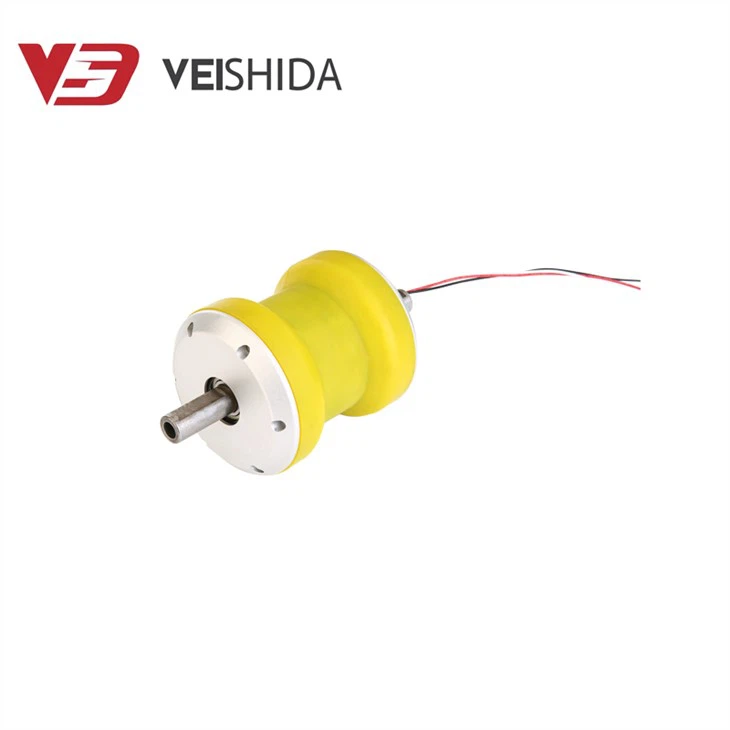
This is a typical hub motor structure; it consists of a servo motor, a planetary reducer, and a wheel assembly.Due to the reducer's presence, the in-wheel motor with this configuration can produce a huge torque steadily for a considerable amount of time, even while it is producing a lot of torque. Additionally, the reducer's visible slowing and buffering effects boost the in-wheel motor's working stability and safety. These benefits make the heavy-duty AGV market particularly suited and also help the market for heavy-duty AGVs grow quickly.
The in-wheel motor's disadvantages with this configuration, however, are also readily apparent. The current drawbacks of this in-wheel motor, which restrict the development of the AGV industry to some extent, are its complex structure, high cost, and huge size.
2. gearless outer rotor hub motor
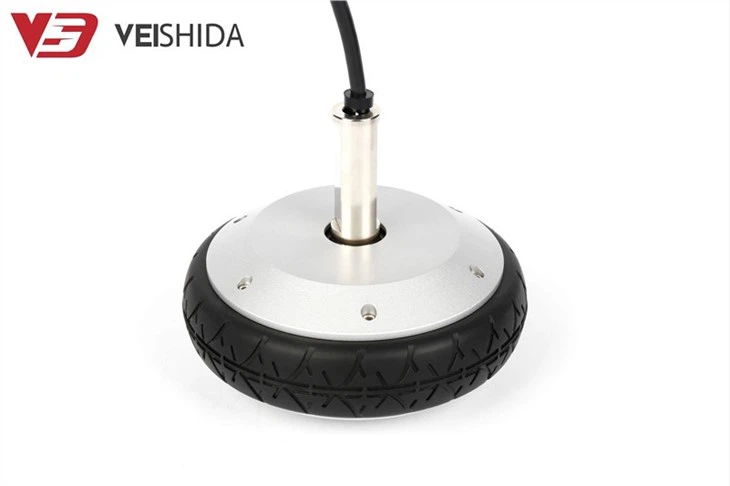
This new kind of in-wheel motor has the following basic components: a stator, an encoder, a shaft, a magnet, a steel ring, a cover, and a tire.
There are several obvious benefits to this in-wheel motor, including its small size, straightforward structure, quick power response, low cost, simple installation, etc. It is ideal for mobile robots that carry loads weighing less than 300 kg, such as robots that deliver food, clean, disinfect, and handle tiny loads. robots used for inspection, sorting, etc. This in-wheel motor can be used in a variety of settings throughout daily life.
Problems with this type of in-wheel motor are also challenging to fix. As a direct-drive in-wheel motor, which limits the design range of the torque constant due to structural factors, the motor must provide high current in order to produce high torque. The motor is susceptible to burnout because it must produce a high current to produce a high torque when it comes into contact with a robot carrying a heavy weight. The downsides of making the stator and rotor bigger and wider to accommodate the high torque output of the motor are that the motor becomes too big and heavy, the cost goes up, and the cost performance is drastically decreased, which has an impact on the application and advancement of robots.
3. There is a geared hub motor on the outer rotor.

This is a brand-new, uncommon in the industry outer rotor hub motor. An outer rotor gearless hub motor and gear (reducer) make up its fundamental construction. The gear is mounted between the motor stator and the output shaft. Increase the output torque on the shaft by reducing the speed in accordance with the reduction ratio.
It goes without saying that this structure has benefits. The development of the robot industry was greatly aided by the addition of a reducer, which increased the torque of the outer rotor hub motor and enabled it to support the application of heavy-duty robots, broaden its range of applications, and simplify the structure of the heavy-duty robot hub motor.

This type of in-wheel motor is a good development direction, but challenges like the precise coordination of the gear structure and the internal structure of the motor and the precision control of the gear structure have slowed down industry growth, which is also a very challenging


