

The Heart Of Robot Motion - The Decisive Role Of Motors in Precision
Leave a message
The "Heart" of Robot Motion: The Decisive Role of Motors in Precision
Motors as the Core Hardware Driving Robot Movement
As the source of driving torque, motors are crucial in the application of robot joints. A motor, commonly referred to as a "motor," is a device that converts or transmits electrical energy according to the law of electromagnetic induction, represented by the letter "M" in circuits. Its primary function is to generate driving torque, providing power for various electrical appliances and mechanical devices.
In the field of robotics, the joint system is a key component for achieving various movements, with joint motors considered the execution unit of the entire system. A complete robot joint typically includes a driver, controller, and joint motor. The joint motor not only needs to undertake tasks like reducing speed, transmitting, and enhancing torque, but also must control the joint's motion with high precision.
The robot joint motor directly influences complex actions such as walking, running, and jumping. It is known as the "heart" of the robot, and its performance plays a decisive role in the robot's precision and efficiency.
Coreless Motor: The Driving Force Behind Robot Joint Technology
In recent years, coreless motors have gradually become a favorite in the robotics field due to their high efficiency, lightweight, and fast response characteristics. Compared to traditional motors, coreless motors, with their rotor adopting a hollow cup structure and extremely low inertia, can respond more sensitively to control signals. This feature is ideal for robot joints, especially in scenarios that require quick and precise movements, such as humanoid robots performing subtle or complex actions.
History and Widespread Application of Motors
The history of motors dates back to the 19th century. In 1820, Danish physicist Hans Christian Ørsted discovered the magnetic effect of electric currents, laying the foundation for electromagnetic theory. The following year, British scientist Michael Faraday created the first experimental electric motor model. Since then, motor technology has continuously developed and gradually become an indispensable part of industrial production and daily life.
Traditional motors typically consist of a stator winding, a rotating armature or rotor, and other accessories. Through the rotating magnetic field generated by the stator winding, the armature produces current and rotates under the force of the magnetic field. This design principle has been carried on to this day, but new-generation motors, such as coreless motors, have made revolutionary breakthroughs in materials and structure, making them shine in robot technology.
Chart: Development History of Motors
Hans Christian Ørsted discovered the magnetic effect of electric current, laying the foundation for motor theory.
Michael Faraday discovered the principle of electromagnetic induction and proposed the basic working mechanisms of motors and generators.
Hippolyte Pixii invented the first electromagnetic generator, marking the starting point of power generation technology.
Thomas Davenport built the first practical DC motor.
Werner von Siemens invented the self-excited DC generator, greatly improving motor efficiency and stability.
Zacharias Gram developed the "Gram ring-type generator," promoting the industrial application of motors.
Nikola Tesla proposed the theory of alternating current and developed prototypes of AC generators and motors.
Nikola Tesla obtained a patent for the induction motor, which became the core technology of modern AC systems.
The appearance of variable frequency drive technology enabled flexible control of motor speed, expanding the applications of industrial motors.
The first brushless DC motor (BLDC) entered practical applications, becoming a key technology in emerging fields due to its high efficiency and long lifespan.
The first servo motor was introduced, widely applied in aerospace and high-precision industrial control.
Vector control technology brought AC motors high-precision control performance similar to that of DC motors.
Superconducting motors and magnetic levitation motor technologies developed, providing efficient solutions for high-speed trains and the energy industry.
Smart motors combined with Internet of Things (IoT) technology were widely applied in robotics, electric vehicles, and smart manufacturing.
The deep integration of motors and artificial intelligence enabled revolutionary innovations in Industry 4.0 and the new energy sector.

Diversity of Motors and the Trend of Integration
There are various types of motors that can be classified according to different dimensions, such as application range, structural characteristics, and working principles. The main classifications are as follows:
- By working power type: DC motors and AC motors.
- By structure and working principle: including DC motors, asynchronous motors, and synchronous motors.
- By application: drive motors, control motors, etc.
Taking DC motors as an example, their structure typically consists of the stator and rotor:
- Stator: The fixed part of the motor that generates the magnetic field.
- Rotor: The core component responsible for rotation and energy conversion, also called the armature, which is the power output hub of the motor.
Similar to DC motors, AC motors also consist of the stator and rotor as core components, plus the casing and other auxiliary parts. Whether DC or AC motors, the coordination of these core components determines the motor's performance.
In robot technology, coreless motors have stood out. Their unique design removes the iron core, allowing the stator and rotor to fit more lightly and compactly, which not only reduces inertia but also improves response speed and efficiency, making them perfect for high-precision, small-volume robot joints.
Integrated Motors: The Perfect Combination of Reduced Size and Enhanced Efficiency
Motors can operate as standalone components, but in many modern devices, they are often integrated with other parts to form efficient, unified systems. This integrated design not only reduces the overall size of the device but also enhances space utilization and performance. For example:
- Three-in-one electric drive: Integrating motor, reducer, and motor controller together, widely used in electric vehicles, significantly reduces the device size and weight.
- Six-in-one electric drive: Besides the motor, reducer, and controller, it includes a DC/DC converter, charger, and distribution box, further optimizing space utilization.
- Eight-in-one electric drive: Further integrates the battery management system and vehicle controller, providing a more compact and efficient solution for electric vehicles.
In the field of humanoid robots, the application of coreless motors not only realizes high-precision driving of robot joints but also promotes the lightweight and compact design of the robot structure. For instance, integrating a coreless motor with a reducer and controller can effectively reduce joint space occupation while improving the overall system's response speed and reliability.


Analysis of Common Motor Types in Robotics: DC Motors, Servo Motors, and Stepper Motors
In robotics technology, the choice of motor directly determines the performance and application effectiveness of the equipment. The motors commonly used in robots mainly include the following three types: DC motors, servo motors, and stepper motors.
3.1 DC Motors
DC motors are widely used in various fields and are mainly divided into two types: brushed DC motors and brushless DC motors.
3.1.1 Brushed DC Motors
Brushed DC motors are an earlier motor technology, with the following characteristics:
- Simple structure, low cost: Rely on the contact between brushes and rotor to achieve the commutation function.
- Low drive requirements: The motor speed is directly proportional to the applied voltage, so the control is more intuitive.
Disadvantages:
- Brush wear leads to the need for frequent maintenance.
- Electromagnetic interference is easily generated during operation, with relatively low reliability.
- Shorter lifespan, making it less attractive in robot design.
3.1.2 Brushless DC Motors
Brushless DC motors are an upgraded version of DC motors, excelling in several aspects:
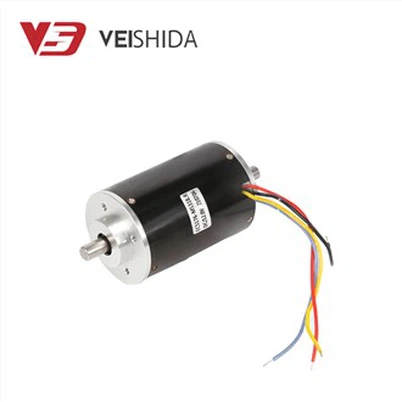
- Permanent magnet use: Durable, small in size, and relatively low cost.
- Electronic commutation: Replaces traditional brushes to achieve magnetic field switching, improving efficiency and reliability.
- Precise control: Through position feedback sensors (such as Hall sensors, optical encoders, or back EMF detection devices), brushless DC motors can control speed and position more precisely.
Although the control circuitry is more complex, brushless DC motors significantly outperform brushed motors in performance and lifespan, making them the preferred motor type for robot joint drives. Particularly, coreless brushless DC motors, with their high efficiency, low inertia, and fast response, are especially suitable for robot applications requiring high precision and lightweight design.

3.2 Servo Motors
Servo motors, also known as actuator motors, are the core execution components in automatic control systems. Their characteristics include:
- High-precision positioning: Achieves angular displacement or angular velocity output on the shaft by receiving pulse signals.
- Closed-loop control: Servo motors can send pulse signals corresponding to the rotational angle, forming a closed-loop system by combining input signals, thus achieving precise rotation control.
- DC and AC classification: Servo motors are divided into DC servo motors and AC servo motors. While there are slight differences in performance and application scenarios, both can precisely adjust speed and position based on control signals.
- The high-precision characteristics of servo motors make them widely used in precision operations of robotic end-effectors, such as robotic arms and robot fingers.

3.3 Stepper Motors
Stepper motors are open-loop control components that convert electrical pulse signals into angular displacement or linear displacement. Their characteristics include:
- Step control: Every time a pulse signal is received, the motor rotates by a fixed angle according to the set step angle.
- No need for closed-loop: Stepper motors can achieve precise angular displacement control through continuous electrical pulse signals without position feedback.
- Cost-effective: Compared to servo motors, stepper motors are less expensive and are suitable for applications with lower precision requirements.
- Stepper motors are commonly used in low-cost components in robot structures, such as simple joints, conveyor belt drives, and more.

Tesla Humanoid Robot: 28 Built-in Joint Actuators, Including Linear and Rotational Types
The Tesla Optimus humanoid robot uses 28 actuators, with 14 linear actuators and 14 rotational actuators. These actuators are responsible for supporting the robot in performing complex actions such as gait and grasping. Generally speaking, bipedal robots need to be equipped with 30 to 40 DC servo motors, which are compact in size and must meet high power, high density, and fast response requirements.
Optimus uses three types of linear actuators and three types of rotational actuators. Among them, the linear actuators include coreless torque motors and planetary roller ball screws, while the rotational actuators combine coreless torque motors and harmonic reducers. The specific distribution of actuators is as follows:
- Shoulder: 6 rotational actuators
- Elbow: 2 linear actuators
- Wrist: 2 rotational + 4 linear actuators
- Torso: 2 rotational actuators
- Hip: 4 rotational + 2 linear actuators
- Knee: 2 linear actuators
- Ankle: 4 linear actuators
This actuator distribution ensures the robot's flexibility and stability in complex environments.

Coreless Torque Motor: A Miniaturized and Highly Integrated Robotic Joint Solution
A coreless torque motor is a lightweight, high-efficiency servo motor, specifically designed for robotic joints and other precision applications. Its unique structure provides the following notable features:
- Modular design, easy to integrate: The coreless torque motor consists of a stator and rotor, without the traditional motor housing. This design allows engineers to customize the housing, bearings, and sensor components according to their needs, making it adaptable to various system structures.
- Compact size, lightweight: Compared to cased motors, the coreless motor significantly reduces overall size and weight, making it ideal for systems requiring integrated solutions.
- High performance and fast response: Due to its unique design, the coreless motor offers rapid dynamic response, meeting modern robots' high precision and energy-efficient joint motion demands.
Thanks to these characteristics, the coreless torque motor is widely used in high-performance driving fields, including robotics, automotive, aerospace, and medical equipment.

Coreless Cup Motor: The Core Component of Humanoid Robot Dexterous Hands
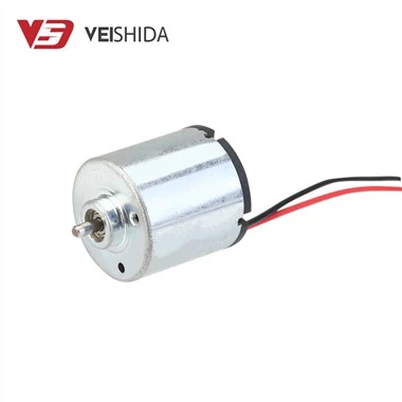
The coreless cup motor is a key component of the humanoid robot's dexterous hands, particularly suitable for finger joints in scenarios that require limited space and high precision. Finger joints typically need miniaturized motors that provide substantial force while ensuring lightweight and high precision. Leading robot manufacturers, such as Tesla, widely adopt the coreless cup motor solution, providing ideal power support for robot hand dexterity.
Core Advantages of Coreless Cup Motors
Cogging-free design, improves precision and smooth operation: The coreless cup motor adopts a coreless, cogging-free design, completely eliminating the vibration and noise caused by the cogging effect seen in traditional motors. This characteristic significantly improves the smoothness of motor operation, making it exceptionally suited for high-precision motion control in humanoid robot finger joints.
High efficiency and fast response: The coreless cup motor breaks through the traditional iron-core motor structure by adopting a coreless rotor design, greatly reducing eddy current losses and improving motor efficiency. Meanwhile, the rotor's lightweight feature gives it excellent start-up and braking abilities, offering dynamic response performance that meets the precise demands of complex actions.
Energy-saving and reliability: By eliminating energy loss found in iron-core motors, the coreless cup motor demonstrates exceptional energy-saving performance. Additionally, its simplified structure reduces mechanical friction, further enhancing lifespan and reliability, ensuring stable performance even under high-frequency operations.
Flexible application in miniaturized scenarios: With its compact size and lightweight design, the coreless cup motor is ideal for miniature motion units such as finger and wrist joints in humanoid robots. Furthermore, its cogging-free design and high efficiency make it widely applicable in fields like medical equipment, precision instruments, and aerospace.
Technological Development and Future Prospects
The coreless cup motor, integrating energy efficiency, high precision, and stability, represents a high-performance energy conversion device. As robotics technology continues to advance, the coreless cup motor will further optimize power output and volume ratio, pushing the humanoid robot's dexterous hands into more efficient applications across diverse scenarios.

Continue reading: Why Humanoid Robots Open A New Blue Ocean For Coreless Motor Applications - Part 1