

Coreless motors: ideal drive solutions for minimally invasive surgical instruments
Leave a message
With the continuous advancement of medical technology, minimally invasive surgery has become an important development direction of modern surgery. Compared with traditional open surgery, minimally invasive surgery completes complex operations through tiny incisions, reduces tissue trauma, postoperative pain and recovery time, and greatly improves the safety of surgery and the comfort of patients. Behind this technological innovation, high-performance minimally invasive surgical instruments play a vital role. They not only improve the accuracy of doctors' operations, but also make more complex and delicate operations possible.
However, to create an ideal minimally invasive surgical instrument, it is not enough to rely solely on a precise mechanical structure. An efficient and stable motor drive system is its core power. Whether it is a surgical robot, laparoscopic instrument, or a high-precision scalpel or electric stapler, the motor drive system directly affects the precise control, stability, low noise, low heat generation, and intelligent feedback capabilities of the equipment. This article will explore in depth the importance of minimally invasive surgical instruments, their high requirements for technical performance, and how the motor drive system plays a key role in it, promoting the technological innovation and application development of minimally invasive surgery.
How Minimally Invasive Surgical Instruments Are Changing Surgery
With the continuous advancement of medical technology, minimally invasive surgery has become an important development direction of modern surgery. Compared with traditional open surgery, minimally invasive surgery is performed through tiny incisions or natural cavities, with the help of precision instruments and image guidance, which greatly reduces surgical trauma and improves the patient's postoperative recovery speed. In this medical revolution, minimally invasive surgical instruments play a vital role. They not only help doctors complete high-precision operations, but also greatly improve the safety and success rate of surgery.
Minimally invasive surgical instruments are easy to understand. They are precision medical tools specifically used for minimally invasive surgery. They are usually small, precisely controlled, and highly flexible. These instruments can perform a variety of complex operations such as cutting, suturing, clamping, and hemostasis in a limited surgical space. Depending on their use, minimally invasive surgical instruments can be divided into the following categories:
Laparoscopic Instruments
Representative equipment: Laparoscope, thoracoscope, arthroscopy, etc.
Main function: With the help of optical systems and micro tools, doctors operate instruments through small incisions and complete surgeries inside the body, such as gallbladder removal and gastrointestinal surgery.
Robotic Surgical Instruments
Representative equipment: Da Vinci surgical robot, etc.
Main functions: Through robotic arms, high-definition imaging and remote control technology, doctors can perform more complex surgeries with higher precision, such as heart surgery, urology surgery, etc.
Endovascular Instruments
Representative equipment: catheters, stent delivery systems, balloon dilators, etc.
Main function: Used for the treatment of vascular diseases, such as heart stent implantation, vascular occlusion treatment, etc., to avoid open chest or craniotomy.
Ultrasound & Laser Surgical Instruments
Representative equipment: ultrasonic knife, electrocoagulation knife, laser cutting knife, etc.
Main function: Through energy drive, it can achieve non-invasive or minimally invasive cutting, and is widely used in ophthalmology, otolaryngology, tumor treatment and other fields.
Neurosurgery and Microsurgical Instruments
Representative equipment: microsurgical scissors, microtweezers, precision electric suture device, etc.
Main functions: Perform precise operations on extremely fine anatomical structures (such as nerves and blood vessels), mainly used in neurosurgery, ophthalmology, plastic surgery and other fields.
The significance of minimally invasive surgical instruments to doctors and patients
For doctors, minimally invasive surgical instruments have greatly improved the accuracy and controllability of surgery. With the help of high-precision drive systems, image navigation and flexible operating terminals, doctors can complete operations in a small space, reduce tissue damage and improve the success rate of surgery. In this process, doctors can also greatly reduce physical and mental energy consumption, reduce fatigue during surgery, and improve the stability of long-term delicate operations, thereby improving the overall quality of surgery.
For patients, the use of minimally invasive surgical instruments means less surgical trauma, faster recovery and lower postoperative risks. Compared with traditional open surgery, minimally invasive surgery usually only requires a few millimeters of incision, significantly reducing postoperative pain, bleeding and infection risks, and patients can return to normal life earlier. In addition, the refined treatment of tissues during surgery can also reduce scar formation, which is especially advantageous in the fields of plastic surgery and cosmetic surgery.
How micromotor drive systems support the development of minimally invasive surgical instruments
Through understanding, we know that the invention and development of minimally invasive surgical instruments have greatly changed the way modern surgical procedures are performed, enabling doctors to perform more precise and safer operations, while also allowing patients to recover faster, with less postoperative pain and lower risk of complications. To achieve these high-demand minimally invasive surgeries, surgical instruments must have high precision, strong stability, flexible operation, low noise, low heat generation and other characteristics, and these core characteristics are largely inseparable from the support of high-performance motor drive systems.
1. Provide high-precision control to ensure surgical accuracy
Minimally invasive surgery is usually performed in a small surgical space, and any slight deviation may affect the surgical effect. High-performance motor drive systems make the movement of surgical instruments more stable and less error-prone through precise speed control, torque regulation, and position feedback. For example, in robot-assisted surgery, the motor drive system can ensure that the movement error of the robotic arm is controlled at the micron level, thereby achieving ultra-fine tissue cutting and suturing.
2. Maintain stability and reduce vibration during surgery
During surgery, the shaking or vibration of the instrument may affect the quality of the surgery and even cause tissue damage. High-quality motor drive systems use low-vibration and low-friction designs to ensure that the instrument operates smoothly. For example, surgical instruments equipped with high-performance brushless motors can provide sufficient power while reducing vibration, improving the doctor's operating stability and making delicate operations safer and more reliable.
3. Low noise operation, optimized surgical environment
The operating room environment needs to be as quiet as possible so that doctors can focus on the operation and avoid external interference. High-efficiency motor drive systems usually adopt low-noise design. By optimizing the magnetic circuit structure and drive control algorithm, the noise during motor operation can be effectively reduced, making the operation more focused and efficient, especially suitable for long and complex operations.
4. Efficient energy conversion, reducing heat and power consumption
During a long operation, excessive heat generation from the motor may affect the performance of the instrument and even the accuracy of the surgery. Therefore, the motor drive system of minimally invasive surgical instruments must have high energy efficiency, low power consumption, and good heat dissipation performance to ensure that the equipment remains stable during long-term operation. For example, motors with efficient electromagnetic structures and advanced control algorithms can reduce energy loss and improve overall energy efficiency, thereby extending the continuous working time of the equipment and reducing the impact of intraoperative temperature on surgical results.
5. Achieve flexible driving to meet complex operation requirements
Minimally invasive surgical instruments usually need to perform multi-degree-of-freedom movements, such as rotation, propulsion, clamping, cutting, etc., and these movements require precise coordination. The motor drive system can achieve precise control of multiple movements through servo control, high-precision encoder feedback, etc. For example, in laparoscopic surgery, the motor-driven micro-robotic arm can freely adjust the angle in a small space to ensure that the surgical instrument can smoothly enter the target area and perform the operation.
Coreless motors: ideal drive solutions for minimally invasive surgical instruments
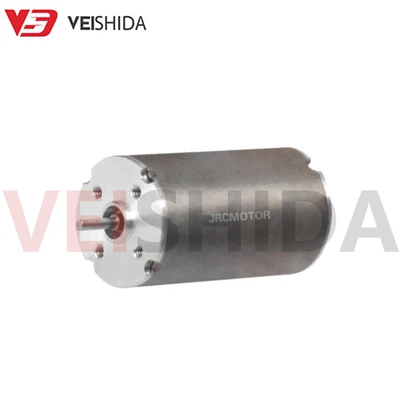
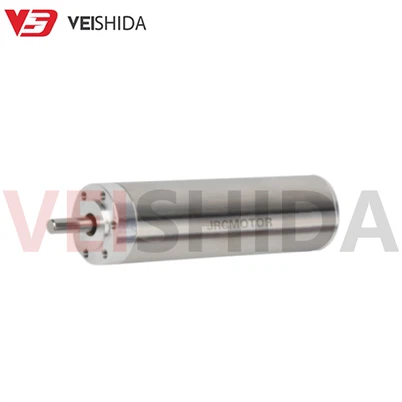
Under the high precision, high stability and low power consumption requirements of minimally invasive surgical instruments, coreless motors have gradually become the preferred drive solution in this field due to their advantages of low inertia, high response, low vibration, low noise and high energy efficiency. With the continuous maturity of winding technology and the reduction of manufacturing costs, the application scope of coreless motors is also expanding. Its performance in minimally invasive surgical instruments is far superior to that of traditional motors, providing reliable support for the further development of medical technology.
1. High precision and sensitive response
Minimally invasive surgery requires extremely high precision of surgical instruments, and any slight error may affect the surgical effect. Compared with traditional motors, coreless motors have no core structure and extremely small rotor inertia, which can achieve a response speed of milliseconds, ensuring that doctors can obtain real-time feedback during operation and accurately control the movement trajectory of surgical instruments. For example, in neurosurgery and ophthalmic surgery, doctors need extremely small hand movements to operate instruments, and coreless motors can provide dynamic responses with almost zero delay, making doctors' surgical operations more handy.
2. Low vibration and low noise
Vibration and noise during surgery not only affect the doctor's concentration, but may also affect surgical accuracy. Traditional brushed motors are prone to noise and vibration due to mechanical friction during commutation, while coreless motors use a coreless winding design, have no cogging effect during operation, and have almost no vibration and noise, allowing doctors to perform delicate operations in a quiet and stable environment. For example, in laparoscopic surgical instruments, coreless motors can control the vibration of the instrument head to the micron level to prevent tissue damage caused by vibration.
3. High energy efficiency and low heat generation to ensure stability during long-term surgery
Minimally invasive surgeries usually last a long time. If the drive motor has low energy efficiency and high heat generation, it may affect the performance of surgical instruments and even the progress of the operation. The Coreless Motor adopts a high-efficiency electromagnetic design with an energy conversion efficiency of up to 85% - 90%. It not only reduces energy consumption, but also greatly reduces the heat generated by the motor during operation, ensuring that the equipment can remain stable during long-term operation. For example, in a robot-assisted surgery system, multiple robotic arms work at the same time, requiring the motor to run for a long time, while the Coreless Motor can maintain low temperature operation to avoid affecting the surgical accuracy due to overheating.
4. Lightweight and flexibility
Minimally invasive surgical instruments need to be small, lightweight, and have a high degree of freedom to adapt to the complex surgical environment inside the human body. Due to the limitations of the internal iron core, traditional motors are large in size and heavy in weight, which is not conducive to the flexible design of minimally invasive surgical instruments. The Coreless Motor adopts an ultra-lightweight structure, small in size and light in weight, and can be integrated into the narrow interior of surgical instruments. At the same time, it supports multi-degree-of-freedom movement for more flexible control. For example, in surgical equipment such as laparoscopes and arthroscopy, Coreless Motors can drive precision micro-robotic arms to achieve flexible rotation and propulsion in a limited space, improving the operability of surgical instruments.
5. High reliability and long life
Surgical instruments need to be highly reliable to reduce equipment maintenance costs and ensure surgical safety. Traditional brushed motors have a short life due to carbon brush wear, which can easily affect the long-term use of the equipment. The coreless motor uses a brushless design to reduce mechanical wear, greatly improve the life and reliability of the motor, and avoid performance degradation caused by carbon brush wear, ensuring that surgical equipment remains stable for a long time. For example, in surgical robots and implantable medical devices, coreless motors can provide stable long-term operation capabilities and reduce the risk of equipment failure affecting the progress of surgery.
In the future, with the continuous innovation of technology, higher requirements will be placed on the accuracy, stability, low noise, low power consumption and flexibility of surgical instruments. Coreless Motors will play a more important role in minimally invasive surgical instruments, helping medical technology to move to a higher level.
Professional Coreless Motor manufacturer
VSD has been deeply involved in the Coreless Motor industry for more than ten years. With its excellent R&D strength and manufacturing technology, it has developed into a leading micromotor manufacturer in the industry. We have a modern factory of over 10,000 square meters, with more than 30 professional R&D personnel, more than 40 assembly lines, more than 300 automated equipment, and more than 500 experienced front-line employees to ensure the high quality output of each product.
In order to meet the needs of higher precision control, VSD provides solutions that can integrate planetary gearboxes or magnetic encoders, allowing Coreless Motors to show better performance in the fields of precision medicine, robotics, etc. In addition, our products have passed ISO, CE and other international certifications, and the quality is trustworthy.
If you are interested in our products, please feel free to contact us, or even come to China to visit our factory and learn more about how VSD can help your application needs!
VSD's coreless motor product recommendation:
VEC - 1218 is known for its ultra-high speed, low inertia and fast response, and is suitable for precision medical equipment, micro-robots and other fields. The non-cogging design ensures smooth operation, supports 12 V and 24 V voltage, and can customize speed, torque, output shaft, etc. to meet diverse needs.
VEC - 1336 has excellent power performance, up to 42,500 rpm, and maintains low noise and vibration. The high-efficiency and energy-saving design is suitable for high-speed driving scenarios, such as drones, experimental instruments, etc. It supports personalized customization to optimize application effects.
VEC - 1628 combines high precision and high speed, suitable for automation instruments, optical systems, etc. No cogging effect brings smooth operation, supports 12 V and 24 V specifications, and can customize voltage, torque, output shaft, etc. to meet the needs of different equipment.
VEC - 1630 adopts lightweight design and has a maximum speed of 37,411 rpm, which is suitable for industrial automation, precision measurement equipment, etc. High-quality materials and ball bearings increase service life and support customized voltage, speed and installation method.
VEC - 1657 has high torque, low noise and fast response characteristics, and is widely used in robot joints, power tools, etc. It supports customized bearings, interfaces, encoders, etc. to optimize performance and meet professional application requirements.