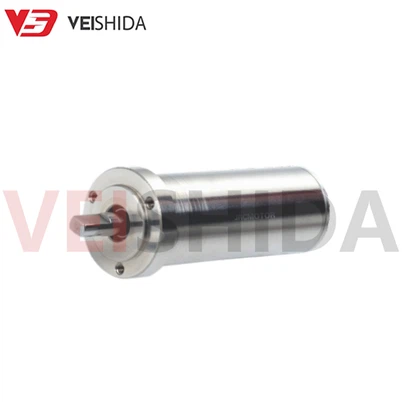


Coreless Motor: Ideal Drive For Precision Medicine
Leave a message
In the modern medical field, surgical navigation systems have become a key technology to improve surgical accuracy and safety, and are widely used in high-precision medical scenarios such as neurosurgery, orthopedics, and minimally invasive surgery. By combining medical imaging, computer-aided technology, and real-time positioning systems, surgical navigation can help doctors accurately plan and execute surgical paths, reduce errors, and improve success rates. However, the efficient operation of this system is inseparable from a precise motor drive system, which determines the stability, response speed, and control accuracy of the navigation equipment.
Among the many types of motors, coreless motors have become an ideal drive solution for surgical navigation systems due to their zero cogging, low inertia, and high precision. Compared with traditional motors, coreless motors can provide smoother motion control, faster response speed, and lower energy consumption, ensuring precise positioning and smooth operation of equipment during surgery. This article will explore the core working principles of surgical navigation systems, analyze how motor drive affects navigation performance, and deeply analyze how coreless motors can help precision medicine.
Surgical navigation system: making surgery more precise and safer
With the development of medical technology, modern surgery has higher and higher requirements for precision and minimally invasive surgery. Traditional surgical methods rely on the doctor's experience and feel, but when faced with complex tissue structures, narrow surgical spaces or high-risk areas, it is difficult to meet the needs of high-precision surgery with the naked eye and preoperative images alone. However, with the emergence of surgical navigation systems, the accuracy, visualization and safety of surgery have been greatly improved, becoming an important auxiliary tool for surgeons.
The surgical navigation system is a high-precision guidance tool that integrates real-time imaging and computer technology. It can accurately locate and navigate according to the patient's anatomical structure. This system combines real-time images (such as CT, MRI, X-ray, etc.) with computer systems to help doctors accurately locate the treatment area, ensure high accuracy during surgery or treatment, and avoid damage to surrounding healthy tissues.
Surgical navigation systems are widely used in surgical operations, especially in operations that require high precision and safety, such as neurosurgery and cardiac surgery. It can help doctors to have a clear idea of what to do and reduce mistakes during surgery by simulating the operation on the computer before the operation. In addition, surgical navigation systems can also be used to train young doctors and classroom teaching in medical schools to improve doctors' surgical skills and accuracy.
Advantages of surgical navigation systems
Compared with traditional surgical methods, surgical navigation systems have the following advantages:
Precise positioning: The surgical navigation system combines real-time imaging and computer technology to enable doctors to accurately locate lesions or treatment areas, with errors reduced to millimeter level, greatly improving the accuracy and success rate of surgery.
Reduce trauma: Since the surgical navigation system can perform preoperative planning in a virtual environment, doctors can choose the surgical path more accurately and reduce damage to healthy tissues, which has significant advantages in minimally invasive surgery. This can not only reduce the patient's pain, but also speed up postoperative recovery.
Improve surgical safety: By real-time monitoring and tracking the position of tools during surgery, surgical navigation systems help doctors avoid important nerves, blood vessels and other critical structures during complex operations, thereby reducing surgical risks and the chance of complications.
Combination of preoperative planning and intraoperative adjustment: The surgical navigation system can not only help doctors make detailed preoperative plans, but also adjust and optimize surgical strategies in real time during the operation. Doctors can make more accurate decisions based on the feedback and real-time images provided by the system.
Improve surgical visualization: The surgical navigation system can connect three-dimensional images with the surgical site in real time, providing all-round visualization support to help doctors observe and judge from multiple angles to ensure the accuracy of the surgical path.
Enhance doctors' confidence and improve their skills: Through high-precision navigation guidance, doctors can be more confident during surgery, especially when facing complex surgeries. The auxiliary functions provided by the system can help reduce surgical anxiety and uncertainty in decision-making. In addition, the surgical navigation system can also be used as a training tool for doctors to help novice doctors quickly improve their skills.
Motor drive system for surgical navigation system
The high-precision performance of surgical navigation systems not only relies on medical imaging technology and computer processing capabilities, but is also closely related to its internal motor drive system. The motor drive system is one of the core components of the entire navigation system, which is responsible for driving the movement of the equipment and ensuring precise control during all operations.
The role of the motor drive system in surgical navigation is crucial, mainly reflected in the following aspects:
1. Precise control and stability
The motor drive system in the surgical navigation system ensures the stable operation of the equipment during surgery through precise motion control technology. Whether it is a robotic arm, laser guidance device, or image display system, the motor system is required to provide precise motion control to ensure that the positioning of the treatment area and the operation of surgical tools can achieve millimeter-level accuracy.
2. Response speed and real-time performance
During surgery, the navigation system needs real-time feedback and adjustments. The response speed of the motor drive system directly affects the real-time positioning capability of the device. A highly responsive motor drive system can quickly track and correct any minor errors, ensuring that the navigation device always remains in the best position during surgery.
3. Fine movement and low noise
During surgery, any additional vibration or noise may interfere with the doctor's judgment or affect the patient's condition. Therefore, the motor drive system must have the characteristics of high-precision motion control and low-noise operation. As a typical drive solution, the coreless motor provides ideal power support for surgical navigation with its low inertia, no cogging effect and high response speed, ensuring smooth operation and quiet operation of the equipment during surgery.
4. High performance and low energy consumption
The high efficiency and low energy consumption of surgical navigation equipment are also affected by the motor drive system. The coreless motor, with its simple structure and high power density, consumes less electricity while providing precise control, which helps to extend the service life of the equipment and reduce maintenance costs.
5. Multi-degree-of-freedom control
Modern surgical navigation systems increasingly use robot-assisted technology, which requires motor drive systems to support multi-degree-of-freedom motion control. The precise control and flexibility of surgical robots largely rely on efficient and reliable motor drive systems to ensure that the robots can accurately perform complex surgical actions, such as minimally invasive cutting, positioning and insertion of treatment tools.
Coreless Motor: Ideal Drive for Precision Medicine
From the above introduction, we can know that the motor drive system plays an indispensable role in the surgical navigation system, which determines the motion accuracy, response speed and stability of the entire navigation system. With the advancement of medical technology and the increase in surgical precision requirements, motor drive technology has also continued to develop. In recent years, as people pay more and more attention to Coreless Motors, their manufacturing technology has also developed rapidly, and has gradually become an ideal motor drive solution in surgical navigation systems.
Compared with traditional motors, Coreless Motors have many significant advantages, enabling them to perform better in high-precision medical equipment.
1. Zero cogging effect, reducing vibration and noise
Traditional motors, especially brushed motors, often have cogging, which causes the motor to generate large vibrations and noise during operation. During surgery, any additional vibrations and noise may affect the doctor's operating accuracy and even interfere with the patient's condition. The coreless motor adopts a brushless design to avoid the cogging effect, provide smooth motion control, and greatly reduce noise and vibration. In this way, the surgical navigation system can operate in a quiet and stable environment, improving the accuracy and safety of surgery.
2. Low inertia and high response speed
The coreless motor has a very low inertia due to its unique structure, which means it can respond quickly to control commands and adjust position quickly. In contrast, traditional motors, especially brushed motors, have a slow response speed due to the friction and inertia of internal components and cannot meet the needs of high-precision, real-time adjustment. In surgical navigation systems, this fast response is critical to maintaining the precise positioning of the equipment, and the advantages of coreless motors are particularly prominent in this regard. It ensures that during surgery, the navigation system can quickly and accurately adjust its positioning to avoid any risks caused by minor errors.
3. Higher precision and controllability
The Coreless Motor adopts a unique brushless design and a high-precision electronic control system to provide more precise motion control. Compared with traditional motors, Coreless Motors can better achieve small motion adjustments, which is particularly important for delicate operations in surgical navigation. Especially when performing neurosurgery, ophthalmology or other surgeries that require extremely high precision, Coreless Motors can ensure the precise guidance of the equipment in minimally invasive surgery and minimize damage to surrounding tissues.
4. Energy saving and extending equipment life
Coreless motors also have advantages in terms of energy efficiency. Due to their brushless design and efficient power transmission, coreless motors can provide the same or even stronger power at lower power consumption, extending the working time of the equipment. In contrast, traditional motors have low energy efficiency and are prone to heat generation due to the friction between the brushes and the commutator, which will affect the stability and life of the equipment. The high efficiency and low heat characteristics of coreless motors make them more suitable for long-term precision operations, ensuring that the surgical navigation system can maintain efficient and stable operation during the operation.
5. More compact and lightweight
The structure of the Coreless Motor is relatively simple and compact, which makes it better adapted to the strict requirements of device size and weight in surgical navigation systems. Traditional motors are usually bulky because they require more parts, which has a certain impact on the flexibility and convenience of surgical equipment. The Coreless Motor provides a smaller and lighter design, which helps to ensure the flexible operation of the equipment during surgery, especially when the surgery needs to be performed in a small space, the Coreless Motor can provide higher flexibility and convenience.
Professional Coreless Motor manufacturer
Since its establishment in 2011, VSD has been committed to the research and development and manufacturing of Coreless Motors. With its outstanding technical accumulation and innovation, it has become a global leading motor solution provider. The company has more than 30 R&D personnel, more than 40 assembly lines, and more than 300 automated equipment to ensure that each motor product can meet high standards of precision and stability. VSD's daily output exceeds 200,000 units, which can meet the global market demand for high-precision motors, especially in the medical field. With ISO 9001:2015, IATF16949:2016, ISO14000 and other quality management system certifications, VSD has laid a solid foundation for providing customers with reliable and high-quality products, ensuring that Coreless Motors can operate stably in high-intensity medical environments and support the accuracy and safety of surgical navigation systems.
VSD's coreless motors are used in surgical navigation systems, and have become the first choice for medical device manufacturers due to their zero cogging, low inertia, and high-precision design. Traditional motors often have problems with slow response and instability in fine motion control, but VSD's coreless motors solve this pain point with their excellent motion accuracy and fast response capabilities. Our products have been exported to Europe, America, Southeast Asia and other countries and regions, providing high-quality drive systems for the global medical industry to ensure precise guidance of surgical navigation systems in complex operations.
Product recommendations for VSD Coreless Cup
The VEC - 1015 coreless motor features ultra - high speed and low noise for high - precision, fast - response applications. Its compact design of 10 mm diameter and 15 mm length, low inertia and no cogging provide smooth and efficient operation. It has a wide voltage range (4.2 V to 16 V) and supports customized speed, torque and other parameters to meet different needs.
The VEC - 1218 coreless motor has a compact design and provides a maximum no - load speed of 30080 rpm, suitable for applications with high speed requirements. It has the advantages of low noise, low inertia and ultra - high speed, and can achieve a maximum output power of 3.45 W under high efficiency, suitable for a wide range of precision drive systems. The output shaft, lead wire and speed can be customized to flexibly adapt to different working conditions.
The VEC - 1630 coreless motor provides high efficiency and fast response, with low noise and low vibration, suitable for industrial and high - end consumer devices. Its 16 mm diameter and 30 mm length design provides strong starting torque and a maximum output power of 21.15 W, suitable for high - load operating environments. It supports customized speed, torque and voltage to meet personalized needs.
The VEC - 4035 coreless motor is suitable for applications requiring fast response and high - precision control due to its strong starting torque and high efficiency. The motor has a maximum power of 213 W and has the advantages of low vibration, low noise and long life. Its lightweight design and diverse customization options (such as double ball bearings or built - in encoders) make it an ideal choice for many high - end industries.
The VEC - 1656SI coreless motor combines excellent torque and low noise performance, with a maximum output power of 76.29 W, suitable for high - precision drive applications. It is designed with fast response, low vibration, long life, and uses high - quality ball bearings to improve its durability and efficiency. Customizable options enable it to adapt to a variety of special needs.
VEC - 20 Series Coreless Motors
VEC - 20 series Coreless Motors provide a variety of rated voltage, torque and speed options to meet the needs of medium and high power to high precision applications. They are particularly suitable for use in environments requiring high speed and low noise, and are widely used in robots, drones and other fields. The motors can be customized according to customer needs in terms of speed, voltage, torque and other parameters to ensure optimal performance and adaptability.