

Motor systems in CO₂ laser systems: Advantages of coreless servo motors
Leave a message
As a high-power gas laser technology, CO₂ laser is widely used in industrial processing, medical cosmetology and scientific research. Its high energy conversion efficiency and good material adaptability make it an ideal choice for non-metal cutting, engraving and marking.
In CO₂ laser equipment, the galvanometer scanning system and the optical focusing system are key components that determine processing accuracy and efficiency. The galvanometer scanning system achieves precise beam positioning by adjusting the direction of the laser beam at high speed, while the optical focusing system is responsible for optimizing the beam energy density and improving cutting and engraving effects.
In order to ensure the high-speed, accurate and stable operation of these two systems, the motor system used must have the characteristics of high dynamic response, low inertia, high precision and low noise. Especially in high-end CO₂ laser equipment, the quality of motor performance directly determines the overall processing quality and system life.
This article will explore the basic principles, application areas, and core features of CO₂ lasers, and focus on analyzing the role of the galvanometer scanning system and the optical focusing system. Finally, it will discuss the motor system requirements required to ensure the excellent performance of the overall equipment.
What is CO₂ laser
CO₂ laser is a gas laser based on carbon dioxide gas as the working medium, which can produce far-infrared light with a wavelength of 10.6μm. Due to its high power density and stable laser output, CO₂ laser is widely used in precision cutting, engraving, welding and marking. Compared with other types of lasers, CO₂ laser has higher energy conversion efficiency, with a typical efficiency of 15%-20%, providing an efficient and economical solution for industrial processing.
Efficient tools for industrial manufacturing
In the field of industrial manufacturing, CO₂ laser has become the preferred technology for cutting, engraving, welding and marking due to its excellent absorption characteristics for non-metallic materials. It can accurately cut materials such as plastic, wood, leather, glass, rubber, etc., and is widely used in electronic product housings, handicrafts, packaging industries and other fields for fine engraving and marking. In addition, CO₂ laser is also used for welding thin-walled metals and precision component packaging in electronic manufacturing and micromachining.
Innovation in the medical and aesthetic fields
CO₂ lasers are also widely used in the medical and cosmetic fields. Due to its precise thermal effect, CO₂ fractional lasers are widely used in skin rejuvenation, scar repair, wrinkle reduction and pigmentation improvement, and have become one of the core technologies of modern medical and aesthetic equipment. At the same time, CO₂ lasers are gradually replacing traditional scalpels in ophthalmology, dentistry and soft tissue cutting surgeries with their advantages of precise control, less trauma and faster recovery, providing patients with safer and more effective treatment options.
Scientific research and special applications
In addition to the industrial and medical fields, CO₂ lasers also play an important role in scientific research, spectral analysis, military and security technology. It is widely used in material research, infrared detection, spectral detection, and even in the military in high-precision fields such as target positioning and long-distance ranging. With its unique optical properties and stable output performance, CO₂ lasers have promoted technological innovation and progress in many industries.
Features of CO₂ laser
Far infrared wavelength (10.6μm)
The wavelength of CO₂ laser is in the far infrared region and can be efficiently absorbed by most non-metallic materials (such as plastic, wood, leather, ceramics, and glass). Therefore, it is particularly suitable for the processing of non-metallic materials.
Continuous wave (CW) and pulse modes
CO₂ lasers can operate in continuous output (CW) mode, which is suitable for long-term, high-intensity cutting and welding; or in pulsed mode, which is suitable for fine engraving and medical applications such as fractional laser beauty.
High power density
CO₂ lasers can generate power from tens of watts to thousands of watts, suitable for processing applications of different sizes. Low power is used for engraving and marking, and high power is used for cutting and welding.
The heat affected zone (HAZ) is relatively small
Although CO₂ laser is a thermal processing technology, through a reasonable optical focusing system, the spot size can be reduced to tens of microns, reducing the heat affected zone (HAZ), thereby ensuring high-precision processing and reducing material deformation.
High energy conversion efficiency
CO₂ lasers have a typical energy conversion efficiency of 15%-20%, which is higher than other gas lasers (such as helium-neon lasers), so the operating cost is lower.
Gas discharge excitation, long device life
CO₂ lasers use gas discharge excitation, and the life of key components such as discharge tubes and optical elements can usually reach thousands to tens of thousands of hours, making them suitable for long-term industrial use.
The role of galvanometer scanning system and optical focusing system in CO₂ laser equipment
Through a brief introduction, we have some understanding of CO₂ laser equipment. In CO₂ laser equipment, there are two systems, namely the galvanometer scanning system and the optical focusing system. They are the core components to ensure processing accuracy and efficiency, and directly affect the positioning, movement and focusing of the laser beam, thereby affecting the final processing quality. The following is an introduction to the role of these two systems in CO₂ laser equipment:
1. Galvanometer scanning system
The main function of the galvanometer scanning system is to achieve high-speed scanning by adjusting the direction of the laser beam. This system consists of a pair of high-speed galvanometers (mirror reflectors) and a motor that drives these galvanometers. Its role is specifically reflected in the following aspects:
Laser beam orientation and positioning
The galvanometer scanning system enables the CO₂ laser beam to be precisely positioned within the work area and moved quickly along a preset path. This is particularly important for applications such as precision cutting, engraving and marking, as it allows for precise control of the laser spot's scanning trajectory on the material surface.
Increase processing speed
The galvanometer scanning system can quickly adjust the direction of the laser beam, enabling it to efficiently cover a wide processing area. This greatly increases processing speed, especially when processing large-area workpieces, which can reduce working time and production costs.
Improve machining accuracy
The high-precision control of the galvanometer system ensures that the laser beam is scanned within a very small error range, ensuring that the details of the processing can be accurately presented, which is especially important in fine engraving and marking.
Reduce the complexity of mechanical movement
Compared with the traditional mechanical moving workbench, the galvanometer scanning system adjusts the light beam direction through the reflection of the mirror, reducing complex mechanical movements and moving parts, which reduces mechanical friction, extends equipment life, and improves system stability.
2. Optical focusing system
The core function of the optical focusing system is to focus the laser beam into a very small spot through the lens to increase the energy density of the laser so that it can effectively cut or engrave materials. The functions of the optical focusing system in CO₂ laser equipment include:
Increasing the energy density of the laser beam
The laser is focused through the lens of the optical focusing system, which can reduce the laser spot to a size of tens of microns, thereby greatly increasing the laser energy density per unit area. This high energy density enables the laser to easily penetrate and cut thicker materials, especially in the processing of metals and certain hard materials, where the optical focusing system plays a vital role.
Optimize cutting and engraving results
Through precise focusing, the laser can maintain a stable spot size and shape during processing, thereby ensuring the accuracy of cutting and engraving. This not only reduces material waste, but also ensures the processing accuracy and surface quality of the workpiece.
Reduce heat affected zone (HAZ)
The optical focusing system can focus the laser on the material surface or processing area, reduce the heat diffusion to the surrounding area, and thus reduce the heat affected zone (HAZ). This is crucial for some materials that are sensitive to thermal deformation, especially the processing of thin films and tiny parts.
Improve precision processing capabilities
The focusing system allows the spot size to be finer and adapt to various precision applications. Whether it is micron-level engraving or extremely small text marking, the optical focusing system can provide extremely high processing accuracy to meet high-end industrial needs.
Through the combination of these two systems, CO₂ laser equipment can provide efficient and precise processing capabilities in different application scenarios. The galvanometer system ensures fast response and precise control during the processing through high-speed scanning and precise positioning; while the optical focusing system improves the laser energy density and optimizes the cutting and engraving effects through fine focusing. The two systems work together to ensure the excellent performance of CO₂ laser equipment in various industries.
Motor system to ensure the performance of galvanometer scanning and optical focusing system
We already know the key role of galvanometer scanning and optical focusing systems in CO₂ laser equipment. Their efficient operation is the core to ensure processing accuracy and speed. In order to give full play to the performance of these two systems, the selection and design of the motor system is crucial. The stability, accuracy and response speed of the galvanometer scanning and optical focusing systems are closely related to the performance of the motor system. So, what characteristics does the motor system need to have to ensure the efficient operation of the galvanometer scanning and optical focusing systems?
High precision and stability
The galvanometer scanning system relies on the motor to accurately control the movement of the galvanometer. To achieve this, the motor needs to have extremely high precision and stability, and be able to respond quickly in a very short time to ensure accurate scanning of the laser beam. Especially in high-precision engraving and marking applications, any slight deviation may lead to product defects, so the accuracy of the motor directly affects the processing quality.
High response speed
In galvanometer scanning and optical focusing systems, the motor needs to respond quickly to control signals and quickly adjust the position of the galvanometer or optical element to achieve precise positioning and focusing of the laser. In order to achieve faster response speed, the motor should have low inertia characteristics, which enables the galvanometer and optical elements to accelerate and decelerate faster. Especially in high-frequency switching and adjustment, low-inertia motors can achieve fast and precise movement.
At the same time, the motor system also needs to support real-time control to ensure that it can react instantly when the laser beam changes, avoiding any delays. This is crucial for dynamically adjusting the laser focus and path.
Smooth operation and low noise
In high-precision laser processing, any mechanical vibration or noise will affect the performance of the galvanometer scanning system and the optical focusing system. Therefore, the smooth operation of the motor is a factor that cannot be ignored. The motor must ensure smooth output to avoid vibration or noise affecting the precise movement of the laser beam.
High performance and low power consumption
The motor system needs to provide stable power output and maintain high efficiency under long-term working conditions. High-efficiency motors can not only reduce energy consumption and operating costs, but also ensure the continuous operation of equipment under high load conditions.
Long life and low maintenance
The motor system should have long life characteristics and reduce maintenance frequency, especially under high load conditions. High-quality motors can maintain stable performance over long periods of use, avoid frequent failures and downtime, and reduce the risk of production interruptions.
Customization options
Laser equipment has different application requirements in different fields, so the customized design of the motor system has become a key factor in ensuring high performance. According to different working environments, load requirements and precision standards, customized motors can provide tailor-made solutions to ensure the best performance of laser equipment.
Features and advantages of coreless servo motors
As mentioned above, the motor system plays a vital role in ensuring the performance of the galvanometer scanning and optical focusing system. In order to ensure that the laser equipment can achieve higher precision and response speed, the Coreless Servo Motor has gradually become an ideal choice with its unique structure and superior performance.
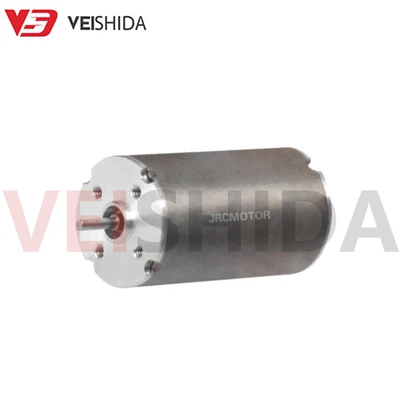
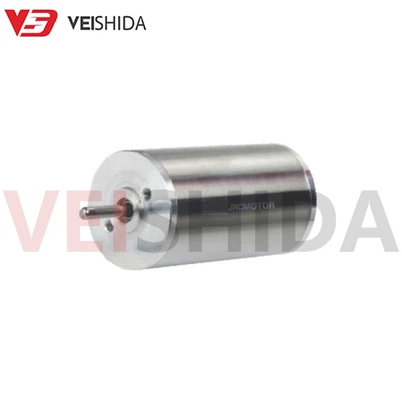
As the name implies, the coreless servo motor is composed of three parts: a coreless brushless motor, a feedback device (such as an encoder), and a drive control system. Its design concept enables it to show unique advantages in precision control and high-performance applications. Next, we will analyze the characteristics of the coreless servo motor and compare it with the traditional brushless DC servo motor to help you more clearly understand its unique advantages in high-precision laser equipment.
1. High precision and stability
The coreless servo motor uses brushless motor technology and is equipped with a high-precision feedback device (such as an encoder) to monitor and adjust the motor's motion state in real time to ensure high consistency in position and speed. This enables the coreless servo motor to achieve extremely accurate laser beam positioning in the galvanometer scanning and optical focusing system, ensuring fine control during the processing process.
Compared with traditional brushless DC servo motors, the feedback system of coreless servo motors is more precise, which can effectively avoid position errors and response delays, and improve the stability and accuracy of the system.
2. Low inertia and high response speed
The low inertia of the coreless servo motor enables it to respond and adjust quickly to rapidly changing control requirements. This feature is critical in galvanometer scanning and optical focusing systems, as these systems require the motor to quickly and accurately adjust the laser path or focus position. The low inertia design means that the coreless servo motor can accelerate and decelerate quickly, thus meeting the needs of laser equipment for fast response.
Compared with traditional brushless DC servo motors, the low inertia of Coreless Servo Motors gives them obvious advantages in high-frequency adjustment, enabling smoother and more precise motion control.
3. High performance and compact design
The coreless servo motor's coreless design makes it more compact and lighter. Despite its small size, the coreless servo motor still provides efficient power output, which allows it to fully exert its high performance in laser equipment with limited space. Traditional brushless DC servo motors are usually larger in size and may not be able to compete with coreless servo motors in space-constrained applications.
This compact design not only helps the integration of Coreless Servo Motors in equipment more flexibly, but also makes them more suitable for high-density motor application scenarios.
4. High-precision feedback and closed-loop control
The feedback system of the Coreless Servo Motor (such as encoder) provides precise closed-loop control function to ensure that the motor always maintains the set motion trajectory. Through continuous feedback adjustment, the Coreless Servo Motor can maintain a high degree of control accuracy in dynamic changes, ensuring the positioning accuracy of the galvanometer and optical components.
In contrast, although traditional brushless DC servo motors can also be equipped with encoders, their feedback accuracy and response speed are usually limited, so they may not be able to achieve the performance of Coreless Servo Motors in complex applications.
5. Long life and low maintenance requirements
Coreless servo motors use brushless motor technology, which reduces friction and wear in traditional brushed motors, thereby greatly extending the life of the motor. Long-term high-load operation has little effect on motor performance. Coreless servo motors can remain stable during long-term operation and have relatively low maintenance requirements.
Although traditional brushless DC servo motors also have a long service life, they may require more regular inspection and maintenance work due to their relatively complex mechanical design.
Compared with traditional brushless DC servo motors, coreless servo motors have obvious advantages in precision control, response speed and reliability, and are an ideal choice for ensuring the stable operation of high-performance laser equipment.
Professional Coreless Servo Motor manufacturer
As a leading motor manufacturer, VSD focuses on providing high-performance Coreless Servo Motor solutions, dedicated to meeting various high-precision and high-efficiency application requirements. With more than ten years of experience in motor research and development, we have set industry benchmarks in technology innovation, quality control and customer service.
VSD has a wide range of standard coreless motors and offers comprehensive customization services. Our winding technology uses fully automatic winding technology to ensure that each motor reaches the industry's top level in terms of performance and stability. We can customize motors of different sizes, powers and performance parameters according to customer needs to ensure the best solution for each project.
As an ISO certified company, VSD strictly follows international quality management standards, and all motor products undergo rigorous quality testing and performance verification. Our motor systems not only meet industry requirements, but also provide customers with long-term efficient and stable operation, ensuring the durability of the equipment.
VSD Coreless Motor Recommendations:
The VEC - 1628 coreless motor has a diameter of 16mm and a body length of 28 mm, and is suitable for applications that require high-precision control and fast response. Its low noise, no cogging effect, and ultra-high speed make it perform well in various types of equipment. This motor is available in different voltage ranges and speeds, and supports customization to ensure that it meets various application requirements.
The VEC - 1819 Coreless Motor, with its 18mm diameter and 18.6 mm length, provides high speed and low power consumption, suitable for applications requiring high efficiency and response speed. This motor has the advantages of low noise, no cogging effect, and remains stable at high speed. A variety of specifications and voltages are available, which can be customized according to needs and are widely used in precision control occasions.
The VEC - 1935 coreless motor has a diameter of 19mm, a length of 35 mm, and a starting torque of up to 261.32 mN.m. It is suitable for applications with high load and high power requirements. Its ultra-high speed and low inertia characteristics make it excellent in precision control. This motor supports a variety of customization options to meet the performance requirements of different customers and is an ideal choice for efficient power systems.
The VEC - 2233 coreless motor has a diameter of 22 mm and a length of 43.5 mm, supports a speed of up to 36,000 rpm, provides strong output power and high starting torque. Its low noise and low vibration characteristics make it the first choice for precision equipment. It is suitable for high-demand applications and supports customized services such as speed, bearings and interfaces to ensure the best application adaptation.
VEC - 2855 Coreless Motor, with a diameter of 28 mm and a body length of 55 mm, has excellent response speed and low vibration characteristics, and is particularly suitable for long-term high-load operation. With advantages such as low noise and fast response, it is very suitable for applications requiring high-precision control. It provides a variety of customization options, supports personalized selection of parameters such as voltage, speed, and bearings, and adapts to various special requirements.