

What motor does the robot vacuum cleaner use?
Leave a message
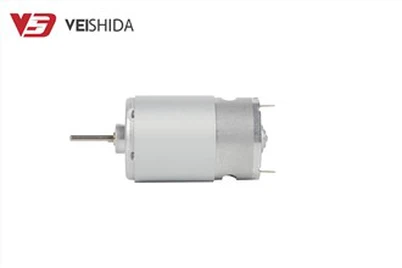
In addition to the vacuum cleaner, the drive motor of the sweeping robot must also have a deceleration function, and increase the torque to have a better drive. The drive motor is usually a brushed DC motor, a brushless DC motor, a hollow cup motor, a stepper motor, and the like. The gear reduction structure is mainly a parallel gearbox or a planetary gearbox to increase the output torque. The requirements of the intelligent sweeping robot for the micro motor are low noise and high torque, which is a necessary condition to prevent hair and other tangles from entering the motor and affecting the service life of the motor. The following is an analysis of the advantages and disadvantages of several common sweeping robot motors.

1. Brushless DC motor: The main difference between a brushless DC motor and a brushed DC motor is that there are brushes and commutators in the structure. Since brushless motors do not have the friction of brushes or commutators, they can last for thousands of years in continuous operation. If it's small, the noise will be lower; since there are no brushes and commutators, the motor has to be electronically commutated to spin, which makes speed control more complicated and costly.

2. Hollow cup motor: The structure of the hollow cup motor is very different from other DC motors. The iron-core rotor structure is cancelled, and it has the unique characteristics of energy saving, easy control, sensitive and stable operation. Various mechanical energy losses due to eddy currents generated by the iron core rotor reduce the size and weight of the micromotor.

3. Brushed DC motor: The sweeping robot uses at least 3-5 brushed DC motors. A brushed DC motor is a type of DC motor. In this structure, the main magnetic pole and brushes are fixed on the stator, and the armature winding and the commutator are installed on the rotor. The DC power enters the armature winding through the brush and the commutator to generate the armature current, and the magnetic field generated by the armature current interacts with the main magnetic field to generate electromagnetic torque, which makes the micromotor rotate and drive the load. For brushed DC motors, the advantages are low price, simple and convenient control, and large starting torque. The disadvantage is the short lifespan. Generally speaking, the continuous running time is only about a few hundred hours, and the noise is relatively large. The higher the speed, the louder the noise (no more than 50dB).