

Why can FPV drones only fly for 3-5 minutes
Leave a message
Battery life is one of the core concerns for FPV drone pilots. Many pilots find that most FPV drones can only fly for 3 to 5 minutes on a full charge, whether for racing or freestyle flying, which is much shorter than the battery life of ordinary consumer drones. Why is this the case?
VSD (Shenzhen Weisda Micro Motor Co., Ltd.) focuses on the research and development and manufacturing of brushless motors. Backed by over a decade of experience, the company delivers a wide range of high-performance FPV motors to customers worldwide.
The root cause lies in motor efficiency, battery configuration and flying habits. In pursuit of speed and flexibility, FPV drones are often equipped with high-KV brushless motors and high-performance power systems. This configuration can bring extreme acceleration and control, but it also significantly increases energy consumption. Combined with the drone's lightweight design and frequent rapid throttle changes during flight, the flight time is further compressed.
In this article, we will take a deep look at the real factors that affect the power consumption of FPV drones, including typical endurance performance, the physics behind energy consumption, and how to maximize the flight time of each battery through reasonable motor and configuration selection.

Typical power consumption of FPV drones
1.1 Motor and whole machine power consumption
A typical 5-inch FPV drone can consume 200–300W per motor during aggressive flight, and the total peak current can reach 150–190A.
During normal flight, the average current draw per motor is 30–40A, but during hard acceleration and intense maneuvers there can be higher peak currents.
To meet this need, most 5-inch quadcopters come with 30A or 40A rated ESCs that can safely handle the high peak currents.
1.2 Battery Capacity and Flight Time
Common configuration: 4S (14.8V) 1300–1500mAh LiPo battery
This setup typically provides 3–5 minutes of flight time at full throttle.
Larger capacity battery:
Using a 2000mAh or higher capacity battery can significantly extend the flight time, up to 8-10 minutes at slow cruising speed.
1.3 Differences in flight range between different flight types
Racing aircraft: continuous high throttle flight, large peak current and shortest flight time.
Freestyle: The throttle changes frequently but the maximum output is less than that of a racing machine, and the endurance is usually 4-6 minutes.
Cinewhoop: Smooth flight, low throttle, and endurance of up to 8–10 minutes.
1.4 Key factors affecting flight time
Battery capacity and discharge rate (C value): For example, a 4S 1300mAh 120C battery can theoretically provide a maximum current of 156A, ensuring that demand is met under high load.
Drone weight and aerodynamics: The greater the weight, the higher the drag, and the motor needs to provide more thrust, which shortens the flight range.
Flying style and throttle management: Aggressive maneuvers consume battery faster, while smooth flying can significantly extend flight range.
Power consumption of load devices: such as DJIO3AirUnit, which consumes about 6W (1.2A at 5V and 0.67A at 9V), will also increase the total energy consumption.
Conclusion: The short flight time of FPV drones is the inevitable result of high-performance power systems and intense flying methods, while reasonable battery configuration and efficient motor selection can significantly improve flight time.

Why does FPV drone consume battery quickly
FPV (first-person view) drones are known for their speed and agility, but these features come at the cost of higher energy consumption. Compared to consumer-grade aerial photography drones, FPV drones have shorter battery life, especially in racing and freestyle flying, often only able to sustain 3-5 minutes of full throttle flight. The main reasons for this include the following aspects:
2.1 High-performance power system
In order to achieve rapid acceleration, sharp turns and vertical climbs, FPV drones are usually equipped with high-KV brushless motors and high-response ESC (electronic speed controller). These components release a large amount of energy in a short period of time in exchange for an extreme thrust-to-weight ratio, but at the same time consume more battery power.
2.2 Aggressive flying style
Racing and freestyle flying require frequent rapid acceleration and large-angle maneuvers, with the motors frequently running at high power. The drastic changes in the throttle not only increase the excitement of flying, but also significantly speed up the consumption of battery power.
2.3 Trade-off between battery capacity and weight
FPV drones generally use lithium polymer (LiPo) batteries. Larger capacity batteries can extend the battery life, but they will also increase the weight of the aircraft, requiring stronger power to maintain flight, potentially offsetting the benefits of the increased capacity. This means that there is always a trade-off between battery capacity and aircraft weight.
2.4 Impact of environment on energy consumption
Strong winds: Increase air resistance, forcing the motor to increase its output power.
Low temperature: reduces the efficiency of chemical reactions within the battery and reduces the actual available capacity.,
2.5 Battery Status and Life
As LiPo batteries are used over time, their capacity and discharge efficiency will decrease. Overcharging or over-discharging will further shorten the life of the battery, thereby reducing the effective battery life.
Summary: The fundamental reason why FPV drones consume power quickly is the combined limitations of performance requirements, flight methods, and battery technology. The more extreme the performance, the greater the energy consumption, which is the inevitable price of the FPV flight experience.

How to improve battery life
To extend the flight time of FPV drones, the key lies in optimizing the efficiency of the power system, reducing energy consumption and improving flight habits. The following are specific improvement strategies:
3.1 Battery Optimization
Choose a battery with the right capacity and voltage: Batteries with larger capacity (mAh) and higher voltage can store more energy and provide longer flight time.
Keep your battery healthy: Follow the manufacturer's recommendations for charging and storage, and avoid overcharging and discharging to prevent capacity loss.
Consider lithium-ion batteries: In some application scenarios, lithium-ion batteries have a better weight-to-energy ratio than traditional lithium-polymer batteries, which helps improve battery life.
3.2 Reduce the weight of the aircraft
Remove non-essential parts: such as blade guards, landing gear or other additional decorations.
Use lightweight materials: Choose lightweight frames, lightweight motors, and other efficient components to reduce overall loads.
3.3 Improving the efficiency of motors and propellers
Efficient motor-propeller combination: Select motors and propellers that match the flight mission to achieve sufficient thrust with minimum power.
Low pitch and two-blade propellers: Low pitch and two-blade propellers are generally more efficient and suitable for extended flight time, but it is necessary to find a balance between thrust and efficiency.
Consider the motor KV value: A lower-KV motor paired with a larger-diameter propeller can improve efficiency.
3.4 Improving flying habits
Smooth control: Avoid frequent sudden acceleration and sharp turns, and reduce the operating time in the high-power range.
Maintain a constant speed: Steady flight saves more energy than frequent acceleration and deceleration.
Choose the flight altitude appropriately: the lower the flight altitude, the smaller the air resistance is, which helps to improve efficiency.
3.5 Adjustment and maintenance
Precisely tune the flight control: Ensure that the flight controller and electronic control parameters are properly adjusted to improve the response efficiency of the power system.
Regular maintenance: Keep the motor, propeller and connectors clean and in good working condition to avoid energy waste.

Design ideas for long-flight FPV drones
The core goal of long-flight FPV drones is to maximize flight time, improve energy efficiency and maintain reliability, which requires comprehensive optimization from fuselage design to power system.
4.1 Airframe and aerodynamics
Body size: 6-7 inch frames are generally more stable and can accommodate larger batteries. Lightweight carbon fiber frames are preferred due to their light weight and high rigidity.
Aerodynamic optimization: Streamlined arms and a neat fuselage layout reduce drag and improve cruise efficiency.
Airframe rigidity: A rigid structure can reduce vibration, maintain the accuracy of flight control sensors and the efficiency of the power system.
4.2 Powertrain Optimization
Battery selection: Lithium-ion batteries (such as 18650 or 21700 specifications) have higher energy density and are very suitable for long-range cruising.
Motor and propeller matching: A low-KV motor with a large-diameter, high-efficiency propeller can provide stable thrust at low speed, which is the standard configuration for long-endurance drones.
Electronic Speed Control (ESC) optimization: Ensure that the voltage of the ESC, motor, and battery are highly matched to avoid energy waste due to power mismatch.
Voltage management: Long-flight drones are more prone to voltage drops, so you should choose an electronic control system that can effectively cope with voltage fluctuations.
4.3 Image transmission and electronic system
Long-range image transmission: Consider using a 1.2GHz or 1.3GHz image transmission system for better coverage.
Efficient power use: Image transmission equipment and cameras must operate reliably within the flight controller's power output range to avoid unnecessary energy consumption.
OSD Integration: Using an integrated OSD reduces the weight and complexity of additional equipment.
4.4 Other design points
Extremely lightweight: Every gram of weight directly affects the battery life. Use lightweight components as much as possible and remove unnecessary parts.
Auxiliary equipment: GPS module and buzzer with its own battery are essential for positioning and retrieval after long-distance flight.
Software Tuning: Correct flight control settings and tuning can significantly improve flight efficiency and stability.
Pre-flight testing: Before performing a mission, the power system, image transmission and sensors must be fully tested and calibrated.
Through the above optimization scheme, the long-flight FPV UAV can achieve a longer cruising time while ensuring reliability, and is suitable for applications such as surveying and mapping, inspection, and long-distance aerial photography.

Optimizing motor efficiency is the key to extending battery life
FPV drone flight time is constrained by the balance of motor efficiency, weight, and battery capacity. To break through the "bottleneck" of 3-5 minutes, the key is to improve the efficiency of the power system, including choosing a more efficient brushless motor, a reasonable KV value and propeller combination, and optimizing the flight strategy.
For users who need longer flight time or special missions, customized motors are often the best solution. By adjusting the motor KV value, power output and efficiency for specific flight style and load requirements, flight time can be significantly extended and energy consumption can be reduced.
Ultimately, improving the endurance of FPV drones does not only rely on larger capacity batteries, but also requires the coordinated optimization of the power system and the overall design. Focusing on efficiency, lightweight and reasonable configuration can extend the time of each flight while ensuring the flight experience.
FPV drone motor recommendations
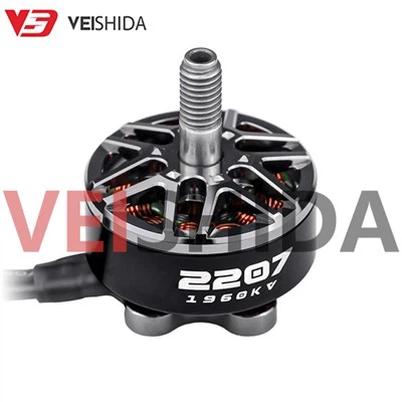
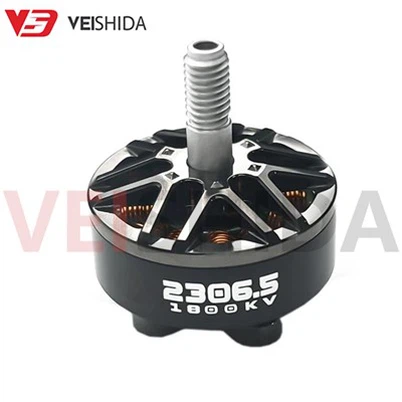
For FPV pilots who pursue stable performance and high efficiency, choosing the right motor is the key to improving the experience. VSD focuses on the research and development and manufacturing of brushless motors. Backed by over a decade of experience, the company delivers a wide range of high-performance FPV motors to customers worldwide.
VSD FPV motor recommendation table
|
Model |
KV value range |
Applicable voltage (S) |
Maximum power (W) |
Maximum thrust (g) |
|
1800–2400KV |
4S–6S |
901W |
1683g |
|
|
1960KV |
6S |
902.5W |
1703g |
|
|
1350–1750KV |
4S–6S |
1436W |
2728g |
|
|
1300–1950KV |
6S |
1623.5W |
2910g |
|
|
900KV |
6S |
1010W |
2710g |
|
|
900–1520KV |
5S–8S |
1617W |
4185g |
|
|
420KV |
6S–8S |
3037W |
7232g |
|
|
380KV |
6S–12S |
4257W |
9034g |
Why choose VSD
More than ten years of manufacturing experience: Since 2011, VSD has been focusing on the research and development and production of micromotors and has accumulated rich industry experience.
Strong R&D capabilities: We invest over one million yuan in R&D every year to continuously iterate and optimize product performance.
Transparent and reliable production: We have our own factory, and customers can visit it online or offline to ensure that the production process is transparent and controllable.
Trusted by global customers: Our products are widely used in racing, aerial photography, surveying and mapping, industrial and professional UAV fields, and are highly recognized in the industry.
Choosing VSD means choosing an efficient, reliable and professional FPV UAV power system.