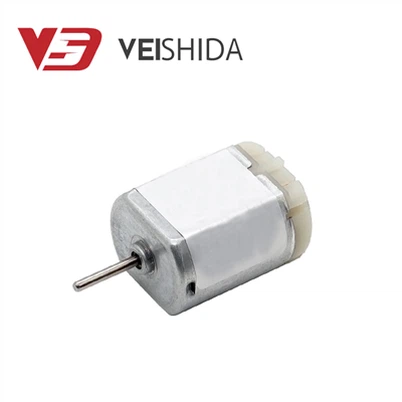


Why Speed Control Of Dc Motor Is Necessary?
Leave a message
DC electric motor is widely used in various application fields due to its high torque and high efficiency. However, if these motors are improperly speed controlled, they may encounter various problems. Here are some reasons for requiring DC motor speed control:
Efficiency: DC motors are usually more effective at higher speeds, which means that controlling the speed of the motor can help to improve its overall efficiency. By changing the speed according to the application requirements, you can ensure that the motor operates at its optimal efficiency level, thereby reducing energy waste.
Load change: the DC motor load changes during operation, which will affect the speed of the motor. The load change may be due to various reasons such as changes in load resistance or new load added by the system. Controlling the speed of the motor can help compensate for changes in these loads and maintain a constant speed.
System stability: The DC motor is connected with the other components of the system, and the proper speed control helps to maintain the stability within the system. If the speed of the motor is not controlled, it may cause excessive vibration, noise, and damage to the system components. Speed control can help maintain a steady running speed and minimize these problems.
Safety: In some applications, such as high-speed fans or machine tools, controlling the speed of a DC motor is essential for safety purposes. The speed of these motors must be monitored and controlled to ensure that they do not exceed their rated speed and cause harm to personnel or equipment.
Productivity: Controlling the speed of DC motors can help improve productivity in various applications. By varying the speed according to the process or task requirements, you can optimize the performance of the motor and ensure that it is at its greatest potential. This can lead to faster cycle times, increased yield, and overall increased productivity.

When the microcontroller output high level, the triode is on, allowing the motor to power and run at full speed; When the microcontroller output low level, the triode is off, there is no voltage at both ends of the motor, and the motor stops turning. As long as the MCU output duty cycle adjustable square wave, that is, the PWM signal can control the voltage change at both ends of the motor, so as to realize the control of the motor speed. The motor depends on the phase speed to change the speed, so why also pwm control? The reversing time is determined by the signal detected by the position (like Hall), the detected signal is determined by the position of the rotor; the rotor speed is determined by the current, the current is large, the electromagnetic torque is greater than the load torque, the acceleration is determined by the voltage; the voltage size is determined by the PWM pulse width.
The calculation formula of DC motor speed is as follows: n= (U-IR) / K φ, where U is the armature end voltage, I is the armature current, r is the total resistance of the armature circuit, φ is the magnetic flux per pole, and k is the structural parameter of the motor. DC motor has three speed regulation methods: reduce the armature voltage, speed to below the base speed, with the armature circuit series resistance speed, weaken the magnetic field, speed to above the base speed.
Controlling the speed of DC motors is necessary to ensure efficiency, maintain system stability, improve safety, optimize productivity and compensate for load changes. Speed control devices, such as transformer resistance, controllers and electronic speed controllers, are usually used to regulate the speed of a DC motor. By implementing the speed control measures, you can ensure the smooth and reliable operation of the DC motor drive system.
The above is our VSD motor to share with you about the micro DC motor expertise. For more information, please contact our professional customer service personnel to answer. Thank you for clicking and watching.