

The Impact Of The Development Of Electric Bicycles On The Environment And Life
Leave a message

Electric bicycles are fast becoming the ideal choice for environmentally friendly travel in modern cities. With the popularity of the concept of sustainable development, more and more people are looking at e-bikes as a low-carbon and convenient means of commuting. E-bikes use less energy than traditional gasoline-powered vehicles, and most EV batteries can be recharged from renewable sources, further reducing carbon emissions and helping to meet environmental goals. In addition, the use of e-bikes produces almost zero noise and exhaust emissions, contributing significantly to the air quality of cities and the healthy lives of residents.
Electric bicycles are not only environmentally friendly, but also bring a better quality of life. With the advancement of technology, e-bikes are becoming more convenient and efficient, especially suitable for use in congested urban environments. E-bikes allow people to enjoy low-intensity physical activity without affecting commuting efficiency, promoting physical and mental health. With lower purchase and maintenance costs compared to gas-powered vehicles, e-bikes are an affordable and healthy way to travel, which is why they are popular among young people and office workers.
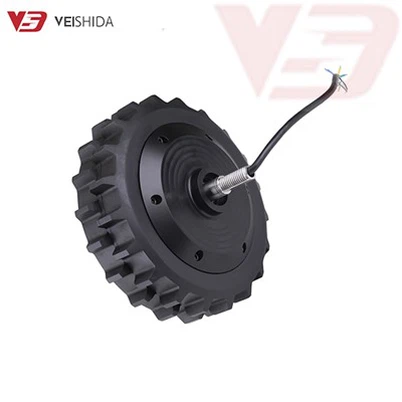
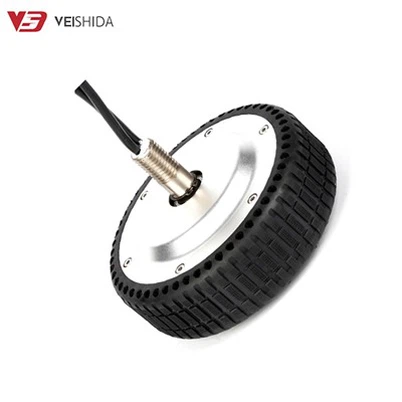
In all kinds of technical progress of electric bicycles, the application of wheel hub motor is particularly key. Hub motor because of its simple design, compact structure and directly drive the characteristics of the hub, so that the electric bicycle travel more smoothly, reduce parts friction and energy loss, and further improve energy efficiency. At the same time, the hub motor has the advantages of high efficiency, low noise, easy maintenance, etc., making the overall performance of the electric bicycle more reliable. It can be said that the popularity of wheel hub motors not only promotes the development of electric bicycles, but also makes electric travel more green, economic and in line with the needs of future urban transportation.
The development of electric bicycles
 A brief history of electric bicycles
Electric bicycles originated in the 1990s, from the attempt to combine the motor with the traditional bicycle to today's intelligent and convenient transportation tools. The initial e-bikes were equipped with bulky lead-acid batteries and the technology has been slow to advance, but the new form of transportation has gradually attracted people's attention. After entering the 21st century, the rapid development of lithium battery technology has brought lighter and more durable electric bicycles, making it gradually popularized in the market. With the application of intelligent technology, today's electric bicycles are not only used for commuting, but also used in various scenarios such as sports and leisure, and are widely welcomed by the global market because of their environmental protection and low-carbon characteristics.
Regional policy support and market trends
European and American markets
In Europe and the United States, strong government support for e-bikes has helped the market expand rapidly. Many countries offer subsidies and are developing bike infrastructure to integrate e-bikes into urban shared transport systems. Major markets such as Germany, the Netherlands and France have seen high adoption of e-bikes due to rising environmental awareness and favorable tax policies. These policies not only promote the decarbonization of urban travel, but also make e-bikes an important choice for residents' daily commutes.
Markets IN Southeast Asia
Southeast Asian regions, such as Indonesia and Vietnam, are benefiting from increasing urbanization as well as the growing problem of traffic congestion, and there is a growing demand for e-bikes. These countries support the development of the e-bike market through tax breaks and subsidies for car purchases. Still, inadequate infrastructure, especially the lack of charging stations in some rural areas, remains a challenge for further expansion of the market. Still, electric bicycles have become one of the important tools for green travel in the region, meeting residents' needs for convenient and environmentally friendly travel.
Asian markets
The penetration rate of e-bikes is higher in Asian countries such as China and Japan, especially in China, which is the world's leading producer and user of e-bikes. The government has introduced several incentives and policies such as limiting speed and battery capacity to ensure e-bikes are safer in crowded urban environments. Driven by China's goal of carbon neutrality, e-bikes are not only widely used in first-tier cities, but have gradually entered the wider market and become a common means of transportation in daily life.
The environmental impact of Electric bicycle
 As a low-carbon travel tool, electric bicycles are increasingly becoming an important choice for people to deal with climate change. Compared with traditional cars and most new energy vehicles, electric bicycles have significantly lower carbon emissions: only about 13 grams of carbon dioxide equivalent per kilometer traveled, compared with 60 to 75 grams per kilometer emitted by new energy vehicles. Therefore, e-bikes have a clear advantage in reducing greenhouse gas emissions in the transportation sector.
Although the process of using an e-bike produces almost no carbon emissions, its manufacturing process still has some environmental impact. E-bike manufacturing, particularly the production of aluminum frames, generates a significant portion of greenhouse gases. In addition, the production of batteries and motors also contributes to some carbon emissions, but overall, the life-cycle carbon emissions of e-bikes are still significantly lower than those of conventional cars.
To further reduce the carbon footprint of e-bikes, manufacturers can consider replacing aluminum frames with environmentally friendly materials, such as lightweight, durable composite materials. In addition, manufacturers can consider adopting efficient wheel hub motors, a design that not only reduces additional transmission structures, but also significantly improves energy efficiency. Since hub motors drive the wheels directly, energy loss is reduced, further reducing the overall carbon emissions of electric bicycles. At the same time, the technology of hub motors is also constantly optimized, and a new generation of hub motors is using more efficient designs and environmentally friendly materials.
The popularity of electric bicycles not only reduces the carbon emissions of personal travel, but also promotes the development of green energy. The efficient cooperation of wheel hub motor technology and electric bicycle makes its energy demand for charging relatively low. If it can be combined with renewable energy such as solar energy and wind energy to charge, it will contribute to promoting the development of sustainable energy. Electric bicycle as a low energy consumption mode of travel, can better fit the development trend of green energy, promote people's recognition and use of clean energy.
The impact of electric bicycle on life
With its small and flexible design, electric bicycles are gradually changing the lifestyle of urban people, especially playing an important role in easing travel problems. As an efficient and convenient means of transportation, electric bicycles can easily navigate narrow streets and congested sections of the city, and this flexibility makes them excellent in coping with the "last kilometer" travel problem. For commuters, e-bikes help them move quickly during the morning and evening rush hours, saving precious commuting time. For couriers and deliverymen, e-bikes are an effective tool to improve work efficiency and help them complete more orders in a limited time.
The travel radius of e-bikes is much larger than that of traditional walking and regular bicycles, meaning users can easily reach further places. This flexibility makes e-bikes not only suitable for daily commutes, but also a convenient option for weekend trips, shopping, visiting friends and more. Whether you want to go to the bustling city center or explore the corners of the city, electric bicycles allow people to travel at will, and thus extend their life radius.
Compared with private cars, electric bicycles not only have low purchase costs, but also more economical daily maintenance and use costs. Electric bicycles do not need refueling, charging costs are low, and maintenance costs are low, and basic maintenance such as tires and brakes can ensure its long service life. For people with a fixed budget, e-bikes are a cost-effective travel option, offering them a more affordable and sustainable way to get around.
Electric bicycle development challenges and future prospects
 Electric bicycles have developed rapidly in recent years, and gradually occupy a place in the global market with the energy efficiency and low-carbon environmental protection travel mode of wheel hub motors. However, with the popularity of e-bikes, a number of key challenges have emerged. Top of the list are the issues of battery life and environmentally friendly recycling. Although the current wheel hub motor design can achieve high energy conversion efficiency, the battery life is still the main factor affecting the user experience, and the sustainable recycling of battery materials is also facing environmental problems.
At the same time, the wide application of electric bicycles in cities has put forward new requirements for road safety. With the increase in the number of electric bicycles, the risk of traffic accidents also increases, and safety regulations and infrastructure construction for electric bicycles need to be improved. This includes setting up dedicated lanes and improving traffic signal systems to ensure the safety of cyclists and other road users.
In the future, the development direction of electric bicycles will further focus on technological innovation, policy support and environmental protection. At the technical level, the innovation potential of wheel hub motor is huge, and the future will be in the direction of lightweight, energy recovery and intelligent control. Lightweight design is expected to reduce the overall weight of electric bicycles and improve battery efficiency; Energy recovery technology can convert kinetic energy while braking into electricity, extending driving range. The introduction of intelligent control technology will improve the comfort and safety of riding. On the policy front, the government is likely to increase subsidies for green travel and introduce more environmental regulations to promote battery recycling, further boosting the popularity of e-bikes.
With the joint advancement of technology and policies, electric bicycles are not only expected to make breakthroughs in environmental performance in the future, but also will continue to optimize in terms of comfort and convenience. The position of electric bicycles in the global green travel system will continue to improve, providing more help for the construction of low-carbon cities.
VSD wheel hub motors help the development of electric bicycles
As a leading micromotor manufacturer in China, VSD has established strong technical advantages in the field of hub motors for electric bicycles with more than a decade of research and development and manufacturing experience. The company's own factory covers an area of more than 10,000 square meters and is equipped with more than 40 advanced production lines to ensure efficient production and strict quality control. VSD's wheel hub motor design is small, power efficient, especially suitable for electric bicycles, can improve the vehicle's endurance and riding experience. Customers can choose to visit the factory online or offline to experience the company's strict production process and advanced equipment.
In addition, VSD has a professional engineering department and R & D design department, which can provide customers with customized wheel hub motor solutions to support OEM and ODM needs and meet the special requirements of different markets and applications. All products of VSD are produced in accordance with international standards such as ISO 9001, CE, ROHS, CCC, UL, GS, etc., to ensure that every motor meets the quality and safety requirements of the global market. The professional quality and customized support of VSD wheel hub motor provide a strong technical support for the popularity and development of electric bicycles.
Note: See more information about VSD