

How to choose the right drone motor? From a novice to a racing player
Leave a message
Why is choosing the right motor important
In the UAV flight system, the motor is almost the first factor that affects the performance. If the motor is well selected, it will not only fly steadily and for a long time, but also fly fast and enjoyably. If it is not well selected, the flight efficiency will be low at best, and at worst, the motor may overheat, the ESC may burn out, or the drone may become uncontrollable.
Different types of drones have completely different requirements for motors:
For beginners, a low-KV motor that is easier to control, has high stability, and has a high fault tolerance is needed;
For aerial photography players, stable thrust, low vibration and long endurance are the key points;
For racing or racing drone players, high KV value, extremely fast response and explosive power are the core.
When choosing a suitable motor, multiple factors must be considered, such as thrust-to-weight ratio, motor power, battery compatibility, motor size and weight, etc. It's not enough to only consider KV or price.
In this article, we'll start with the basics and walk you through how to choose the most suitable motor based on your drone type, flight requirements, and budget-whether you're a novice pilot or a competitive player.

Key selection parameters for drone motors
Choosing a motor is not about whether it is expensive or not, but whether it matches your flight platform and flight requirements. The following are the core parameters that you need to pay attention to when choosing a drone motor:
1. KV value: speed capability per volt
The KV value (RPM/V) represents the theoretical speed of the motor for every 1V input voltage.
For example: For a 900KV motor, the theoretical no-load speed is 9000RPM when the input voltage is 10V.
Low KV (such as 380KV, 900KV): low speed, large torque, suitable for load flight and aerial photography platform;
High KV (such as 1800KV, 2400KV): high speed, fast response, suitable for racing drones, racing drones and other occasions that require explosive power.
Note: The higher the KV value, the greater the current consumption and the shorter the battery life.
2. Thrust-to-weight ratio: measures whether the motor is powerful enough to fly
Thrust-to-weight ratio = maximum thrust of the motor ÷ total weight of the drone (including battery and payload)
An ideal multi-rotor drone should have a thrust-to-weight ratio of ≥ 2:1, and a racing drone can have a thrust-to-weight ratio as high as 4:1.
Thrust-to-weight ratio < 2: It will struggle to take off and maintain stable flight.
Thrust-to-weight ratio > 4: Excessive power, the control becomes sensitive and difficult to control (not suitable for novices);
The selection should be balanced based on the fuselage structure, load capacity, and mission type (aerial photography or racing).
3. Power and current matching: avoid "burning ESC" or "insufficient thrust"
The maximum power and peak current of the motor must match the electronic speed controller (ESC). The ESC current is recommended to be ≥ 1.2 times the maximum current of the motor.
For example:
The maximum motor current is 60A ➜ an ESC of ≥ 72A should be selected;
The motor power is 1600W ➜ It is recommended to use 6S batteries with suitable propellers to fully unleash the performance.
4. Compatible battery voltage (S number)
S represents the number of lithium batteries connected in series (1S ≈ 3.7V)
Different motors support different voltage ranges, the most common ones are as follows:
Be sure to check the motor specification sheet and select a battery with a compatible voltage range to avoid overvoltage or undervoltage use.
5. Motor size and weight: Don't ignore the impact on the airframe's load and balance.
The larger and heavier the motor is, the greater the thrust will be, but it will also affect the center of gravity, flight time, and load capacity.
Small racing machine: 2207, 2306, 2807 and other lightweight motors are recommended;
Medium-sized drones: medium-sized motors such as 3115, 2808, and 2812 are recommended;
Large payload flight platform: Choose high thrust models such as 4720 and 5315.

How to choose motors for different user scenarios
Different types of flight missions have significantly different requirements for motor parameters. From beginners to professional racing players, the following are reference ideas for selection for three common types of users:
1. Novice pilots: ease of control and crash resistance are key considerations
Recommended features:
Medium and low KV value (900 ~ 1500KV): softer response and easier to control;
Medium thrust-to-weight ratio (about 2:1): easy takeoff but not too "powerful";
Batteries below 4S: The voltage is relatively safe and the system risk is low;
Moderate power: Avoid overheating or falling too fast while flying.
Applicable models:
Teaching quadcopter and multirotor kit
DIY Small Lightweight Flying Machine
2. Aerial photography and mapping users: focus on stable flight and endurance
Recommended features:
Low KV value (380 ~ 900KV): Improves torque and efficiency, suitable for loaded flight;
High thrust-to-weight ratio (more than 2.5:1): ensures stability when mounting cameras, radars and other equipment;
6S ~ 12S battery: provides power support for long battery life and high torque;
The motor is compatible with large-size propeller blades: improving lift efficiency.
Applicable models:
Professional aerial photography drone
Surveying/Inspection/Agriculture Multi-rotor Platform
3. Racing and crossing players: pursuing speed, explosiveness and response speed
Recommended features:
High KV value (1800 ~ 2400KV): Improve speed response and control sensitivity;
High thrust-to-weight ratio (≥ 3.5:1): fast take-off and landing and extremely fast forward speed;
4S ~ 6S battery: maintain high current output and response speed;
Lightweight motor + compact propeller combination: pursuing the ultimate in overall machine response.
Applicable models:
FPV Racing Drone
Drones for freestyle flight or acrobatic maneuvers

Practical selection suggestions and misunderstanding reminders
Choosing a motor is not only about looking at the parameters, but also about understanding the "matching logic". Many users will fall into some typical "pitfalls" in the early stages. The following are some common misunderstandings and practical suggestions we have summarized.
Myth 1: "The higher the KV value, the better?"
Fact: High KV ≠ high performance. High KV means fast speed, but it is accompanied by high power consumption, high heat and low torque.
It is correct to use a high KV in racing scenarios;
If you select a high KV for aerial photography, it may cause large flight vibrations, poor endurance, and unstable control;
Novices are more likely to crash the drone when using a high KV motor.
Recommendation: Choose a reasonable KV value based on your flight goals. Beginners or aerial photographers should give priority to medium and low KV motors.
Myth 2: "The greater the thrust, the more stable it is?"
Fact: High thrust does make an aircraft "able to fly", but a thrust-to-weight ratio that is too high will cause the flight control to be too sensitive, especially on light UAVs, where excess thrust will make it difficult to control.
suggestion:
The thrust-to-weight ratio should be controlled between 2:1 and 3:1;
Racing aircraft can reach 4:1, but it requires more advanced flight control and training level;
Don't blindly pursue the "big motor + small frame" combination.
Myth 3: "Only look at KV and not voltage compatibility?"
Fact: KV value must be considered together with battery voltage (S number), otherwise you may:
The voltage is too low ➜ the motor performance cannot be brought into full play;
Too high voltage may burn out the motor or ESC.
Recommendation: Check the motor specifications, confirm its recommended voltage range, and match the battery appropriately. For example:
2207/2306 high KV motor ➜ with 4S or 6S;
5315/4720 low KV motor ➜ for 6S~12S.
Myth 4: "Mismatch between motor power and ESC capacity"
Fact: The maximum motor current is greater than the ESC carrying capacity, which can easily burn out the ESC, especially during high-power takeoff or full throttle.
suggestion:
ESC rated current should be ≥ motor maximum current × 1.2;
At the same time, check whether the ESC wire diameter, capacitor, and battery discharge rate match;

VSD UAV motor selection reference
Whether you are a drone beginner or an FPV racing player pursuing extreme performance, VSD can provide you with a full range of brushless motors with stable performance. The following are recommended combinations for common flight needs:
Getting Started/Daily Practice
Target requirements: easy to control, stable, low maintenance cost
Recommended models:
VSD 2808 Drone Motor (1300KV / 1500KV): compatible with 4S/6S batteries, taking into account balance and battery life
VSD 3115 Drone Motor (900KV / 1050KV): Suitable for small aerial photography and medium-sized training platforms
Recommended pairing: Recommended thrust-to-weight ratio is about 2:1, with a light frame
Aerial photography and inspection operations
Target requirements: stable thrust, strong wind resistance, low vibration
Recommended models:
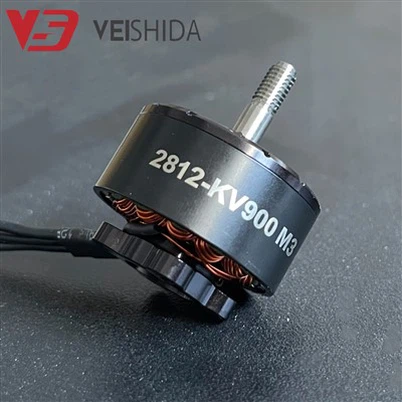
VSD 2812 Drone Motor (900KV): compatible with 6S batteries, quiet and stable
VSD 4720 Drone Motor (420KV): High thrust, supports medium and large multi-rotor platforms
VSD 5315 Drone Motor (380KV): Suitable for 6~12S high voltage platform, maximum thrust up to 9kg+
Recommended pairing: large propeller (such as 15x5.2), with 80A~100A ESC
FPV Racing/Flying
Target requirements: high burst, high response, extremely fast start and stop
Recommended models:
VSD 2306 Drone Motor (1800KV / 2400KV): Classic light-duty cross-country motor with fast burst
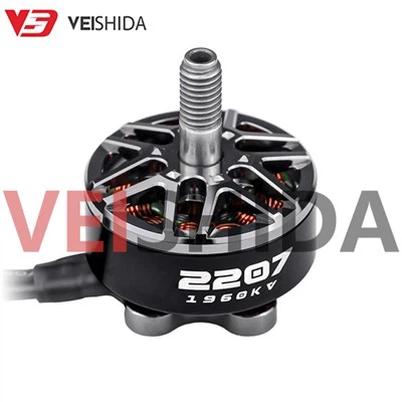
VSD 2207 Drone Motor (1960KV): dedicated for high-performance racing platform
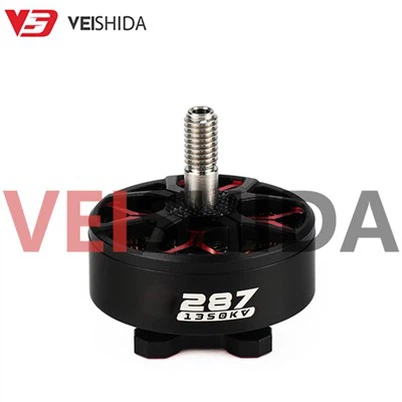
VSD 2807 Drone Motor (1350KV / 1750KV): Suitable for medium-sized high-speed flight platforms
Recommended pairing: 4S/6S high rate battery + high performance ESC + three-blade racing propeller
Why choose VSD?
Direct supply from the manufacturer, more competitive price, eliminating the need for middlemen.
We have our own factory, support online/offline visits, and the production process is transparent and controllable.
We have passed ISO 9001, IATF16949, ISO14000 and other international certifications, and our quality is guaranteed.
All motors have undergone comprehensive tests including noise, waterproofing, life, salt spray, collision, storage, etc.
Our products are exported to Europe, America, and Southeast Asia, serving customers all over the world and supporting OEM/ODM customization.
Welcome to contact VSD for motor selection advice and sample services!