

Selecting the Ideal Drone Motor for Performance and Quality
Leave a message
Motor: The Core Component Driving Drone Performance
For drone assembly manufacturers, complete machine development companies, and even R&D teams engaged in industry integration solutions, a high-performance, stable and reliable motor not only determines the thrust and endurance performance of the aircraft, but also affects the stability and safety of the entire system in complex environments.
Especially in industrial application scenarios such as aerial survey, logistics and transportation, and security inspection, slight differences in motor performance may be the key to the success or failure of a project.
When selecting a motor, many customers not only pay attention to the KV, power, size and load matching of the motor, but also pay more and more attention to its structural process, thermal management capabilities and brand manufacturing guarantee. Choosing the wrong motor may lead to unstable flight, shortened lifespan, or ESC overheating; the right motor, on the other hand, ensures higher efficiency, lower maintenance, fewer failures, and smoother system operation.

Analysis of the core performance indicators of drone motors
In the process of selecting drone motors, several key performance parameters cannot be ignored. For wholesalers, machine assemblers and R&D engineers, a deep understanding of these indicators will help quickly match the appropriate motor model and achieve the best balance between performance and cost.
1. KV (speed constant)
The KV determines the speed generated by each volt of the motor. A high KV means a fast motor speed, which is suitable for racing and flexible models; a low KV provides greater torque, which is suitable for aerial photography or logistics drones with heavy loads. When choosing, a comprehensive evaluation should be made based on the weight of the drone, propeller size, and expected thrust.
2. Maximum power and maximum current
The maximum power represents the peak output capacity that the motor can withstand, while the maximum current is the current carrying limit of the motor during operation. Industrial-grade drones often require motors to have continuous high-power output capabilities to ensure long-term flight and stable performance.
3. Efficiency and thermal management
High motor efficiency means that electrical energy can be converted into mechanical energy more effectively, reducing battery energy consumption. Excellent thermal management design, such as optimizing windings, using high-performance magnets and improving heat dissipation structures, can prevent motor overheating and extend its service life.
4. Weight and dimensions
The weight and size of the motor are crucial for lightweight drone design. Compact design not only saves space, but also helps improve flight efficiency and control flexibility.
5. Structural technology and materials
High-quality motors usually use advanced winding technology and selected magnetic steel materials to ensure stable output and reduce vibration and noise. Good dynamic balancing correction technology is also the key to improving motor life and flight stability.

Recommendations for motor parameter selection for different types of drones
There are many types of drones, and each application has different performance requirements for motors. Understanding these differences will help drone motor wholesalers, assemblers, and R&D teams select the most suitable power unit for specific needs.
Aerial photography and mapping drones
This type of drone usually requires stable flight and long flight time. Recommended:
The KV is low (usually in the range of 300-500KV) to ensure sufficient torque and low current consumption, improving endurance
Large rotor diameter and winding size to optimize efficiency and heat dissipation
Higher efficiency ratio, reducing battery burden and heat generation
The weight is moderate, which ensures the power without affecting the balance of the whole machine.
Logistics and transport drones
This type of drone has a large load capacity and extremely high requirements for thrust and power stability. It is suitable to choose:
The KV is lower, usually below 400KV, and the focus is on providing high torque output
High rated power and current carrying capacity ensure long-term stable operation
Thickened iron core and high-quality magnetic steel materials improve durability and stability
Excellent heat dissipation design to cope with high temperature challenges under heavy load conditions
Racing and flying drones
Pursuing fast response and extreme speed, the power requirement emphasizes light weight and high speed, and the appropriate parameters are:
Higher KV (generally above 600KV) ensures fast speed and quick response
Smaller rotor diameter and lightweight design reduce inertia and improve acceleration performance
Low internal resistance and high-quality windings support high-frequency starting and rapid acceleration
Reasonable thermal management to maintain stable output under high-intensity working conditions
Industrial inspection and special application drones
This type of drone may operate in complex environments, and the motor needs to have both stability and durability. Recommended:
The KV is flexibly adjusted according to the specific task, usually between 400-600KV
Dust-proof, moisture-proof and high-temperature resistant
Structural reinforcement to support long-term continuous operation
Compatible with various installation specifications, easy to integrate into different platforms

Choose VSD and enjoy strong manufacturing capabilities and all-round support
As a professional micro motor manufacturer, VSD provides reliable power cores for global drone motor wholesalers, assemblers and R&D teams with excellent production capabilities and strict quality management.
Professional team leads innovation and quality assurance
VSD has a core management team consisting of the general manager, deputy general manager and chief engineer, who lead more than 30 R&D engineers to continuously promote motor design innovation and technology upgrades to ensure that product performance continues to lead.
Complete customization and OEM/ODM services
According to the diverse needs of customers, VSD provides flexible customized design solutions, covering KV adjustment, structural size optimization and special function customization, helping customers to create differentiated products and respond quickly to market changes.
Advanced automated production lines and testing equipment
The factory is equipped with more than 40 assembly lines and more than 300 automated equipment, including automatic winding machines, laser automatic box swinging machines, automatic balancing machines, etc. The daily output exceeds 200,000 units, ensuring production efficiency and stable quality.
All motors have undergone a number of rigorous tests including noise, waterproofing, life, collision, salt spray, etc. to ensure that each product meets international standards.
International certification and quality management system assurance
VSD has passed ISO 9001:2015, IATF 16949:2016, ISO 14000 and other system certifications, and has CE certification and advanced testing equipment to ensure product quality, safety and reliability.
Transparent production and flexible delivery
Customers can visit the factory online or offline to learn about the production process in real time. The brushless motor sample cycle is only 15-25 days, the batch delivery cycle is 15-40 days, and the on-time delivery rate is as high as 99%, helping customers to operate the supply chain efficiently.
Global Logistics and After-Sales Support
We support multiple modes of transportation and provide comprehensive customs clearance services to ensure that products reach customers around the world quickly and smoothly. Our professional technical team provides full pre-sales and after-sales technical support to help customers solve various application problems.
VSD has a variety of drone motors to meet diverse application needs
VSD provides a wide range of motor options for different types of drones, helping wholesalers, machine manufacturers and R&D teams to make precise matches and improve flight performance and reliability.
The KV is 380KV, suitable for 6S to 12S voltage, the maximum power is 4257W, and the maximum thrust is 9034g. The strong power supports large-scale logistics transportation and long-flight drones to meet high load requirements.
KV is 420KV, suitable for 6S to 8S voltage, maximum power is 3037W, and maximum thrust is 7232g. With stable performance and excellent thermal management, it is an ideal power choice for aerial photography and mapping drones.
The KV has multiple levels (900KV, 1050KV, 1520KV), is suitable for 5S to 8S voltage, has a maximum power of 1617W, and a maximum thrust of 4185g. It is suitable for small and medium-sized multi-rotor drones, taking into account both efficiency and flexibility.
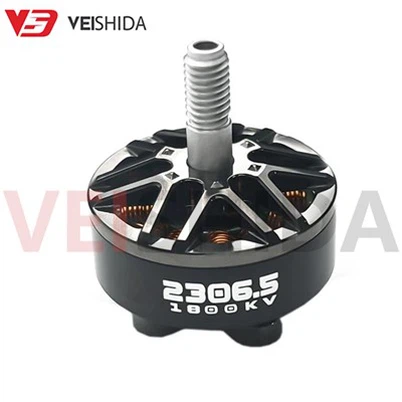
The KV range is 1800KV to 2400KV, suitable for 4S to 6S voltage, maximum power 901W, maximum thrust 1683g. High KV design, specially designed for racing and flexible models, with quick response.
Multiple KVs (1300KV, 1500KV, 1950KV), compatible with 6S voltage, maximum power 1623.5W, maximum thrust 2910g. Suitable for high-performance multi-rotor drones with balanced power output.
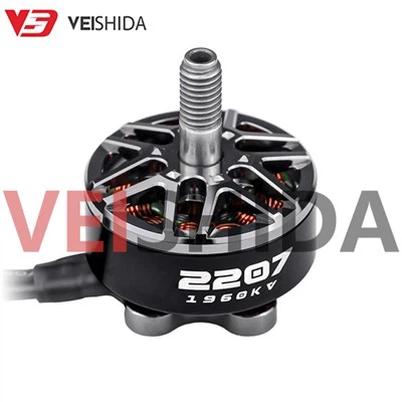
KV 1960KV, compatible with 6S voltage, maximum power 902.48W, maximum thrust 1702g. Lightweight design, suitable for racing and flexible control drones.
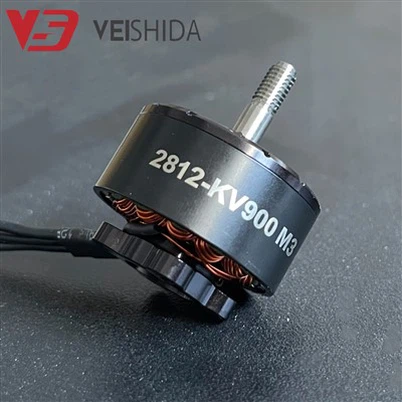
KV 900KV, compatible with 6S voltage, maximum power 1010W, maximum thrust 2710g. Suitable for medium-sized UAVs and general aerial photography applications, taking into account both performance and stability.
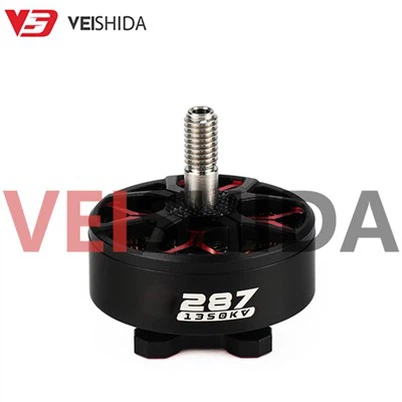
KVs of 1350KV and 1750KV are optional, suitable for 4S to 6S voltage, maximum power of 1436W, and maximum thrust of 2728g. Flexible adaptation to various drone needs, balanced performance.
If you are seeking high-quality, high-performance, and customizable drone motors, VSD is here to support your success. VSD looks forward to becoming your long-term partner and jointly promoting the development of the drone industry.