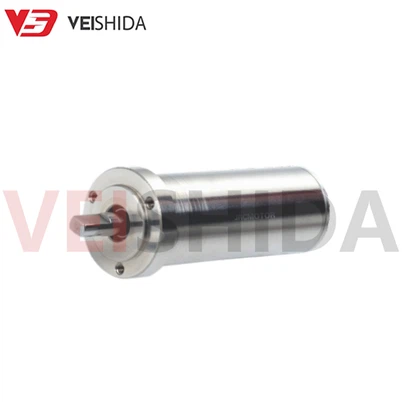


Micromotor drive and magnetic resonance imaging fine-tuning system
Leave a message
Magnetic resonance imaging (MRI) equipment is a common advanced imaging device in hospitals, which can help doctors clearly observe the internal structures of the human body, such as the brain, spine, joints and even blood vessels. In order to take clear images, MRI equipment not only requires a strong magnetic field, but also requires fine adjustments to the coil position and the bed so that the scanning area is just right for the target area.
However, these adjustments cannot be done manually, but rely on the precise drive of micromotors. In traditional applications, MRI equipment usually uses stepper motors, servo motors or brushless DC motors (BLDC) to adjust the coil angle and control the movement of the bed, but these motors may cause electromagnetic interference (EMI) and affect the imaging quality of MRI equipment. In recent years, coreless motors have begun to attract the attention of MRI equipment manufacturers due to their low EMI, high precision, and fast response.
So how important is the coil and bed adjustment of MRI equipment? How do different types of micromotors work? And what advantages do coreless motors bring?
The role of magnetic resonance imaging (MRI)
Magnetic resonance imaging (MRI) is a non-invasive imaging technique widely used in modern medical diagnosis. By using powerful magnetic fields and radio frequency pulses, MRI can clearly show the soft tissue structure inside the human body and provide more detailed images than traditional X-rays and CT. Its radiation-free nature makes it a safer examination method for patients, especially for groups that need multiple examinations, such as cancer patients and patients with chronic diseases.
For doctors, the high-resolution images provided by MRI are key to diagnosis and treatment decisions. Doctors can use MRI images to accurately identify brain tumors, spinal injuries, joint problems, and other complex diseases, allowing for more effective treatment planning. The application of MRI is not limited to disease diagnosis. With the deepening of medical research, MRI is also playing an increasingly important role in preoperative planning, postoperative evaluation, and patient follow-up.
Coil adjustment and bed fine-tuning in MRI
In MRI examinations, the patient's position and the precise adjustment of the coil are crucial. In order to obtain high-quality images, the MRI equipment needs to accurately adjust the position and angle of the coil according to the imaging requirements of different parts. This process directly affects the resolution and accuracy of the imaging.
The coils in MRI equipment are used to generate and receive radio frequency signals. The coils for each MRI scan area need to be adjusted according to the patient's body size and the examination area. For example, when examining the head, the head coil needs to be precisely positioned on the patient's head to ensure optimal signal transmission and reception. For other areas, such as the spine or joints, the angle and position adjustment of the coil are equally important to help obtain clear and detailed imaging data.
The fine-tuning system of the bed ensures that the patient maintains the correct posture and position during the scan. The height, angle and rotation of the bed need to be precisely adjusted to ensure that the patient is in the best position for scanning. The fine-tuning of the bed is not only related to the image quality, but also to the comfort and safety of the patient. Especially in long-term scanning or special postures, the fine-tuning system can provide the most appropriate support to reduce the patient's discomfort.
These adjustment systems are usually driven by precision micromotors, which ensure that every adjustment of the coil and the bed is made within the millimeter level. As the requirements for precision and stability of medical equipment continue to increase, the role of these micromotors in MRI systems is becoming increasingly important.
Micromotor drive and magnetic resonance imaging fine-tuning system
In magnetic resonance imaging (MRI) equipment, precise coil adjustment and bed fine-tuning systems are crucial, and the accuracy of these adjustment operations directly affects imaging quality and patient comfort. These fine adjustments usually rely on micromotor drive technology, and common micromotor types include stepper motors, servo motors, and brushless DC motors (BLDC). Although these motors play an important role in MRI equipment, they also have some limitations.
1. Stepper Motor
Stepper motors are widely used in MRI equipment due to their simple structure, low cost and high control accuracy. They adjust the position by stepping the movement, which is suitable for low-load, low-speed precision control tasks. They are very suitable for adjusting the coil position or fine-tuning the bed, especially when fast response is not required.
However, the operation of stepper motors will generate significant electromagnetic interference (EMI), which may affect the image quality of MRI equipment. The vibration and noise of stepper motors are also major problems, especially when running at low speeds. These vibrations may affect the comfort of patients and even interfere with the stability of the equipment. In addition, stepper motors usually do not have a closed-loop feedback control system. When the load changes greatly, they may not be able to maintain a high positioning accuracy, resulting in error accumulation.
2. Servo motor
Servo motors are often used in MRI equipment for tasks that require high precision and high loads. Unlike stepper motors, servo motors use a closed-loop control system to adjust their movements through real-time feedback, thereby ensuring precise position control. Servo motors can maintain high accuracy and stability under large loads and long operation times, so they are used in MRI equipment for complex bed adjustments or coil adjustments that require high image quality.
In terms of control, servo motors have certain advantages, providing stable positioning accuracy and high load-bearing capacity. However, servo motors are usually large in size and complex in structure, which may affect the overall size and spatial layout of the equipment. In addition, servo motors still generate certain electromagnetic interference (EMI) during operation. Although they are relatively accurate, they may still have an adverse effect on MRI images in a high-precision environment.
3. Brushless DC Motor (BLDC)
Brushless DC motors (BLDC) are the mainstream choice in MRI equipment due to their high efficiency, low noise, long life and low electromagnetic interference (EMI). BLDC motors can maintain high stability under high load and long-term operation. Due to their low noise and low vibration characteristics, BLDC motors are very suitable for applications in MRI equipment that have high requirements for precision and stability.
However, there may be some problems with the control of BLDC motors at low speeds or during the startup phase. Since they use electronic commutation, they may face problems with unstable startup or slow response at low speeds, especially when making fine adjustments, which may affect the accuracy and flexibility of the equipment. In addition, BLDC motors require a dedicated electronic controller for regulation and commutation, which increases the complexity of the control system.
Coreless motors: ideal for increased precision and reduced interference
From the above, we know the importance of micromotor drive to magnetic resonance imaging. However, traditional motors have certain problems, which have been effectively solved with the development of Coreless Motor technology. Compared with traditional stepper motors, servo motors and brushless DC motors, Coreless Motors have significant advantages in many aspects, especially in low electromagnetic interference (EMI), high precision and fast response, and have become an increasingly important choice in MRI equipment.
First, the coreless motor adopts an ironless design, which means that it does not produce large magnetic field changes like traditional motors, thus significantly reducing electromagnetic interference (EMI). This is critical for MRI equipment, because any electromagnetic interference may affect the imaging quality, causing blurred or distorted images. The low EMI characteristics of the coreless motor can ensure the image clarity and accuracy of the MRI equipment, meeting the medical industry's demand for high-precision imaging.
Secondly, the Coreless Motor has a very high speed response capability, its inertia is small, it starts quickly, and it can make fast and fine adjustments, especially suitable for the precise positioning of coils and beds in MRI equipment. Whether it is fine-tuning the coil position or adjusting the bed angle, the Coreless Motor can provide accurate and immediate feedback to ensure accurate alignment of the scanning area, further improving the quality of imaging.
Furthermore, the Coreless Motor has a simple design structure and compact size, which can reduce space occupation and provide more flexible design options for MRI equipment. The smaller size and lighter weight allow MRI equipment to optimize space layout while ensuring high performance, improving patient comfort and ease of operation.
Therefore, VSD believes that with the continuous development of technology, Coreless Motors will play an increasingly important role in the field of medical imaging, providing more accurate and efficient support for medical diagnosis.
Professional Coreless Motor manufacturer
As a company focusing on the R&D and manufacturing of coreless motors, VSD has accumulated more than ten years of valuable experience in the micromotor industry. The company currently has a modern factory of more than 10,000 square meters, equipped with more than 30 professional R&D personnel, more than 40 assembly lines and more than 300 automated equipment, with strong production capacity and R&D strength. With the excellent performance of coreless motors, VSD has obtained international certifications such as ISO and CE to ensure the quality and reliability of its products worldwide.
In order to meet higher control requirements, VSD also provides Coreless Motor solutions that can be integrated with planetary gearboxes or magnetic encoders to further improve accuracy and response speed. Our products are not only widely used in many fields such as medical, industrial automation, and robotics, but also provide customized solutions according to different needs of customers. If you are interested in our products, please feel free to contact us. We also sincerely invite you to come to China, visit our factory, and personally experience VSD's strength and service.
VSD Coreless Motor Product Introduction
VEC-1015 is an ultra-small Coreless Motor with ultra-high speed (up to 75,656 rpm), low noise and no slot effect, suitable for precision instruments, medical equipment and micro robots. The low inertia design ensures fast response, and the speed, voltage and output shaft can be customized to meet different application requirements.
The VEC-1630 coreless motor is designed with a 16mm diameter, high efficiency and low noise, with a maximum output power of 21.15W. Its low inertia and fast response characteristics are suitable for automation equipment, medical instruments and high-precision motion control systems, and the voltage, speed and mounting interface can be customized.
VEC-1656SI has the advantages of fast response, low noise, low vibration and long life, with a maximum output power of 76.29W, suitable for industrial automation, robots and precision equipment. It supports voltage, speed and interface customization, is compatible with a variety of application scenarios, and provides excellent power solutions.
VEC-16mm Series Coreless Motors
The VEC-16mm series includes models such as EC1636, EC1644, and EC1656. They have efficient power output and Hall signal feedback and are widely used in precision instruments, medical equipment, and robotics. A variety of voltage and torque options are available, which can be customized on demand to ensure the best performance match.
VEC-22mm Series Coreless Motors
The VEC-22mm series (EC2232, etc.) provides high power density, low noise and Hall signal feedback, suitable for industrial automation, smart equipment and unmanned systems. It supports a variety of voltage and torque specifications to meet high-precision drive needs and provides flexible customization options.
The VEC-32 series Coreless Motors are designed for high precision and high torque requirements, with low noise, fast response and high efficiency. Its EC3242 model has a rated output power of 30.8W and provides a torque of up to 25mN.m, suitable for medical equipment, robot joints, automation instruments, etc. The EC3260 model has a rated output of 53W and a higher peak torque, suitable for power-intensive applications. It supports customization of voltage, speed, bearings, and interfaces to ensure that different application requirements are met.