

Should You Clean Your Drone Motors? Here’s How to Do It Properly
Leave a message
Should drone motors be cleaned?
Absolutely - especially after outdoor flights.
Drones tend to pick up dust, grass clippings, and sand during flight-especially during low-altitude takeoffs, landings, or when flying close to the ground. Once these foreign objects enter the gaps in the motor, they may cause rotor imbalance and frictional heating, leading to reduced motor efficiency, accelerated bearing wear, and ultimately, a shorter motor lifespan.
In high-speed brushless motors used in multi-rotor or racing drones, clean rotation is crucial for flight stability and responsiveness. Regular motor cleaning is essential for ensuring reliable drone performance and extending service life.

How to Properly Clean Drone Motors
Cleaning the drone motor does not require complicated tools, but the method must be correct to avoid secondary damage. The following are the recommended basic steps:
1. Disconnect power and remove propellers
Before cleaning, ensure the drone is powered off and the propellers are removed to avoid accidental injury.
2. Use compressed air to blow away dust
Use an air tank or air pump to blow air into the motor openings to dislodge dust and debris from the stator, coils, and housing.
3. Local treatment with soft brush/cotton swab
For stuck small particles or adhered impurities, use a soft brush or dry cotton swab to gently remove them. Avoid applying excessive force, as it may scratch the motor surface or coils.
4. Avoid liquid cleaning
Avoid using water, alcohol, or other liquid cleaners-especially on non-waterproof models-as they can cause corrosion or internal short circuits.
5. Check the rotation status
After cleaning, manually rotate the motor to ensure it spins freely without resistance or unusual noise.
In case of severe pollution or complex flight environment, the cleaning time can be appropriately extended to ensure that the motor returns to good working condition.

VSD motor dust and water resistance level description
Drone motors are often exposed to environmental elements like dust, grass, and moisture during flight.To cope with the changing outdoor environment, VSD's brushless drone motors focus on protection performance in structural design, with IP6X to IPX7 dust and water resistance ratings, which can cope with most complex scenarios.
Protection capability highlights:
IP6 dustproof grade: completely prevents dust from entering the motor, protecting the coil, bearings and magnets;
IP7 waterproof rating: short-term water immersion resistance, suitable for missions such as humid, low-altitude wetland, and foggy flight;
Tightly sealed assembly: features such as precision bearings and silicone gaskets prevent ingress of external contaminants.
Anti-corrosion coating design: delays the impact of rain or moisture on the rotor and wiring parts, extending service life.
VSD drone motor models with high protection capabilities include:
|
model |
Applicable voltage |
KV value range |
Maximum thrust |
Typical Uses |
|
6S–12S |
380KV |
9034g |
Large load-carrying drone, inspection platform |
|
|
6S–8S |
420KV |
7232g |
Multi-rotor aerial photography, industrial applications |
|
|
5S–8S |
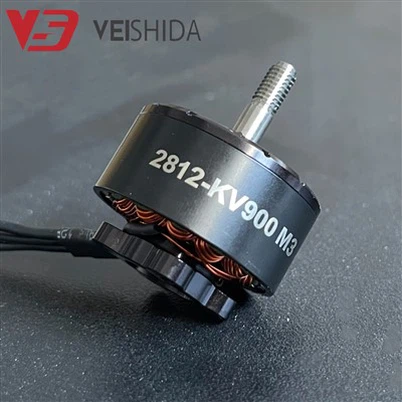
900–1520KV |
4185g |
Medium-sized aerial photography drone, flexible platform |
|
|
6S |
1300–1950KV |
2910g |
Multi-rotor aerial photography, light load drone |
|
|
6S |
900KV |
2710g |
Low-noise aerial photography platform, commercial multi-rotor |
|
|
4S–6S |
1350–1750KV |
2728g |
Racing drone, flexible flight |
|
|
4S–6S |
1800–2400KV |
1683g |
Cross-country drone, high-speed flying platform |
|
|
6S |
1960KV |
1702g |
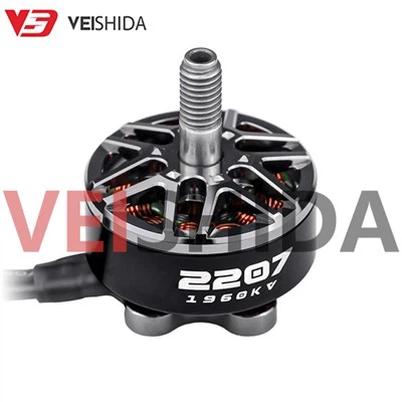
FPV Racing Drone |
These models can be customized with specific KV values, enhanced protection ratings, and ESC compatibility adjustments to meet the demands of various flight scenarios.
Feel free to contact us for product manuals, samples, or expert consultation. Visit our product page to explore more motor models and technical details. Let VSD help your drone fly more smoothly, reliably, and longer.