


Advantages And Disadvantages Of Brushless DC Motors With And Without Inductors
Leave a message
Sensing in a brushless motor refers to the presence of a Hall sensor, which, when current flows through a conductor perpendicular to an external magnetic field, produces a potential difference at its ends perpendicular to the direction of the magnetic field and the current. Thanks to the Hall sensor, the brushless driver can determine the position of the brushless motor rotor. A sensorless, on the other hand, has no Hall sensor and can only determine the position of the motor rotor indirectly because the brushless motor lacks a Hall sensor and cannot get instant feedback. The following is an overview of the advantages and disadvantages.

Advantages and disadvantages of a sensored brushless motor
Pros: Improved motor linearity, high speed stability, and good responsiveness.
Disadvantages: high cost and difficult to do waterproof treatment, limited by Hall sensors, easy to be interfered with, allowing the drive to receive the wrong information and cause failure, so the drive to motor wire length limit is generally within 5 meters.
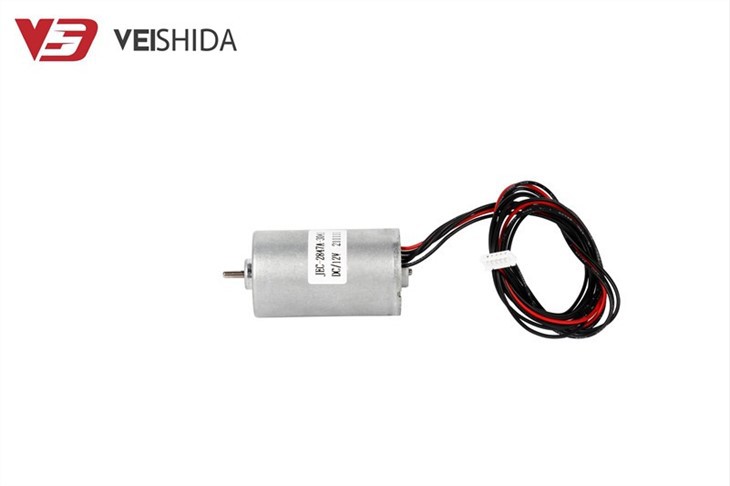
Sensorless brushless motor advantages and disadvantages
Advantages: no sensor, lower cost, wire length not limited by Hall factor.
Disadvantages: less linear than a sensored brushless motor, in addition to the drive in the market because the speed does not have accurate feedback, the error will be more than ± 20 rpm. With load, full load start easily jitter or start failure.

The above is the difference between brushless DC motors with and without inductance, for more information about this, please feel free to contact us


