

Why Is The Hollow Cup Motor So Small?
Leave a message
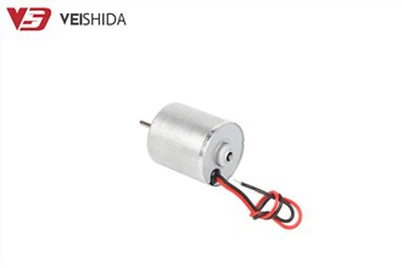
The hollow cup motor is a permanent magnet DC servo motor, which can be classified as a small motor. Structurally, it breaks the rotor structure of the traditional motor and adopts an ironless rotor, also known as a hollow cup rotor. Brushless motors are divided into two categories: brushed and brushless.

The coreless motor consists of a back cover, a limiter, a brush end cover, a brush, a rotor, a rotor (rotor), a rotating part, a seal, a sliding bearing, a casing, a magnet (stator), a flange and a ring. .The stator consists of permanent magnets, housing and flanges. The housing provides a constant magnetic field, making the motor virtually damage-free. No soft magnetic teeth. Power delivery is precise and runs smoothly even at low speeds. At higher speeds, the motor reduces vibration and noise. The windings are connected to the shaft by means of commutation plates. The coil moves in the air gap between the magnet and the housing. The commutation system uses two precious metal brushes to reduce brush sparking. Reduced brush sparks lead to less electromagnetic emissions.
This new rotor system completely eliminates power losses caused by eddy currents formed by the iron core. Because there is no iron loss, its efficiency is higher than that of ordinary DC motors. The device is a rotor with a small moment of inertia, which is easy to control, but without an iron source, the rotor can be made very delicate, otherwise the magnetic flux will be lost, so the The power will not be very large, and the large hollow cup motor will not reach a few hundred watts.