

How to Tell If Your Drone Motor Is Working Properly
Leave a message
Introduction: Why test motors?
The motor is a critical part of a drone's flight system, and even minor issues can lead to reduced thrust, unstable flight, or complete failure. Therefore, basic motor testing is essential before installation, when abnormal behavior occurs during flight, or as part of routine maintenance.
Some motor faults may not be visible externally but could involve burnt windings, internal shorts, or ESC signal issues. If left unchecked, these can reduce efficiency or even damage the ESC, battery, or flight controller.
This article outlines several practical motor testing methods for different use cases:
· Pre-installation checks for new motors
· Troubleshooting after abnormal flight performance
· Routine maintenance inspections
· Comparing performance across different motors
With basic tools and operations, you can quickly determine whether the motor is in normal working condition, thus ensuring flight safety and project stability.

The most common testing methods
To assess motor performance, testing typically includes two types: static diagnostics and dynamic evaluation. The following three methods are common and effective testing methods, which are suitable for most brushless motor systems.
1. Use a Multimeter to Check for Coil Abnormalities
Using a digital multimeter, you can quickly determine whether the motor has hardware faults such as burnout or short circuit. The steps are as follows:
· Disconnect the motor from the power supply to ensure that there is no power supply;
· Use a multimeter to measure the resistance between the three-phase wires (AB, BC, CA);
· The resistance between any two of the three phase wires should be nearly equal-typically in the tens of milliohms.
· If the resistance of two phases is obviously too high or infinite, there may be a winding short circuit;
· If the reading is close to 0 or the buzzer alarm sounds, there may be a coil short circuit.
Advantages: Fast, secure, no reliance on additional equipment
Best used when the motor is unmounted and undergoing initial inspection.
2. Run ESC Startup Test to Verify Drive Functionality
Connecting a normal ESC and a signal source (such as a flight controller, PWM tester or remote control receiver) can determine whether the motor can start and run smoothly.
Operation suggestions:
· Use a known working ESC and a reliable signal source such as a flight controller, PWM tester, or RC receiver.
· Slowly increase the throttle signal and observe whether the motor starts smoothly;
· In normal state, there should be no violent vibration, no jamming, and the sound should be clean and free of noise;
· If there are severe jitters, harsh high-frequency sounds, or inability to rotate, it may be due to abnormal windings or mismatched ESC configuration.
Advantages: Simulate the real working environment and observe the operating status intuitively
Applicable scenarios: Before flight debugging, when testing ESC coordination
3. Use a Thrust Stand to Test Dynamic Performance
The thrust test stand is a more professional testing method that can measure key performance indicators of the drone motor, such as thrust output, speed, and temperature rise, under different loads and throttle inputs .
Test highlights include:
· Is the thrust output stable under different throttles?
· Look for anomalies such as jerky response, delayed throttle reaction, or inconsistent thrust.
· Whether the motor is overheated or vibrates abnormally after long-term operation;
· Check whether the thrust meets the standard and adapts to the current propeller blade and voltage combination.
Advantages: Obtain complete dynamic data, suitable for evaluating product performance
Applicable scenarios: New motor R&D testing, motor and propeller combination debugging
These three test methods can be used in combination to gradually determine whether the motor is reliable, from basic troubleshooting to dynamic evaluation. If you need mass production testing or engineering applications, you can also use speed sensors and current/power meters for more comprehensive analysis.

Suggestions for troubleshooting common problems during testing
When testing drone motors, even with the right equipment and methods, you will often encounter problems that appear to be "broken motors." In fact, many faults are not caused by damage to the motor itself, but rather by wiring, ESC configuration, or mismatched accessories.
Here are some typical problems and troubleshooting suggestions:
1. The motor only shakes but does not rotate (slight vibration but does not start)
Possible causes:
· The three-phase wires are connected incorrectly or loosely;
· ESC output is discontinuous or PWM signal is abnormal;
· Incorrect ESC startup settings (e.g., minimum throttle too low or improper startup mode);
· The motor coil is burned out or broken.
Troubleshooting suggestions:
· Check whether the three-phase connection between the ESC and the motor is firm;
· Replace the ESC or use a PWM tester instead of the flight controller to check for signal problems;
· Measure the resistance between the three-phase lines to determine whether there is a circuit break;
· Try replacing the motor with the same model to confirm whether the problem is with the ESC.
2. The motor whistles at high frequencies and is difficult to start
Possible causes:
· The ESC cannot identify the motor position and the startup fails;
· The propeller places excessive load, and the ESC cannot provide enough current;
· The KV value and voltage of ESC and motor do not match.
Troubleshooting suggestions:
· Remove the propeller first and test only the unloaded motor;
· Ensure that the ESC supports the current motor's operating voltage and current requirements;
· Check whether the ESC startup mode is correct (you can try switching to soft start);
· Replace the propeller with one with lower thrust or test with a motor with lower KV.
3. The motor temperature rises too high and the casing becomes hot
Possible causes:
· The system continues to work at full load for too long, resulting in insufficient heat dissipation;
· The motor and propellers do not match, resulting in overload;
· The ESC frequency or battery output is abnormal;
· The motor bearings are aging and the mechanical friction is too large.
Troubleshooting suggestions:
· Check whether the motor load exceeds the specification (it can be re-tested by thrust frame);
· Replace the appropriate propeller blade combination and adjust the flight throttle curve;
· Inspect the motor for debris, internal obstruction, or lack of lubrication
· Use infrared thermometers to monitor motor temperature rise and properly evaluate thermal management conditions.
4. Low thrust or unstable speed
Possible causes:
· Motor performance deterioration (coil aging, demagnetization);
· The battery voltage drops and the power supply is insufficient;
· The propeller is installed upside down or the specifications do not match;
· The ESC is incompatible and the output curve is unstable.
Troubleshooting suggestions:
· Replace the motor with a new one of the same model for comparison;
· Check the battery internal resistance and discharge capacity to eliminate power supply problems;
· Confirm that the propeller is installed in the correct position;
· Choose a matching ESC brand or flash compatible firmware.
Knowing these problem types and troubleshooting methods in advance can not only quickly locate the motor status, but also effectively reduce debugging time and maintenance costs, which is especially critical for developers, integrators or drone manufacturers.

Recommended high performance drone motors
Whether the performance of the drone motor is stable directly affects the reliability, safety and overall performance of the flight platform. Testing with a multimeter, electric regulator, thrust rack, etc. can help you find potential problems before installation, eliminate hidden dangers in advance during use, and quickly locate the fault point after a failure.
Of course, testing helps identify issues that have already occurred. But choosing a high-quality motor in the first place is key to avoiding problems altogether.
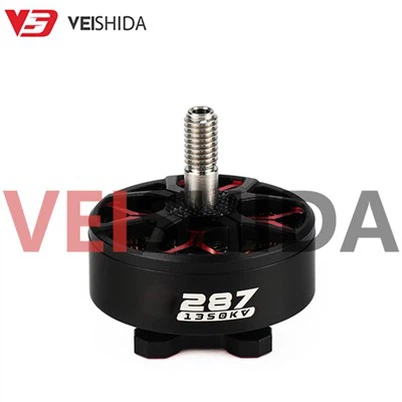
If you are looking for a high-performance motor for aerial photography drones, FPV drones, industrial inspections or multi-rotor load platforms, the VSD drone motor series is worth considering. We offer a range of brushless outer rotor motors designed for various applications-from lightweight drones to heavy-lift platforms:
VSD 5315 Drone Motor / VSD 4720 Drone Motor: Suitable for large-scale aerial photography and industrial-grade drones, with strong thrust and stable operation;
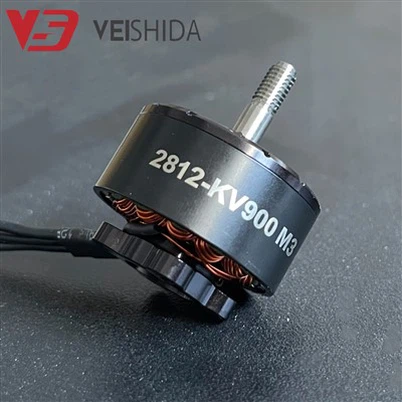
VSD 3115 Drone Motor / VSD 2808 Drone Motor / VSD 2812 Drone Motor: suitable for medium-sized aerial survey and multi-rotor mission platforms;
VSD 2306 Drone Motor / VSD 2207 Drone Motor / VSD 2807 Drone Motor: Designed for FPV racing and lightweight racing drones, with quick response and plenty of power.
Each motor undergoes multiple dynamic and static tests before leaving the factory to ensure that it meets the industry's high standards in terms of thrust, temperature rise, efficiency, vibration control, etc. At the same time, VSD also provides technical selection support and test data sharing services to help you complete product integration and verification faster.
Feel free to contact us for product manuals, spec sheets, or test reports. We also provide sample units and offer OEM/ODM customization to meet the needs of your project.