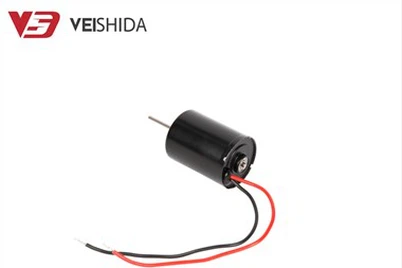


Knowledge related to brushless DC motors
Leave a message
What is a brushless DC motor?
Brushless DC motor (BLDC) is a type of DC motor that uses permanent magnets and electronic control chips to control rotor rotation. Unlike traditional DC motors, brushless DC motors do not require brushes, thus avoiding problems such as short motor life and low efficiency caused by brush damage and wear.
Brushless DC motor control is achieved through the built-in power regulator and motor control chip of the motor to control and manage the motor operation. The motor control chip manages and controls the rotational speed and direction of the rotor through motion control algorithms, and obtains information such as the rotor position and speed of the motor through sensors.
The characteristics of brushless DC motors are high efficiency, high power density, high speed, smooth and silent operation, long service life, and easy to build control modules. This makes brushless DC motors widely used in various situations that require motor motion control, including robots, aircraft, electric tools, printing machines, textile machinery, medical devices, and other fields

What is the working principle?
Brushless DC motor (BLDCM), also known as permanent magnet synchronous motor, is a new type of DC motor that uses electronic commutation technology to control the rotation of the motor rotor. Compared with traditional brushless DC motors, brushless DC motors have advantages such as long lifespan, high energy efficiency, and low noise. It is widely used in fields such as automobiles, electric tools, household appliances, industrial automation, etc.
Brushless DC motors do not have the commutator and brush used in traditional brushless DC motors. The commutation process is completed by the internal electronic control system of the motor, which uses electronic commutation to achieve motor steering and speed control. The rotor permanent magnet of a brushless DC motor is usually made of strong magnetic materials, which interact with the permanent magnet inside the motor to generate a strong magnetic field. Therefore, it has the characteristics of high starting torque, low mechanical inertia, and excellent dynamic performance.
The electronic commutator inside a brushless DC motor is composed of multiple transistors, which control the current direction of each coil in the motor at different time periods, achieving three-phase alternating electromagnetic force generation and driving the rotor to rotate. The electronic commutator will accurately calculate the rotor position and speed by measuring the current and position sensor signals, enabling precise control and adjustment of torque and speed, achieving efficient and accurate driving.
The working principle of a brushless DC motor can be simply summarized as using an electronic commutator to control the rapid reversal of the current in the motor coil, allowing the motor rotor to rotate accordingly, thereby achieving control over the operation and direction of the motor. The application of this brushless DC motor in transmission and control systems has optimized the performance of various machines, improved efficiency and stability, and provided important driving force for the development of modern mechanical manufacturing industry.
When the motor rotor rotates, the magnets on the rotor will generate a magnetic field in the stator core, and the current in the stator winding will continuously change according to the direction of the magnetic field, resulting in a rotational torque that drives the motor to rotate.

What are the classifications of brushless motors?
Brushless DC motors can be classified into various types based on different classification methods. The following are common classification methods and corresponding types of brushless motors:
1. Structural classification:
(1) Inner rotor brushless motor: The rotor is located inside the motor, and the stator rotates around the rotor. Common types include planar, salient pole, conical, etc.
(2) External rotor brushless motor: The rotor is external to the motor, and the magnetic field generated by the stator drives the rotor to rotate. Usually used for high-speed operation, with strong durability, such as electric vehicle tire drive, fan motor, etc.
2. Magnetic circuit classification:
(1) Permanent magnet brushless motor: The rotor pole is a permanent magnet, and the rotor is equipped with a permanent magnet, which generates a magnetic field through changes in the stator field line.
(2) Induction rotor brushless motor: The rotor magnetic pole is an induction magnet, and the stator DC power supply drives the winding to generate a magnetic field, causing the rotor to induce magnetic field rotation.
3. Control classification:
(1) Hall sensor controlled brushless motor: The motor is equipped with a Hall sensor, which can provide real-time feedback on motor speed and position information, achieving precise control.
(2) Traditional Hall sensorless control of brushless motors: calculates motor speed and position through internal parameters such as current and voltage changes, and controls motor speed and direction.

What are the structure and main components of a brushless motor?
1. Rotor
The rotor of a brushless motor is composed of multiple permanent magnets, which are placed parallel to the central axis of the rotor. For smaller motors, permanent magnets adhere directly to the surface of the rotor. Larger models of motors use multiple segments of permanent magnets, which are evenly stacked along the rotor loop. Permanent magnets are usually manufactured through high-temperature sintering and other methods.
2. Stator
The stator of a brushless motor contains a soft iron core and winding. Unlike traditional DC motors, the windings of brushless motors do not undergo electromagnetic commutation through brushes, but instead use thyristor controllers to achieve electronic commutation. The stator winding is fixed on the stator core, and the magnetic field formed by the current passing through the winding attracts or repels the permanent magnet of the rotor, thereby driving the rotor to rotate.
3. Sensors
In order to achieve accurate electronic commutation, brushless motors need to install sensors to detect the position and speed of the rotor. The most commonly used sensor is the Hall sensor, which can detect changes in magnetic fields and generate electrical signals. By processing these signals, the controller can accurately determine the position of the rotor, thereby achieving precise electronic commutation.
4. Controller
The key component of a brushless motor system is the controller. The controller receives the signal sent by the sensor and processes it into a voltage and current suitable for the motor. A controller typically includes a set of power switches to control the output of current and magnetic fields. Its internal circuit also includes a phase-locked logic circuit, PWM modulation circuit, Hall sensor interface, etc.
A brushless motor is composed of several main components, including a rotor, stator, sensor, and controller. The rotor is composed of multiple permanent magnets, while the stator contains a soft iron core and winding. Sensors determine the position and speed of the rotor by detecting changes in the magnetic field. The controller is a key component of the entire system, used to process the signals generated by sensors into voltage and current suitable for the motor. All of these components work closely together to achieve efficient and precise electronic commutation.

How to control and drive brushless motors?
There are three main methods for driving and controlling brushless motors:
1. Direct drive method: Use electronic switching devices to control the direct drive of a three-phase brushless motor. This method is simple and feasible, but requires high-precision circuits to ensure the positioning and control of the motor.
2. Electric angle driving method: Use sensors to detect the position of the motor and apply control algorithms to achieve accurate motor speed and control. This method has better stability than the direct drive method, but the circuit is complex and costly.
3. Magnetic encoder driving method: Fix a magnetic encoder on the motor rotation axis, and control the motor speed and direction by detecting the position of the motor encoder through a sensor. This method can achieve high-precision positioning and control.
4. Sensorless driving method: Integrate sensors inside the motor and use feedback circuits to detect the position and speed of the motor for control. This method is the simplest and highly reliable, but requires complex control algorithms to achieve high-precision control.
5. Control method based on Hall sensor: This method uses Hall element to detect rotor position, and controls the phase sequence of the motor through the control circuit and PWM signal. The advantage is high control accuracy, but additional Hall elements are required.
Common controllers/drivers include FPGA, DSP, ARM, STM32, etc. The controller/driver can control the speed, position, and other parameters of the motor based on different control algorithms. There are many driving and control methods for brushless motors, and choosing the method that is suitable for one's own application requires comprehensive consideration of factors such as cost, accuracy, and reliability.

What are the maintenance methods?
Brushless motor is a high-precision and high-efficiency motor with high reliability and stability. In order to ensure its normal operation, regular maintenance is required. The following are the maintenance methods for brushless motors:
1. Regular cleaning: The exterior of brushless motors should be cleaned regularly to remove dust and debris deposited on the surface. You can use a soft brush or cotton cloth to dip in an appropriate amount of cleaning solution for cleaning. In addition, it is necessary to avoid water entering the interior to avoid circuit damage.
2. Check cables and connections: Regularly check whether the cables and connections of the brushless motor are intact and undamaged. If gaps, wear, or damage are found, they should be replaced or repaired in a timely manner.
3. Check bearings and mechanical components: Regularly check whether the bearings and mechanical components of the brushless motor are normal. If abnormal noise, looseness, or wear are found, they should be dealt with promptly. The bearing should be coated with an appropriate amount of lubricating grease to ensure its normal operation.
4. Check the motor temperature: Brushless motors generate a certain amount of heat during operation. To avoid overheating damage, it is necessary to regularly check the motor temperature. If the temperature is found to be too high, it should be stopped in a timely manner and the cooling equipment should be checked for normal operation.
5. Regular maintenance: Brushless motors require regular maintenance to ensure their normal operation. Maintenance includes cleaning, lubrication, replacing worn parts, etc. It is recommended to regularly develop maintenance plans based on usage and execute them according to the plan.
In short, the maintenance of brushless motors is crucial for their normal operation. Only regular inspection and maintenance can ensure its long-term stable operation.

What are the faults and troubleshooting methods for brushless motors?
1. Check the power supply: First, check the power supply to confirm if there is sufficient voltage and current. If the current is insufficient or the voltage is too low, it will cause the brushless motor to not work properly.
2. Check the battery: Check if the battery has sufficient power. If the battery is already low, it should be charged or replaced with a new one in a timely manner.
3. Check the motor chip: The main component of a brushless motor is the motor chip. If the motor chip malfunctions, the motor will not function properly. You can confirm whether there is a power outage, short circuit, or other fault by checking the motor chip.
4. Check the circuit: Check if there is a short circuit or power outage in the circuit of the brushless motor. If a circuit malfunction is found, it should be repaired in a timely manner.
5. Check the motor sensor: The sensor of the brushless motor can detect the speed and direction of the motor. If the sensor malfunctions, the motor will not operate properly. You can check the sensor to confirm if there are any circuit faults, connection issues, or sensor damage.
6. Check the fan: If the brushless motor is used in an environment that requires heat dissipation, a fan malfunction may also cause the motor to malfunction. You can confirm whether there is a malfunction or damage by checking the fan.
7. Check the motor bearings: Damage to the motor bearings can cause the motor to rotate unevenly and even fail to function properly. You can confirm whether repair or replacement is necessary by checking the motor bearings.
The above are some common troubleshooting methods for brushless motors. If the nature and solution of the problem cannot be determined, it is best to contact professional personnel for repair and handling.

How to clean a brushless motor?
1. Disassembly: Firstly, it is necessary to disassemble the brushless DC motor and remove any oil and dust from the motor slot.
2. Cleaning: Use professional cleaning solution or gasoline to wipe the motor slot and rotor, and gently brush the motor bearings and rotor with a clean brush.
3. Drying: Quickly dry the cleaned interior and rotor surface of the motor using a hair dryer or other means.
4. Assembly: Add an appropriate amount of lubricating oil to the dry rotor, and then reinstall the motor. Pay attention to ensuring that the motor components are intact and undamaged during installation.
Attention: When cleaning brushless DC motors, pay attention to safety. Do not use water to clean the motor, avoid short circuits caused by water ingress, and do not use corrosive liquids such as acid or alkali for cleaning.

How to extend the service life of the motor?
1. Maintain good heat dissipation: Brushless motors generate a certain amount of heat during operation, and it is necessary to maintain good heat dissipation. Heat dissipation fins, fans, and other methods can be used to reduce temperature and reduce motor losses.
2. Prevention of overload and short circuit: Overloading and short circuit can cause an increase in motor current, accelerate motor aging, and even burn out the motor. Therefore, it is necessary to avoid overload and short circuit situations during use, and pay attention to the matching of the power supply and motor.
3. Regular lubrication: Brushless motors have bearings inside, which require regular lubrication with oil or grease to reduce friction and wear, and extend service life. Reasonable lubrication cycle management needs to be carried out based on the usage and operating time of the motor.
4. Avoid high or low voltage: The motor needs to use a suitable voltage, as high or low voltage can cause abnormalities in the motor, increasing its loss and aging.
5. Avoid excessive speed: The maximum speed of brushless motors generally has a limit value. Overspeed can cause the motor to experience excessive mechanical stress, increasing the risk of wear and aging. Therefore, when using brushless motors, it is necessary to pay attention to the difference between their rated speed and maximum speed to avoid overspeed operation.
6. Avoid reverse operation: Reverse operation can cause serious damage to electronic components, coils, bearings, etc. inside the motor. When using a brushless motor, it is important to ensure forward operation to avoid generating reverse current, which can lead to motor overload, burning, and other situations.
7. Regular inspection: The service life and quality of brushless motors are influenced by many factors, and regular inspections are needed to promptly identify and solve potential problems, improve the reliability and service life of the motor.
The above are the common questions and answers we Vshida shared with you about brushless DC motors. If you have any other needs, please contact our professional customer service personnel to explain them in detail. If you have any other needs, please contact us.