

What is an FPV drone? How is it different from a regular drone
Leave a message
What is FPV Drone
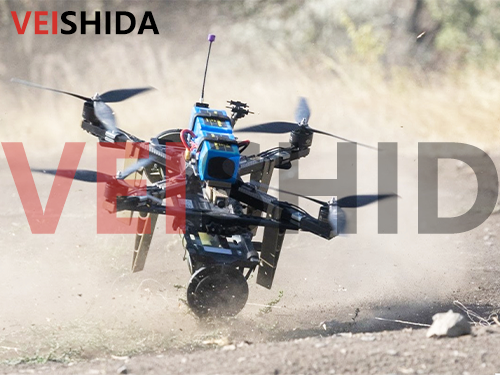
FPV stands for "First-Person View" - a flight mode where pilots see through the drone's onboard camera in real time, and wears image transmission glasses or watches it on the monitor, as if they were inside the drone, piloting it directly. This immersive operation method is significantly different from the traditional "visual flight" or "GPS automatic control" drone.
Unlike aerial photography drones that prioritize stability and automation, FPV drones emphasize speed, controllability, and instant feedback. Pilots not only view the live feed in real time, but also manually control the drone's attitude, including pitch, roll, yaw, and other directions, with minimal automated assistance-any mistake can easily result in a crash.
This type of drone is widely used in racing, stunt crossing, urban exploration, free flight training, etc. Especially on social media platforms, you may have seen some videos of flying through tight spaces such as forests, buildings, and under bridges. These flights showcase the unique appeal of FPV drones.
Although the entry threshold is slightly high, FPV drones are attracting more and more DIY enthusiasts, racing players and aerial photography creators with their unique "first-person perspective immersion".

FPV Drones vs Regular Drones: Key Differences
Although both FPV drones and ordinary drones are "multi-rotor aircraft", they are essentially different in terms of flight logic, functional positioning, and core configuration. Understanding these differences will help you choose the type of drone that is more suitable for you.
1. Different control methods
FPV drones can be flown from a "first-person perspective" by wearing FPV glasses, and the images are transmitted in real time from the onboard camera. Pilots typically use joysticks for precise manual control, requiring fast reflexes and strong handling skills.
Ordinary drones are mostly remotely operated through a remote control, app or ground station. These drones support autonomous hovering and pre-programmed flight paths. Some models can take off and return with one button. The operating threshold is low, making it suitable for novices to get started quickly.
2. Different flight design goals
FPV drones are centered around speed and maneuverability, allowing for quick repairs and relaunch after an intentional crash or loss of control, making them ideal for racing and obstacle-based flight challenges.
Ordinary drones pay more attention to flight stability and shooting image quality. They are designed to be stable and controllable, and are suitable for tasks such as photography, surveying and mapping, and monitoring.
3. Learning difficulty and training curves differ significantly
FPV drones require pilots to have a certain foundation. Most people need to practice hundreds of times in a simulator before they can actually fly, mastering attitude control and dealing with loss of control.
Ordinary drones are easy to operate, and most users can complete take-off, hovering and image acquisition without any training.
4. Different flight methods and maneuverability
FPV drones emphasize dynamic flight and can perform stunts such as rolling, sharp turns, and crossing obstacles. The entire operation process relies on the pilot's real-time visual judgment.
Ordinary drones fly more smoothly, with the goal of slow movement and precise positioning, and are widely used in aerial imaging, GIS data acquisition, and environmental monitoring.
5. Differences in motor and image transmission system configuration
|
Components |
FPV Drone |
Ordinary drone |
|
Motor |
High KV brushless motor, high thrust output and quick response |
Low to medium KV motor, stable operation, focusing on efficiency and endurance |
|
Image transmission system |
analog transmission with ultra-low latency or digital high-definition image transmission (such as DJI O3) |
Mainly HD image transmission, but with slightly higher latency |
|
Camera |
Mainly based on real-time image acquisition, with low-latency output |
High-resolution photo/video recording is the main focus, and the less immersive experience |
|
Battery Specifications |
Mostly 4S/6S high discharge rate lithium batteries |
Most of them are 2S~4S batteries, which have longer battery life but relatively flat output. |
6. Different application scenarios
FPV drones are suitable for racing flights, free flying, stunt training, simulated combat, etc. They are often used for training, competitions or short-distance special effects video shooting.
Ordinary drones are widely used in aerial photography, map surveying and mapping, agricultural spraying, security inspection and other tasks, which have higher requirements for flight stability and shooting quality.
Through the comparison of these 6 different angles, we can find that FPV drones are more challenging and immersive, suitable for players who pursue speed and control; while ordinary drones focus more on the ease of flight and functionality, and are more suitable for entry-level users and groups with shooting needs.
What are the core components of FPV drones?
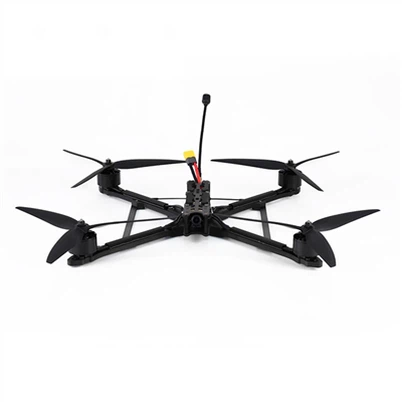
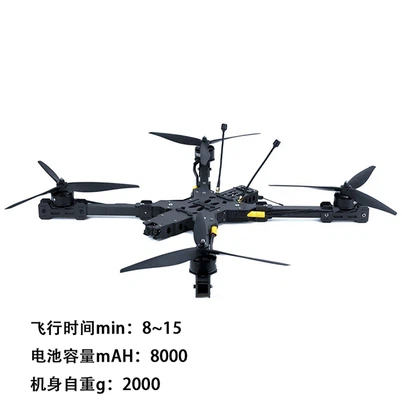
One of the biggest differences between FPV drones and ordinary aerial photography drones is that they rely more on "human-machine collaboration" and "high-response configuration." The whole machine usually adopts a modular design, and pilots can freely combine various components according to their flying style and target scene.
Structurally, FPV drones are mainly composed of the following four systems:
1. Power system
This is the foundation of FPV drone flight performance. The core components include:
● Motor
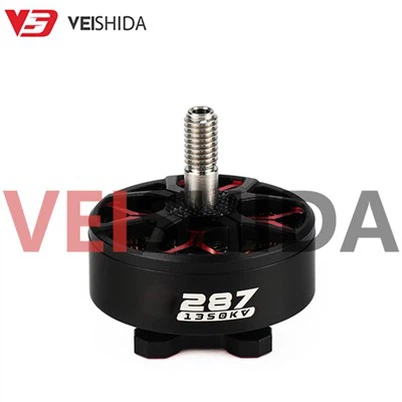
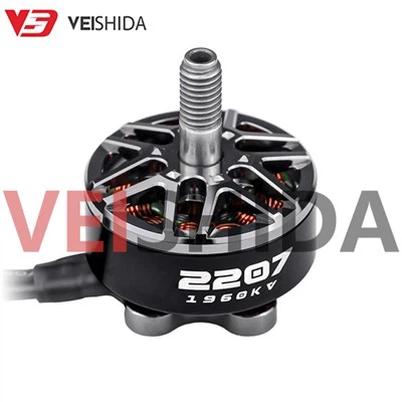
The motor delivers the thrust needed for flight and serves as the heart of the power system. Its performance is determined by multiple parameters:
Stator size (such as 2207, 2306, etc.): The larger the size, the stronger the thrust, but the higher the energy consumption;
Construction type: Mostly brushless external rotor motors, suitable for high-speed, high-torque applications.
● Electronic speed controller (ESC)
Supports high-frequency PWM signals for rapid motor response, synchronized with the flight controller.
Generally, a 4-in-1 ESC that supports BLHeli_32 or similar protocols is chosen to save space and wiring.
● Battery
Supplies power to the drone and affects flight time and burst performance.
Most are high-rate lithium batteries (LiPo), with common specifications being 4S and 6S;
The battery capacity and discharge rate need to be weighed against the motor power and flight requirements;
Affects the aircraft's endurance, thrust-to-weight ratio and weight distribution.
2. Flight Control System
This is the brain and neural network of the FPV drone, responsible for converting human instructions into specific flight movements.
● Flight Controller
The flight control board collects flight status through built-in sensors (such as gyroscopes, accelerometers, barometers, compasses, etc.) and controls each motor to achieve stable flight.
Mainstream systems such as Betaflight and INAV support ACRO/RATE mode;
Make extremely high-frequency response calculations to the pilot's input, suitable for stunts and flying through the air.
● Receiver
Used to receive signals from the remote controller and transmit commands to the flight controller for execution.
Mainstream protocols such as ELRS and Crossfire;
Signal strength and anti-interference performance directly affect long-distance flight stability.

3. Image Transmission System
FPV's "first-person perspective" experience depends entirely on the low-latency performance of the image transmission system.
● Camera
Responsible for capturing real-time images during flight, there are two common types:
Analog camera: low latency, fast response, and "rough" image style;
Digital cameras (such as DJI): The image is clear, the latency is slightly higher, but the experience is more realistic.
● Video Transmitter (VTX)
Encode the image signal collected by the camera and send it to the ground receiving device:
Analog image transmission: mostly use 5.8GHz frequency band, adjust power to control interference;
Digital image transmission: higher bandwidth and better clarity than analog image transmission.
● Image transmission receiver & display device
The aerial signal is decoded and transmitted to FPV glasses or display screens, providing the pilot with a first-person perspective and controlling the flight path in real time.
4. Fuselage structure system
It supports and protects all the above components, and determines the strength and reliability of the flight structure.
● Frame
Used to install core components such as motors, ESCs, batteries, and flight controllers.
Common materials: carbon fiber (light and strong), plastic (entry-level), aluminum alloy (high strength);
The layout structure determines the overall handling and crash resistance of the vehicle (such as X-shape, H-shape, etc.).
● Propeller
Together with the motor, the propeller blades output thrust. The length, pitch and material of the propeller blades determine the flight speed, control sensitivity and energy consumption:
High pitch, large propeller: more suitable for high-speed flight;
Small propeller/low pitch propeller: suitable for flexible and maneuverable crossing flight.
Therefore, the configuration of each component of the FPV drone will directly affect the flight performance, operating experience and maintenance convenience. In this system, the combination of motors, ESCs and batteries determines the core "thrust-to-weight ratio" and power response, which is the priority of all configurations.

Who are FPV drones suitable for
FPV drones are not only flying devices, but also an "immersive control experience". Compared to regular consumer drones, FPV models demand greater technical knowledge and manual control skills. But because of this, it can meet the needs of more users who "want to personally participate in the flight process".
1. Leisure and entertainment users
People who seek flying excitement: FPV drones can reach speeds of more than 150km/h in racing scenarios, and can perform high-dynamic flight actions such as tumbling, diving, and sharp turns in manual flight mode, bringing an immersive sense of speed and control. This experience is far beyond the "automatic flight" of ordinary drones.
Indoor entertainment players: Micro FPV drones with a wheelbase less than 100mm are particularly suitable for indoor use. They can complete flight practice and stunt performances in spaces such as living rooms and offices, while reducing the risk of bombing, making them suitable for beginners.
2. Creative users
Action videographers: FPV drones enable immersive, cinematic shots, you can capture movie-level sports shots, bringing the visual impact of "the audience is in the air" in extreme sports, documentaries, and advertising shooting.
Advanced choice for aerial photography players: Some integrated FPV devices (such as DJI Avata) have 4K video recording, image stabilization and other functions, which can produce images with both a sense of speed and stable image quality. They are suitable for users who have high requirements for aerial photography quality and dynamic freedom.
3. Learning and Technology Explorer
Drone engineering enthusiasts: The assembly, parameter adjustment, and upgrade of FPV drones involve multiple systems such as motors, electronic controllers, flight control, and image transmission. For people who love electronic technology and mechanical structures, it is a vehicle for both hands-on practice and technical learning.
Flight simulation enthusiasts: Players who are accustomed to flying in simulators such as Liftoff and Velocidrone can smoothly transition to real-machine operation after mastering the ACRO control logic and apply their "virtual skills" to real-life scenarios.
4. Users in specific industries
Surveyors and investigators: FPV drones equipped with different sensors can flexibly perform tasks such as terrain surveying, agricultural inspections, and forest monitoring. They are especially suitable for complex terrain or areas that are difficult for ground equipment to reach, improving work efficiency.
Emergency and rescue personnel: At disaster sites, ruined buildings or complex environments, FPV drones can quickly enter small spaces due to their small size and strong maneuverability, providing front-view images and environmental data for rescue.
Whether it is for leisure flying, shooting creative content, or for industrial applications, FPV drones are expanding from "geek toys" to a wider range of application scenarios. If you like challenges, like to get started, and are willing to delve into the details of flight control, FPV is undoubtedly the door to a whole new world of drones.

Choose the right motor to make your FPV flight more accurate and exciting
FPV drones are becoming the first choice for more and more flight enthusiasts and technical players due to their highly immersive first-person perspective flight experience. In order to achieve flexible control, extremely fast response and stable flight, an excellent brushless motor is the power core of the entire system.
If you are building your own FPV drone, or looking to upgrade your flight performance, choosing the right motor will be a crucial step.
Why choose VSD's FPV drone motors?
VSD focuses on the research and development and manufacturing of micro brushless motors and has many years of industry experience. We have served a large number of FPV aircraft manufacturers and project customers, and our motors are widely used in multiple sub-scenarios such as cross-country drones and racing drones. The main advantages include:
High KV selected models (such as 2207 Brushless Motor / 2306 Brushless Motor / 2807 Brushless Motor, etc.): suitable for different sizes and flying styles;
High thrust response/stable output/optimized energy consumption: meet the needs of high-speed flight and intense stunts;
Lightweight and low-vibration design, suitable for long-term actual combat flight;
Stable export, support OEM / ODM cooperation: We have rich export experience and long-term cooperation with customers from many countries.
In addition, we also have a dedicated export team responsible for the overseas implementation and supporting services of China's FPV UAV complete machine projects. Feel free to contact us to explore potential collaborations.